Gas Topped up Three Times: Hidden Leak at the Service Valve
Gas has gone in three times in a year. A leak that survives several searches is sitting where nobody thought to look.
By Team Snowflake | Updated 24 Aug 2026
Teaching case based on recurring Snowflake service patterns; identifying details are combined.
How this presents
Cooling restored by a refill, holding for two or three months, then fading to the same point. Three times inside a year, with the wider circuit checked each time and nothing found. The consistency of the interval is what makes it a leak rather than an accident.
- Setup
- Midea Wall-mounted10-12 yearsHDBYishun
- Misread as
- Indoor coil or compressor failure, the expensive end of a repeat top-up.
- Check first
- The service port itself, once the wider circuit reads clear
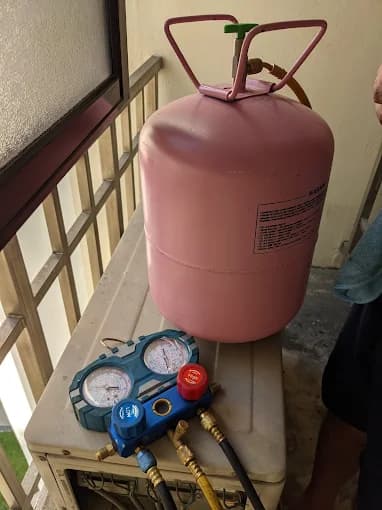
What else produces this
A leak that survives repeated inspection is a search-order problem, not a mystery. The refill interval sizes it: two to three months to drain usable pressure describes something slow and steady. Working the circuit in order, from the main pipe joints inward, leaves the small service-port fittings last. That is where a standard leak check tends to stop short.
Three refills in under a year, each holding two to three months, fits a slow steady loss rather than a sudden failure.
Main pipe joints, pipe fittings and indoor coil connections all clear, which is why earlier visits found nothing.
Bubble solution and an electronic sniffer both register at the service-port valve core on the outdoor unit.
A core worn and slightly deformed by age and by being opened at every past top-up explains a seal that leaks only slowly.
Why it happens
The valve core is a wearing part that gets used every time the system is charged. Connecting to the port presses the core open and releases it, and each cycle costs a little of the sealing surface. After years and several top-ups the seal closes almost, but not quite, and refrigerant slips past slowly enough to take months to matter. The leak is too small to find without testing at the port itself, which is why a wider circuit check clears the system and the cycle repeats.
What resolution involves
The core is a small part, and the scope is the reassuring half of the answer. It goes in, then pressure goes in and has to hold before any refrigerant follows. A steady reading with no drop is what confirms the circuit is sealed. Only then does the recharge happen. No indoor coil work and no compressor work follow from this diagnosis.
How to tell it worked
Watch the size of the fix against the size of the fear. A repeat-top-up symptom quoted as a coil or a compressor deserves one question first: where was the leak located, and what named it.
Before you approve a quote
The leak can hide at the fitting used to add the gas
- A leak that survives several inspections is usually a search-order problem, not a rare fault.
- Service-port hardware wears from being opened, so the connection used for every refill is a candidate in its own right.
- Ask what named the leak. A sealed circuit is proved by pressure that holds before recharge, not by cooling on the day.
Related diagnostics
Questions this case answers
Why does my aircon lose gas again a few months after every top-up?
Where do small refrigerant leaks usually hide?
Does replacing the valve core actually stop the leak?
What should I ask before paying for another gas top-up?
Describe your situation
Tell us what’s going on. Symptoms, setup, photos, anything we should know. We’ll assess and come back with the right next step.