On this page
How This Presents
An intermittent knock rattles along an exposed pipe run outside a Marina South office whenever strong coastal winds hit the facade. Indoor and outdoor units sit rock solid. Cooling output and operating pressures remain completely normal.
- Setup
- Mitsubishi Electric Wall-mounted10-12 yearsOfficeMarina South
- Misread as
- Trouble inside the refrigerant circuit itself, which sounds serious and reads as expensive.
- Check first
- Whether holding the pipe by hand stops the noise while the unit runs
- Actual finding
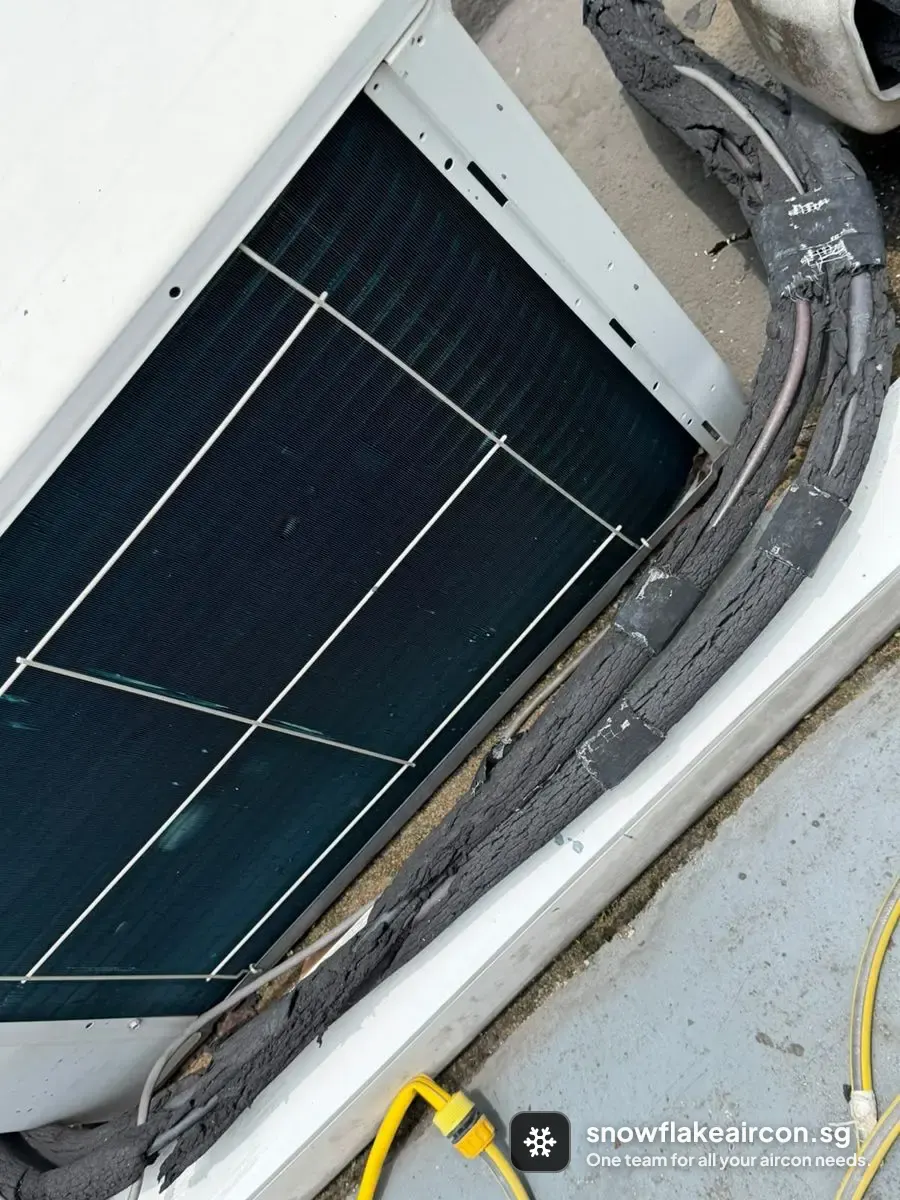
- Released pipe clips leaving an exposed run free to swing and strike the wall
- Scope saved
- Targeted repair instead of full replacement
What Else Produces This
Noise that varies with the weather rather than the equipment's cycles points at something moved from outside. An exposed refrigerant run is a long, fairly heavy span that wind pushes on every gust. Where its clips have released, it swings and strikes the wall. A technician holding the pipe while the unit runs identifies this in seconds, without instruments.
Knocking that worsens in windy weather, rather than during particular running cycles, points at an outside force.
Both units mounted solidly rules out the mountings anybody would normally think to inspect first.
Released clips along the exposed run leave that whole length free to move under load.
The noise stopping the moment the pipe is held by hand confirms the source beyond any argument.
Why It Happens
Exposed copper pipework relies on spaced wall saddles that absorb both compressor tremor and Singapore monsoon gusts. Over years of coastal wind loading, loose anchors let a long span swing back and tap against concrete. The sealed refrigerant loop stays intact; the bare run is simply slapping the wall.
What Resolution Involves
Replace the clips at proper intervals, with cushioning wherever the pipe passes close to the wall, so any remaining movement does not become contact noise. Pipe support on an exposed run is rarely inspected, though it is the one part of an installation spanning open air.
How to Tell It Worked
Judged in genuinely windy weather, not on a calm afternoon. A run that is quiet with no wind on it has not met the load that produced the complaint.
Before You Approve a Quote
The pipe is a separate thing that needs holding
- Pipe between the units has weight and carries vibration from both ends. It needs its own support.
- Noise that follows the weather is something outside pushing on the installation, not a cycle.
- A loose run falls quiet when a technician holds it while the unit runs. That check is for trained hands, not for a homeowner reaching out of a window.