On this page
How This Presents
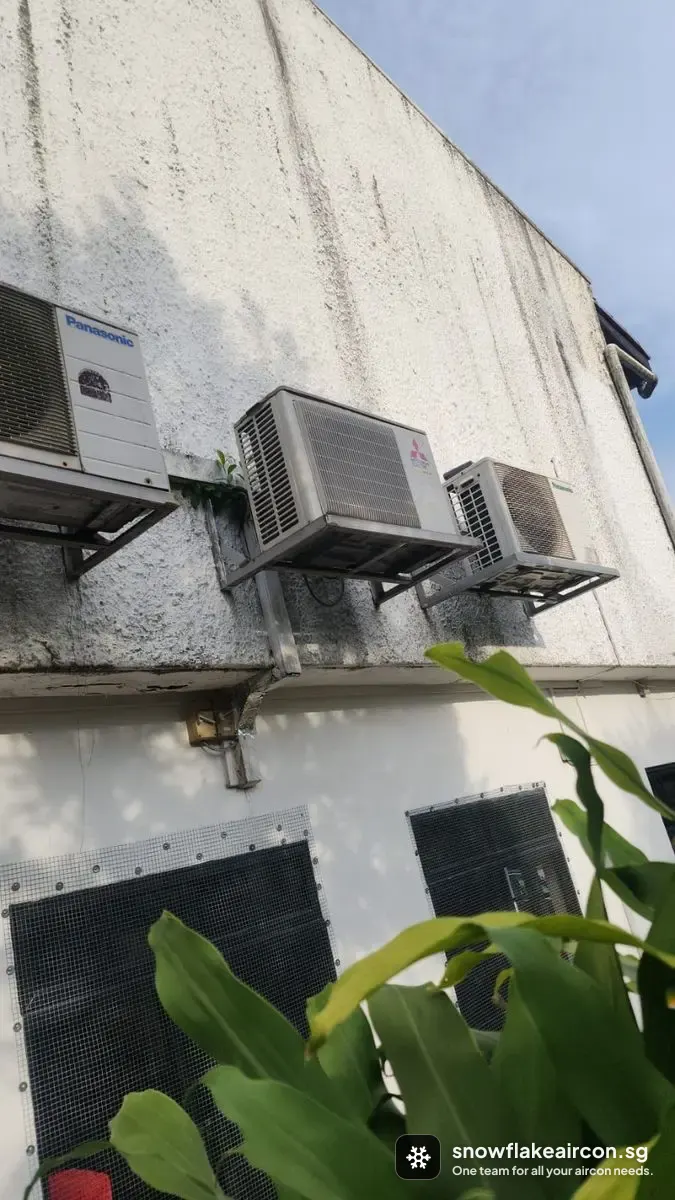
A bracket on aged brickwork that works loose repeatedly, in an airwell that funnels wind straight against the unit. Each retightening holds for a while and then gives way. The brickwork surface is visibly uneven.
- Setup
- Panasonic Wall-mounted13-15 yearsShophouseRochor
- Misread as
- Fixings that will not stay tight, on a mounting nobody has managed to make solid.
- Check first
- Whether the bracket bears evenly across its face before the fixings go in
- Actual finding
- A bracket bearing on high spots of uneven brickwork, rocking under wind load
- Scope saved
- Targeted repair instead of full replacement
What Else Produces This
Repeated loosening after sound work points at how the bracket meets the wall, not at the fixings. A bracket on high spots touches the wall at two or three points instead of across its face, so it rocks about them under load. The airwell supplies plenty of cycles. Access is work for a trained installer, who checks the contact face, the wall and the anchors together.
Repeated loosening after sound tightening points past the fixings to how the bracket sits.
A visibly uneven brickwork face means the bracket bears on high spots rather than across its area.
Wind funnelled through the airwell supplies a continuous load that works those contact points.
A bracket that rocks under hand pressure while its bolts are tight confirms the bearing is what is wrong.
Why It Happens
A bracket transfers load to a wall only where metal touches masonry. On aged Rochor brickwork that means two or three high points, letting the frame pivot under Singapore monsoon gusts funnelled down the airwell. Tightening bolts harder only crushes the same high spots without spreading the bearing load.
What Resolution Involves
The bearing surface is made good with packing or a levelled bed, so the bracket meets the wall across its whole face, and the fixings are matched to the actual brickwork. Once the load is spread, the fixings stop being worked and stay tight. On any old or uneven wall this belongs at installation.
How to Tell It Worked
The installer rocks the bracket by hand once the bolts are tight. A mounting that cannot be moved is bearing properly; one that still pivots will loosen again however hard the fixings are pulled up.
Before You Approve a Quote
Tight bolts cannot fix a bracket that does not bear
- A bracket on high spots pivots about them. Tightening harder loads the same points more.
- Repeated loosening after sound work points at the bearing surface, not at the fixings.
- Pack or bed the bracket so it meets the wall across its face. Then the bolts stop being worked.