On this page
How This Presents
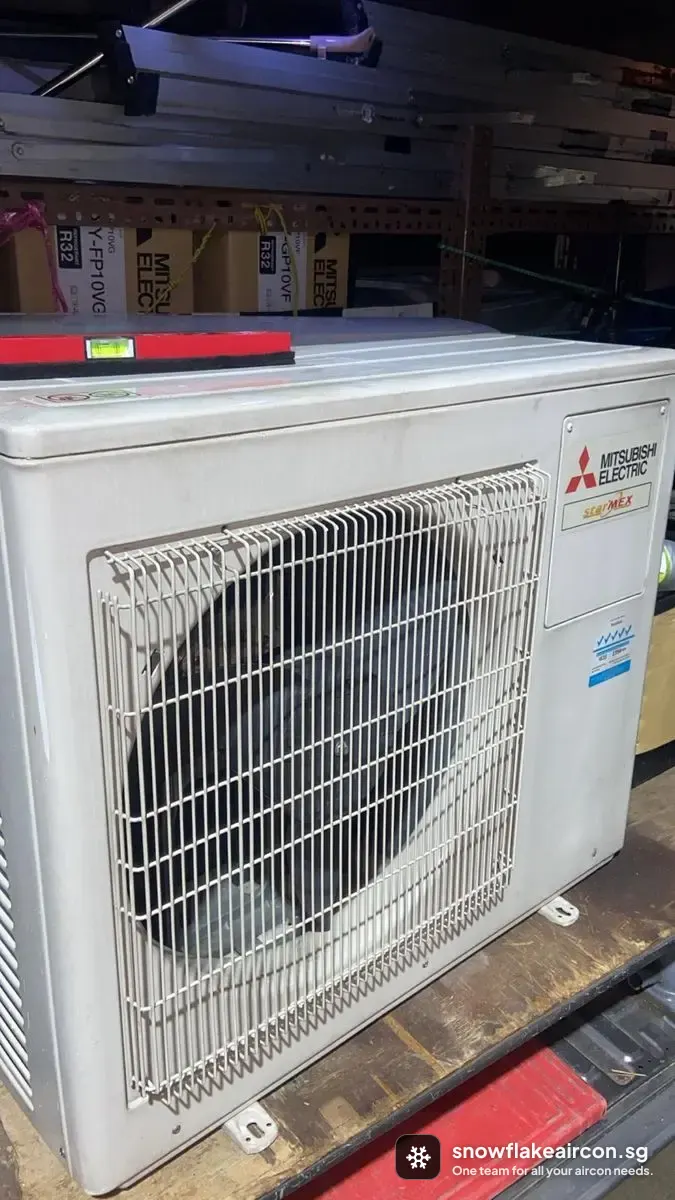
Steady knocking drifts indoors from the outdoor ledge at a newly handed-over Tengah BTO HDB flat since its very first evening of use. The outdoor condenser has never run silently. Bedroom cooling handles Singapore humidity right on target.
- Setup
- Mitsubishi Electric Wall-mountedNew installHDBTengah
- Misread as
- A manufacturing defect on a unit that has only just been installed.
- Check first
- Whether the unit has ever been quiet since the day it was installed
- Actual finding
- Transit packing left inside the casing after installation
- Scope saved
- Targeted repair instead of full replacement
What Else Produces This
Something that has never worked properly is a handover question, not a fault. On brand-new equipment nothing has had time to wear, corrode or loosen, so what can be wrong on day one is what was or was not done at installation. Packing left inside the casing sits near the top, because nothing prompts its removal once the covers are on.
Noise present from the very first run rules out anything that develops with age or use.
Normal cooling performance confirms the equipment itself is working as designed.
A transit block still fitted inside the outdoor casing accounts for the knocking on its own.
An absence of wear or damage across the whole installation confirms it is otherwise entirely sound.
Why It Happens
Factory teams wedge foam blocks and retaining ties inside outdoor housings so compressors and fan brackets survive shipping. Installers are meant to strip them during HDB commissioning, a detail easy to overlook once side panels clip shut. Running equipment then hammers straight against its own forgotten transit restraints.
What Resolution Involves
Remove the transit protection and check nearby parts for rub marks. Ask about it directly on any new installation before a warranty conversation starts about a machine that was never faulty.
How to Tell It Worked
A full start and stop cycle after removal, not simply switched on. Restrained parts sometimes touch only while starting or stopping, which a steady run does not reveal.
Before You Approve a Quote
Noise from day one usually came in with the packing
- Transit blocks and ties go inside the machine and are meant to come out at installation.
- Nothing on new equipment has had time to wear. A day-one noise belongs to the handover.
- Ask directly whether transit protection was removed. It costs nothing and settles it immediately.