On this page
How This Presents
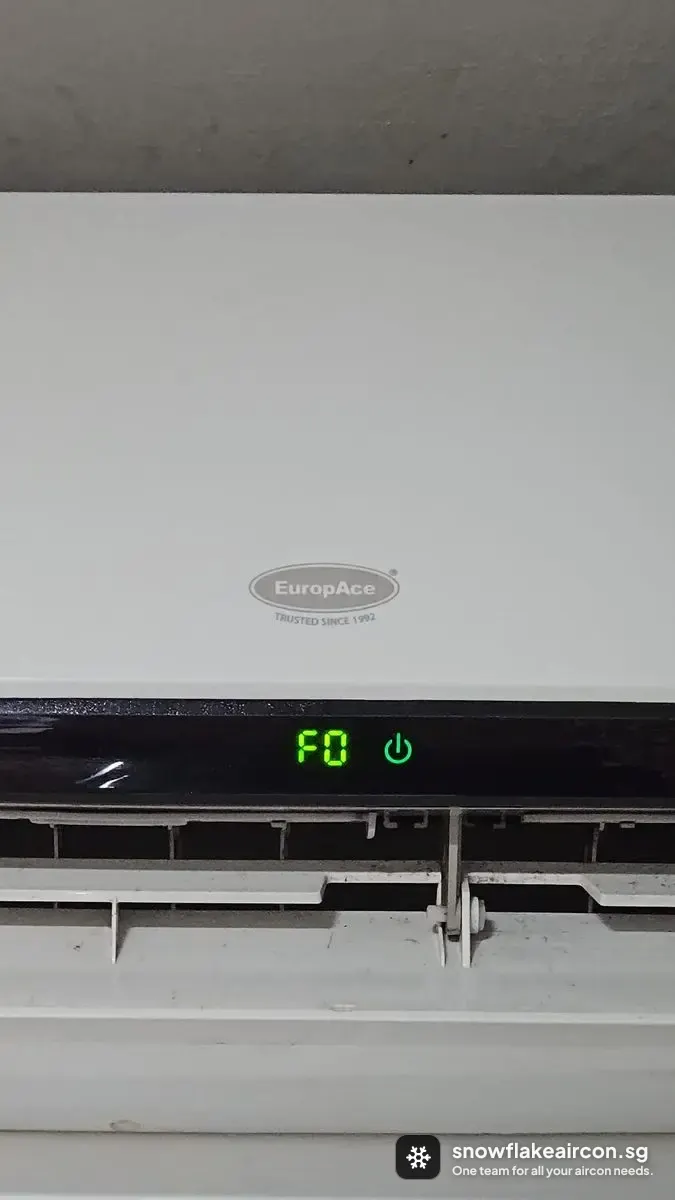
Inside a Tampines HDB living room, the split fan coil chills cleanly each morning, then stops every hot afternoon with F0 glowing on the front panel. Switching mains power off and back on restores cooling briefly before the unit locks out again.
- Setup
- Midea Wall-mounted4-6 yearsHDBTampines
- Misread as
- Condemning a five-year-old Midea outdoor compressor because an afternoon overload lockout cut off living-room cooling repeatedly.
- Check first
- Measuring live compressor clamp-meter amps and condensing pressure on the HDB ledge under afternoon heat before clearing the choked outdoor coil
- Actual finding
- Clogged outdoor condenser fins trapping afternoon exhaust heat and driving compressor head pressure into Midea overload protection while windings stay healthy
- Scope saved
- Servicing or adjustment with no parts replaced
What Else Produces This
An afternoon-only trip points straight toward thermal or pressure load rather than a dead indoor control board. Testing both electrical draw and outdoor heat rejection narrows the exact fault path quickly.
Confirming the indoor and outdoor Midea model plates verifies the protection circuit responds to excessive compressor load and condensing stress.
Clamping an ammeter onto the ledge supply lead shows compressor current climbing steadily above nameplate rating as afternoon load builds.
Checking manifold readings confirms elevated condensing pressure while the outdoor fan blade spins at full speed.
Inspecting the rear condenser face reveals a dense mat of road grit and dried lint sealing the back fins tight against the HDB ledge wall.
Isolating power and metering compressor terminals verifies balanced winding resistance with zero short to ground.
Why It Happens
West-facing afternoon heat on the Tampines HDB ledge combined with years of trapped lint across the rear condenser fins blocked airflow through the coil. Unable to reject heat outdoors, condensing pressure and compressor draw climbed until the board triggered its F0 protective shutdown.
What Resolution Involves
Keep the healthy Midea compressor and outdoor PCB untouched. Isolate the ledge power switch, remove the outer condenser louver grille, and brush away loose matted lint from the rear fin bank. Coat the fins with condenser-safe detergent and rinse deep through the rear fin pack until clean water runs clear and light shines right through.
How to Tell It Worked
Turn the ledge isolator back on and test living-room cooling during peak midday heat. Confirm outdoor exhaust air feels brisk, running current holds comfortably below nameplate limits, and F0 never returns during a full sustained load run.
Before You Approve a Quote
Test outdoor heat rejection before blaming a tripped compressor
- Midea F0 lockouts flag protective cutoffs tied to overload, current limits, or refrigerant pressure stress depending on the model chassis.
- Afternoon Tampines sun magnifies any dirt blanket across the outdoor condenser fins, pushing operating pressure past safety limits.
- Checking healthy motor coils and flushing the clogged outdoor coil clears repeat trips with zero parts replaced.