On this page
How This Presents
Living-room air turns warm mid-afternoon in a high-floor Choa Chu Kang HDB flat while the indoor fan keeps blowing steadily. Outside on the concrete ledge, the outdoor casing emits a brief strained hum, clicks silent, and repeats the cycle minutes later. Cooler rainy mornings run noticeably longer.
- Setup
- Panasonic Wall-mounted7-9 yearsHDBChoa Chu Kang
- Misread as
- Paying for a full HDB condenser replacement when the living-room unit clicks off on hot western afternoons.
- Check first
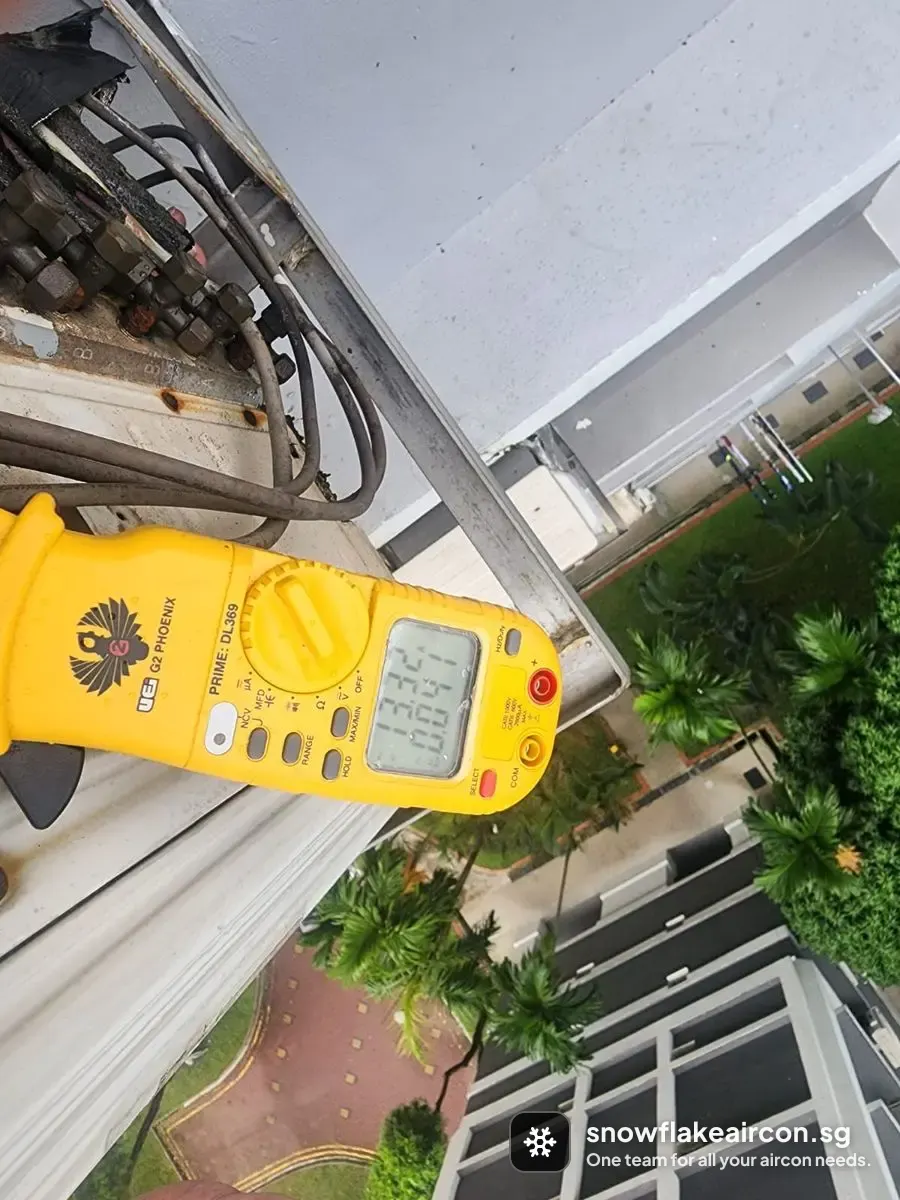
- Clipping a clamp meter onto the high-ledge live feed while testing capacitor strength and condenser heat rejection
What Else Produces This
Intermittent outdoor cut-outs tied to afternoon heat point toward overload protection rather than a dead indoor controller. Measuring live amperage on the high ledge separates a seized compressor from an overloaded coil and weak capacitor.
Clipping a clamp meter onto the outdoor live conductor catches current spiking well past nameplate limits before the protector trips.
Inspecting the rear condenser face shows a thick grey blanket of road dust choking heat rejection across the narrow HDB ledge.
Isolating power and testing the run capacitor shows weak electrical charge capacity unable to kick the compressor cleanly across peak head pressure.
Checking compressor windings against earth shows clean balanced coils with zero short to the metal shell.
Why It Happens
West-facing high-floor ledges in Choa Chu Kang bake under harsh tropical sun while wind packs estate lint into rear condenser fins. Trapped heat forces higher head pressure, making the compressor draw heavier current every afternoon until the run capacitor degrades and thermal protection intervenes.
What Resolution Involves
Leave the healthy compressor untouched and secure harness lines before flushing the rear condenser coil thoroughly from the inside out. Install a fresh rated run capacitor with crisp tight spade terminals, clean oxidized contacts inside the electrical bay, and clear loose debris from the ledge.
How to Tell It Worked
Re-clamp the live wire after restart and watch startup current settle cleanly within factory nameplate amps under peak afternoon sun. Warm exhaust airflow pushes briskly off the cleaned Choa Chu Kang condenser coil, and the living room chills evenly through thirty minutes without a single trip.
Before You Approve a Quote
Electrical tests clear healthy compressors before costly swaps
- A condenser that starts briefly then clicks off often struggles with poor heat release and weak starting boost rather than internal motor failure.
- Afternoon heat trapped on high Singapore HDB ledges pushes a tired starting part and dust-caked outdoor fins past safe cutout limits.
- Washing the outdoor coil and fitting a fresh starting part restores steady living-room cooling at a fraction of unit replacement.