On this page
How This Presents
Fitting rooms and rear racks inside a Geylang apparel shop grow warm on busy weekends even though staff rinse the return grille monthly. One contractor suggests replacing the eight-year-old ceiling FCU because ceiling space looks tight.
- Setup
- Carrier Ducted7-9 yearsRetailGeylang
- Misread as
- Replacing a concealed commercial fan coil unit and cutting down ceiling fixtures.
- Check first
- Opening the rear return plenum on the overhead FCU behind the filter slot
What Else Produces This
When every diffuser on a single Carrier ducted FCU weakens together, the bottleneck sits inside the central air handler rather than in individual branch ducts. Inspecting the overhead casing clarifies whether cleaning or hardware replacement is warranted.
Supply air leaving the fitting-room diffusers still reads cool at 13°C, but air volume barely stirs a tissue held at the slot.
Insulated supply and return lines entering the ceiling FCU feel properly chilled, proving central cooling delivery is intact.
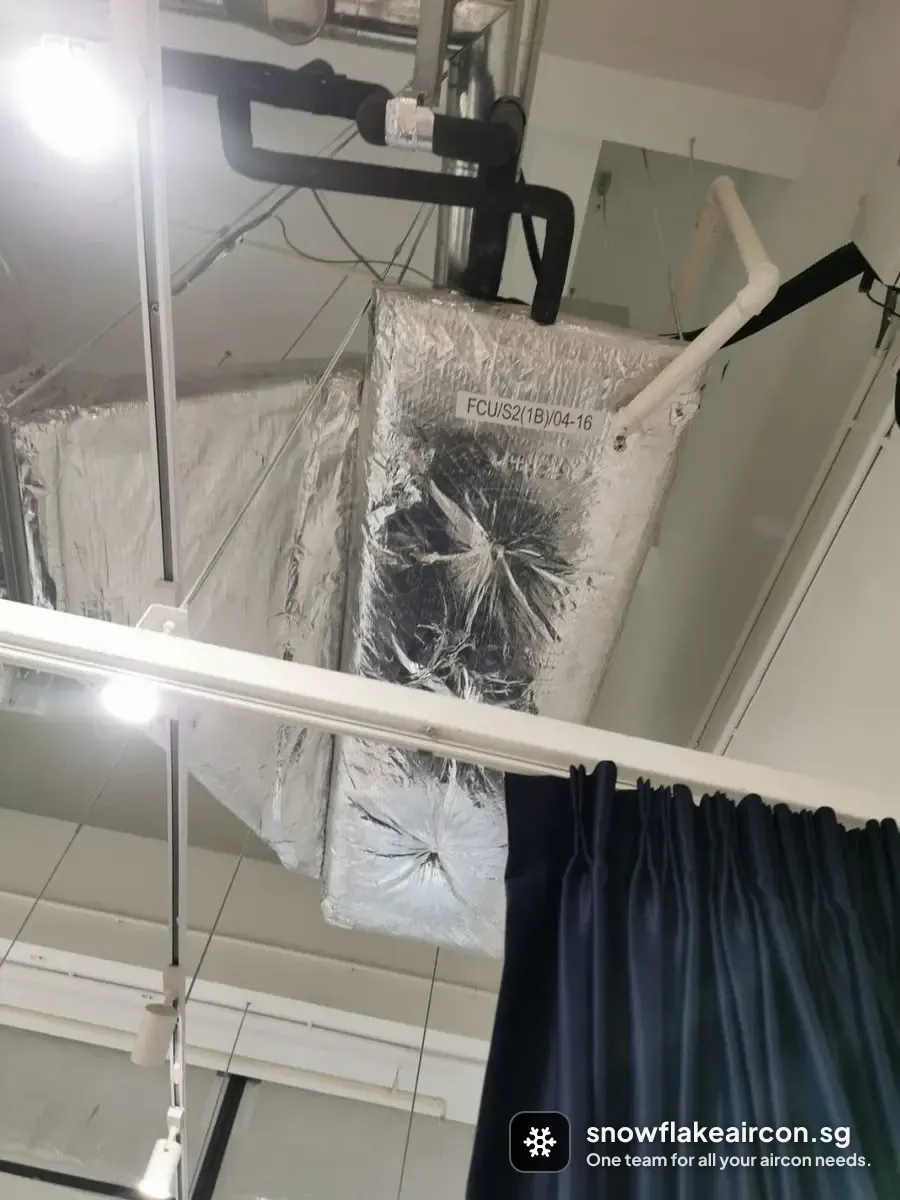
Opening the service panel on the foil-wrapped casing above the track lighting exposes a grey felt mat of garment lint sealing half the coil face.
Squirrel-cage blower blades behind the coil carry thick lint ridges that cut static pressure down the duct run.
Why It Happens
Daily handling of garments in Singapore's humid retail air pulls loose fabric fibres into the overhead return plenum. Over years of surface-only filter rinses, lint bypassing the filter track binds with coil moisture into a dense mat that starves the ducted blower of air.
What Resolution Involves
Skip FCU replacement. Cover the fitting-room curtains and track lights below, rig a wash shroud around the overhead casing, brush off dry lint mats, chemically flush the full coil depth and blower wheels, and clear the PVC drain trap.
How to Tell It Worked
Feel and measure airflow at the farthest fitting-room diffuser after reassembly. Strong, even supply throw should return across every grille with zero moisture dripping from the overhead pan.
Before You Approve a Quote
Retail lint settles behind the ducted filter where quick visits miss it
- Clothing racks and fitting curtains shed continuous fine fibres that bypass loose return-plenum filter tracks into the overhead FCU.
- Weak diffuser flow across every zone served by one FCU points to coil or blower restriction rather than a broken supply damper.
- Proper wash shrouding above track lights lets technicians chemically flush the concealed coil safely without dropping the unit.