On this page
How This Presents
Upper-floor workspace cooling in this Geylang shophouse cuts out abruptly whenever the outdoor unit tries to start. Resetting the distribution board brings the indoor fan back for a brief spell, then a sharp click from the rear ledge trips the breaker again. A faint acrid smell lingers beside the condenser casing.
- Setup
- York Wall-mounted10-12 yearsShophouseGeylang
- Misread as
- Facing a full commercial condenser replacement because repeated outdoor circuit trips sounded like a seized compressor.
- Check first
- Opening the condenser electrical compartment to inspect capacitor terminals and test compressor winding insulation separately
What Else Produces This
Immediate trips on outdoor engagement point toward either a grounded compressor winding or an electrical fault in the start circuit. Pulling the condenser top cover separates both possibilities safely.
Isolator supply voltage arrives steady at the outdoor terminal block with the condenser disconnected.
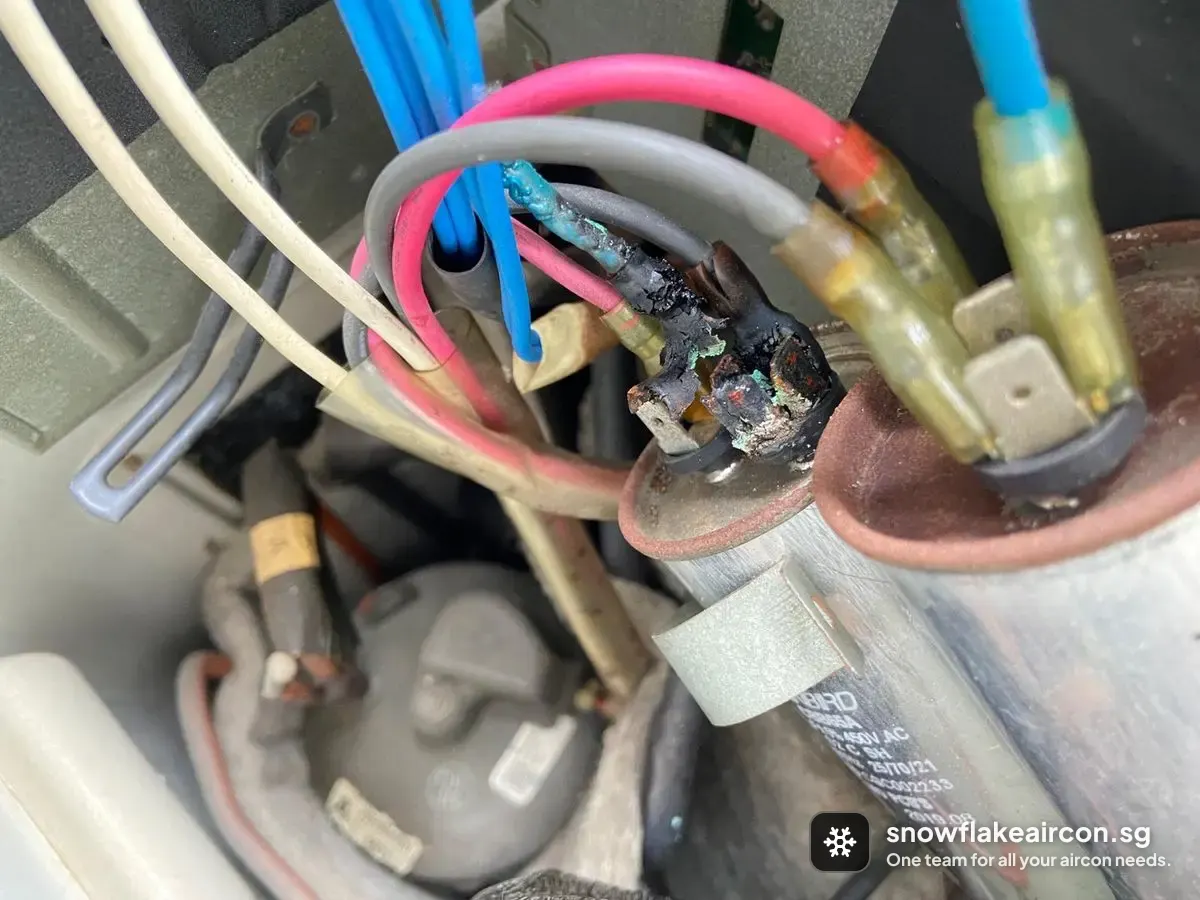
Inside the electrical box, the metal run capacitor sits bulging slightly with two blackened spade lugs and scorched lead sleeves.
Off-circuit meter checks show capacitance has dropped well below spec, leaving the compressor unable to spin up cleanly.
Megohmmeter readings across all three compressor pins to earth stay high and winding resistances balance cleanly.
Why It Happens
Shophouse condensers along Geylang back lanes endure trapped afternoon heat and year-round Singapore humidity. Over a decade of daily cycling, vibration loosens push-on spade terminals on the outdoor run capacitor while moisture oxidises the brass grip. High contact resistance cooks both the connector and the ageing capacitor until arcing or stalled start current trips the breaker.
What Resolution Involves
Lock off the shophouse isolator, discharge the damaged capacitor safely, and remove the scorched assembly from its clamp. Cut back every heat-brittled wire end to bright copper strands, crimp heavy-duty insulated high-temperature spade lugs, and mount a fresh capacitor matched to the unit rating. Secure the wire harness neatly clear of sharp sheet metal.
How to Tell It Worked
Restore power at the distribution board and monitor the compressor start and steady running current with a clamp meter. Outdoor start-up sounds smooth with zero hesitation, running amps sit squarely within nameplate limits, and the Geylang workspace cools steadily across the afternoon without tripping.
Before You Approve a Quote
Charred capacitor lugs mimic a shorted compressor on start-up
- A tripping breaker right as the outdoor unit engages does not prove a burned-out compressor motor until electrical parts are tested apart.
- Heat and humid air inside Geylang shophouse ledges corrode push-on spade clips until poor contact chars the insulation.
- Fitting a matched run capacitor with fresh crimped lugs restores steady cooling at a fraction of condenser replacement.