On this page
How This Presents
A waiting-room ceiling unit running full clinic hours pushes sluggish air across seating rows while condensation beads along the supply louvers. Staff lower the thermostat without relief inside the Paya Lebar commercial block. Distant chairs stay warm while air right under the grille feels icy.
- Setup
- Mitsubishi Electric Cassette4-6 yearsClinicPaya Lebar
- Misread as
- An expensive refrigerant leak or indoor motor swap disrupting busy daytime consultation hours.
- Check first
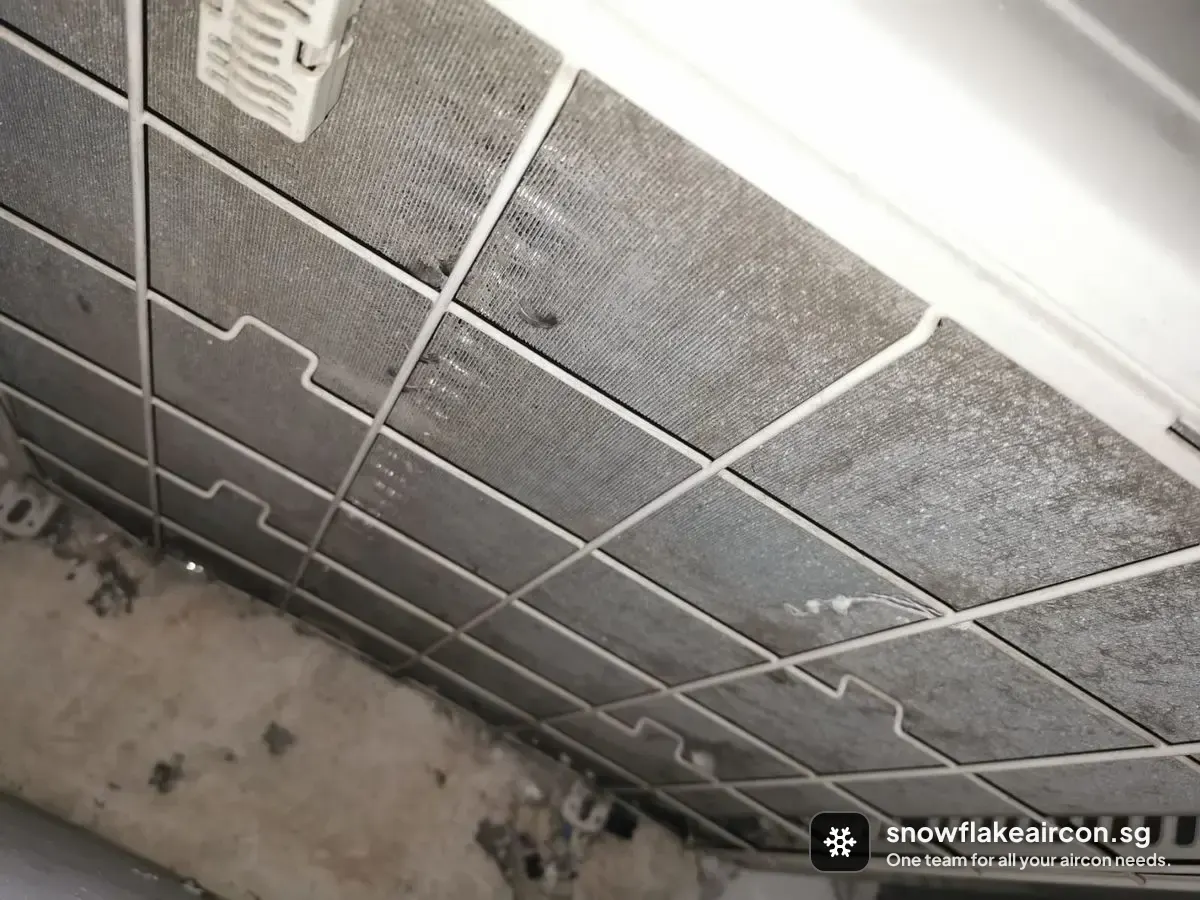
- Lowering the egg-crate return grille to inspect intake mesh transparency
What Else Produces This
Sweating plastic louvers alongside weak room throw points directly at air starvation across a cold coil, not warm refrigerant. Looking upstream at the intake path before touching pipework isolates the cheapest fix first.
Louver surfaces feel icy damp while air movement two metres away barely stirs lightweight clinic notices.
Opening the overhead egg-crate return grille exposes a three-panel filter carpeted in thick grey lint.
Holding the mesh toward ceiling lights shows zero daylight passing through the matted dust blanket.
Once the choked filter comes out, fan suction surges immediately and louver surface temperature normalises.
Why It Happens
Busy medical clinics in Singapore run overhead aircon nonstop through humid daylight hours. Constant foot traffic releases fine textile fibres, paper lint, and corridor grit into high ceiling returns. Because tall egg-crate grilles sit above easy reach, filters go unwashed between quarterly contracts. Over several weeks, a solid felt wall seals the mesh, starving the chilled coil and pulling louver temperatures below room dew point.
What Resolution Involves
Lift down the white egg-crate grille and three-section filter frame carefully without scattering lint over clinical counters. Soak and rinse every mesh panel at the pantry sink until completely translucent, then wipe the grille squares clear. Inspect the evaporator face behind it for secondary dust buildup. Refit the dry mesh firmly and schedule monthly filter rinses between contract visits.
How to Tell It Worked
Run the Paya Lebar clinic unit for twenty minutes on normal cooling under busy waiting-room load. Check air throw across the farthest waiting chairs and feel the plastic supply louvers. Confirm the white overhead intake grille clips sit completely flush and secure. Completely dry louver edges and brisk, even room airflow confirm full recovery without opening sealed gas lines.
Before You Approve a Quote
Restricted return intake mimics both weak cooling and leak symptoms
- Long clinic operating hours pull heavy cloth and paper lint into overhead return filters much faster than home bedrooms.
- Choked intake slows air past the cold coil, chilling the louver blades below Singapore room dew point so condensation beads.
- Inspecting the return mesh behind high egg-crate grilles always comes before connecting manifolds or quoting motor work.