On this page
How This Presents
Consultation room ceiling unit in a Rochor clinic develops a steady ceiling drone and weaker corner throw over two months. Reception staff rinse the return mesh regularly, and an earlier callout quotes a new fan motor.
- Setup
- Daikin Cassette4-6 yearsClinicRochor
- Misread as
- Replacing a cassette fan motor and shutting a consultation room for parts ordering.
- Check first
- Removing the ceiling fascia to spin and inspect the turbo wheel by hand
What Else Produces This
Low humming from an overhead Daikin cassette comes from either worn shaft bearings or aerodynamic imbalance on the central wheel. Opening the decorative panel lets a technician check both in five minutes.
Vibration climbs sharply between low and high fan speeds while compressor load stays unchanged, pinning the noise to the indoor blower assembly.
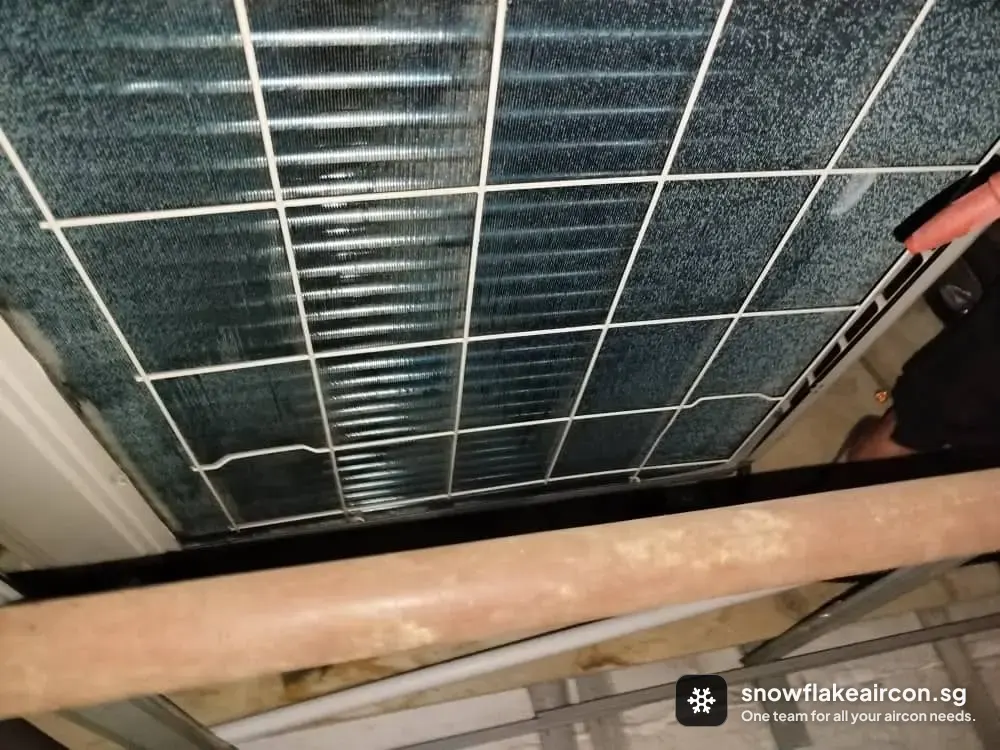
Dropping the intake panel and unclipping the black fan guard reveals grey clinic dust packed unevenly along the trailing edges of the turbo blades.
Turning the fan hub by hand feels completely smooth with no scraping, shaft wobble, or burnt winding smell.
Motor current draw sits squarely within nameplate specification once the wheel is unbolted and run momentarily unloaded.
Why It Happens
Singapore clinics run cassettes continuously in humid air alongside paper towels, fabric curtains, and foot traffic from the corridor. Fine dust bypasses the coarse intake mesh and sticks to damp plastic fan vanes in uneven patches, throwing the spinning turbo wheel out of balance and vibrating the ceiling frame.
What Resolution Involves
Keep the original fan motor. Unbolt the centre locknut, lower the turbo blower wheel into a wash basin, scrub every blade channel clean, wipe the bell-mouth shroud, and torque the hub nut squarely during reassembly.
How to Tell It Worked
Run the cassette across all three fan speeds after refitting the fascia panel. The ceiling grid should stay vibration-free and discharge airflow should match evenly across all four louvers.
Before You Approve a Quote
Spin the cassette blower by hand before condemning the motor
- Long daily clinic hours pull fine gauze lint and corridor dust past standard return screens onto curved turbo fan blades.
- Even a few grams of uneven dirt on a high-speed cassette wheel creates a low-frequency ceiling hum that mimics worn motor bearings.
- Hand-spinning the unpowered hub immediately separates smooth, quiet bearings from mechanical bearing grind.