On this page
How This Presents
Bedroom airflow inside a River Valley condo travels barely two metres beyond the vent even on maximum fan speed. Washing removable mesh screens at the bathroom tap changes nothing overnight. Soft steady humming inside the top casing often gets mistaken for a failing indoor fan motor while sleeping areas stay warm and humid.
- Setup
- Samsung Wall-mounted4-6 yearsCondoRiver Valley
- Misread as
- Quoting S$250 to S$400 for a full motor replacement when bedroom throw turns noticeably weak.
- Check first
- Confirming steady full-speed motor rotation and inspecting deep fin gaps behind clean filters before quoting indoor fan motor replacement
- Actual finding
- Compacted lint and humid dust bridging deep aluminium evaporator fin channels, choking indoor air throw while the fan motor spun smoothly at normal speed
- Scope saved
- Servicing or adjustment with no parts replaced
What Else Produces This
Limp air throw past clean intake screens often triggers hasty motor swap quotes. Checking fan wheel spin and deep fin gaps separates motor wear from coil dirt before ordering spare parts.
Stepping through low, medium, and turbo fan speeds produces clear acoustic pitch changes with zero bearing chatter or wobble.
Spinning the cross-flow wheel manually confirms smooth, light movement along both side bearings with zero shaft play.
Looking closely between top evaporator coil fins on the River Valley unit reveals grey damp lint packed deep inside channels.
Holding a tissue beside the return grille shows feeble suction pull despite brisk wheel RPM inside the blower tunnel.
Measuring outlet temperature right at the louvre lips records crisp coil chill, confirming healthy outdoor cooling output.
Why It Happens
Fine bedding fibres slipped past coarse intake screens during nightly Singapore condo runs and lodged inside tight River Valley Samsung fin rows. Humid condensation compacted that lint into a dense inner mat that choked intake airflow while leaving the fan motor completely sound and spinning freely.
What Resolution Involves
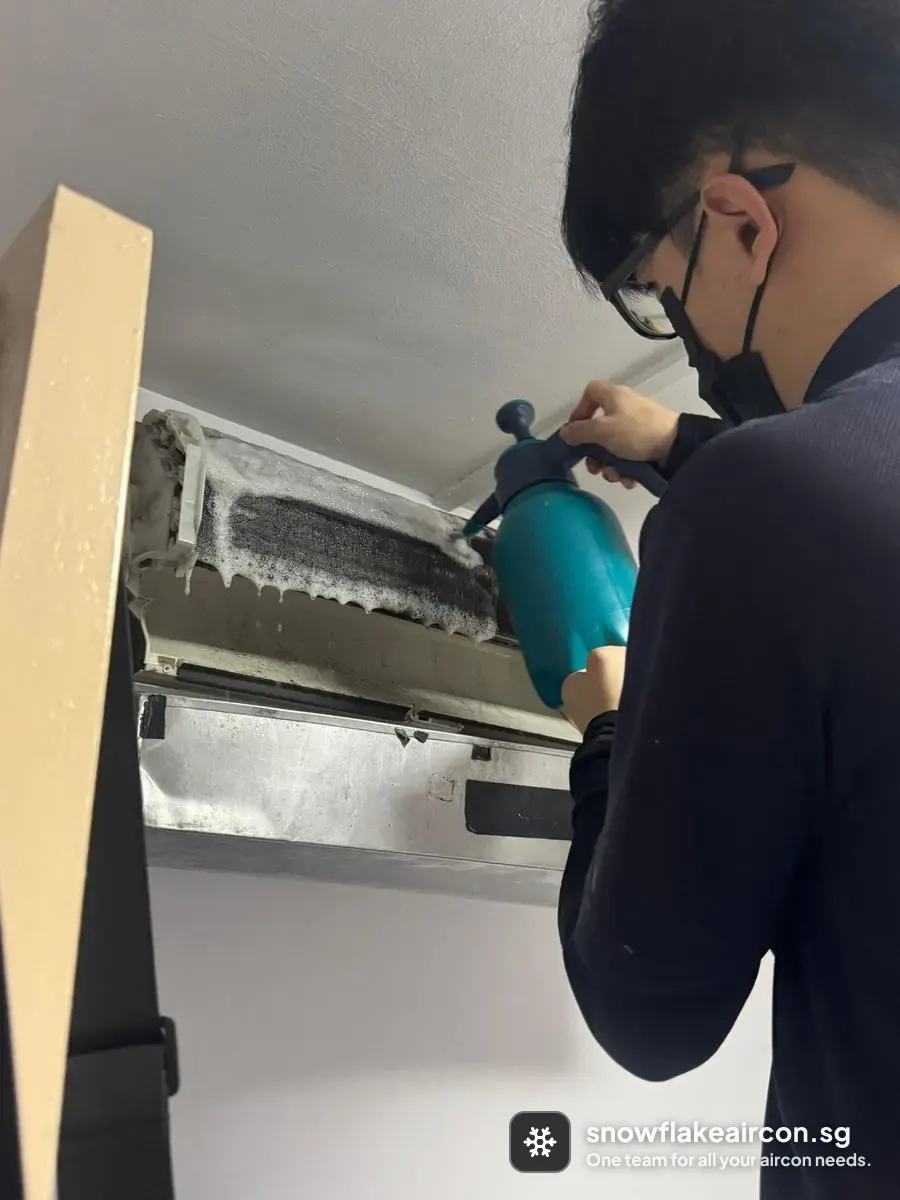
Skip replacing a perfectly healthy indoor fan motor. Shield wall paint with a waterproof catch bag and pump-spray foaming chemical cleaner across the packed River Valley Samsung coil and blower blades. Give the foam time to lift deep lint, then rinse gently until water runs clear.
How to Tell It Worked
Wipe housings dry and run the River Valley condo Samsung on medium cool for fifteen minutes. Crisp chilled airflow carries evenly across the entire master bedroom, fan noise settles into an effortless hum, and outlet air turns sharply colder right across the bed.
Before You Approve a Quote
Foam-wash clogged cooling fins before paying for a replacement fan motor
- When indoor cooling fins pack tight with damp dust, even a healthy spinning fan has no open air path to draw room breeze through.
- Foam cleaner expands deep between tight aluminium rows, lifting grey grime that ordinary spray bottles leave sitting behind the coil face.
- Confirming smooth silent wheel spin saves Singapore condo owners from unnecessary motor parts and gets cold bedroom throw back fast.