On this page
How This Presents
Nighttime airflow in a Tengah HDB bedroom stays lukewarm and sluggish despite freshly rinsed dust filters and a 22°C remote setting. Stepping closer to the vent reveals uneven breeze across the louvre width while the room remains humid past midnight. Raising fan speed adds noise without noticeably sharpening bedroom chill.
- Setup
- Mitsubishi Electric Wall-mounted1-3 yearsHDBTengah
- Misread as
- Unneeded R32 gas top-up charges or premature coil repair bills on a young Tengah BTO bedroom aircon.
- Check first
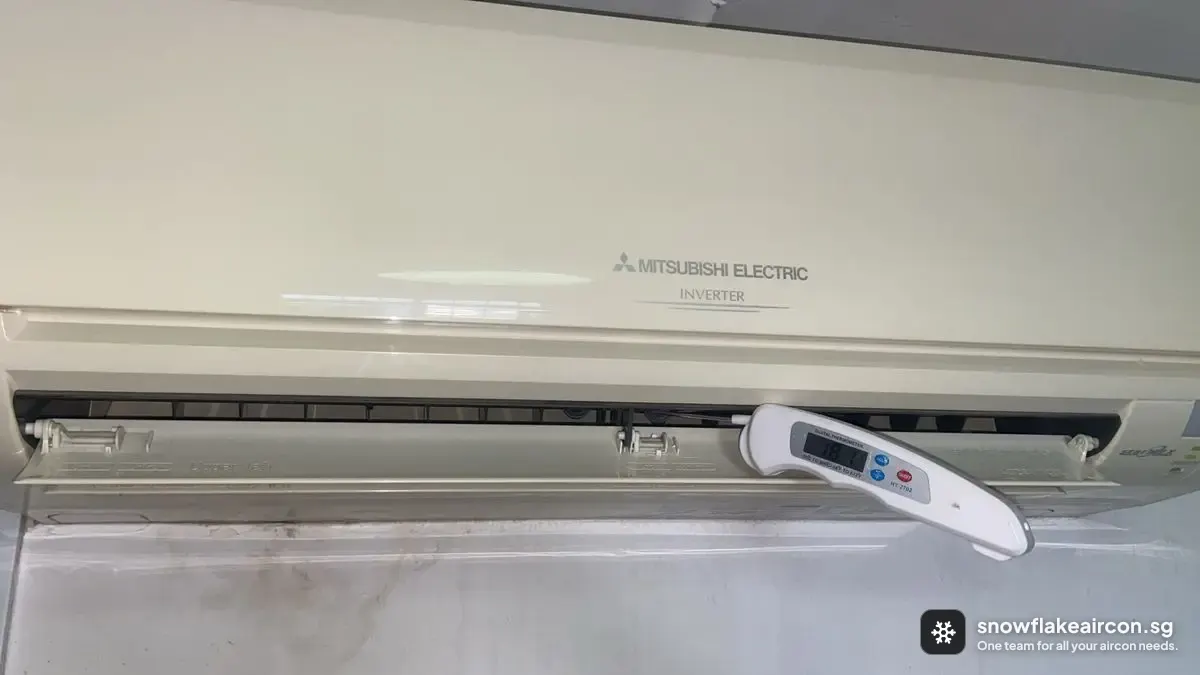
- Measuring intake-versus-supply temperature split with a digital outlet probe thermometer and inspecting the blower drum vanes behind the swing louvre
- Actual finding
- Renovation dust and damp biofilm coating the evaporator fins and blower wheel blades, choking indoor heat transfer while the R32 refrigerant loop held normal pressure
- Scope saved
- Servicing or adjustment with no parts replaced
What Else Produces This
Tepid air in a young flat often triggers quick assumptions of early gas leakage. Measuring supply temperature and peeking behind the louvre separates airflow restriction from charge loss immediately.
Inserting a digital probe thermometer into the Tengah supply vent records 23°C against a 27°C return intake. That leaves just a 4°C temperature drop.
Pointing an inspection torch inside the discharge slot exposes dense grey lint packed tightly along the curved blower drum ribs.
Lifting the front casing reveals fine pale renovation dust matted deep between the aluminium evaporator fin rows.
Checking the outdoor condenser on the service ledge confirms steady inverter ramp-up and cool copper return lines, ruling out refrigerant shortage.
Measuring fan motor draw shows the wheel spinning at normal electrical load while fouled blades fail to scoop room air efficiently.
Why It Happens
Fine construction grit drifting through a newly occupied Tengah HDB estate bypassed coarse intake screens. That dust fused with nightly condensation across the evaporator fins and blower vanes. The thickened coat slashed airflow volume and insulated cold aluminium from warm bedroom air, capping output at a weak 4°C split.
What Resolution Involves
Skip any speculative R32 gas refill and leave sealed copper lines closed. Dismantle the indoor casing, drape a waterproof wash bag, and coat the matted evaporator bank and blower drum with coil-safe alkaline cleaner. Rinse gently with low-pressure water until clear runoff drains down the discharge hose and bright aluminium fins show through.
How to Tell It Worked
Snap the clean front shell into place and test the Tengah Starmex on cool mode at medium fan for twenty continuous minutes. Supply outlet probe readings fall to 15.5°C against 26.5°C room intake, proving a restored 11°C delta-T. Brisk airflow now reaches across the bedroom without musty odour or fan rattle.
Before You Approve a Quote
Measure supply air chill before paying for refrigerant refills
- Fine renovation plaster dust bonds with Singapore humidity inside young BTO flats, coating hidden blower blades behind clean mesh filters.
- Weak heat pickup across a matted indoor coil leaves outlet air tepid although the outdoor condenser works at steady speed.
- Chemical washing clears deep fin dirt and restores a crisp temperature drop without touching sealed refrigerant lines.