On this page
How This Presents
Master bedroom in a Kallang HDB flat struggles to cool past 25°C on humid nights despite freshly washed filters and a 19°C remote setting. A brief earlier check suggested topping up refrigerant without testing coil temperatures.
- Setup
- Daikin Wall-mounted4-6 yearsHDBKallang
- Misread as
- A gas top-up or compressor swap quoted without opening the indoor casing.
- Check first
- Outlet probe temperature compared against return air and compressor draw
What Else Produces This
Coolish breeze from a wall unit splits between low refrigeration capacity and poor indoor heat transfer. Measuring the actual air split alongside outdoor electrical draw separates both paths before any manifold hose comes out.
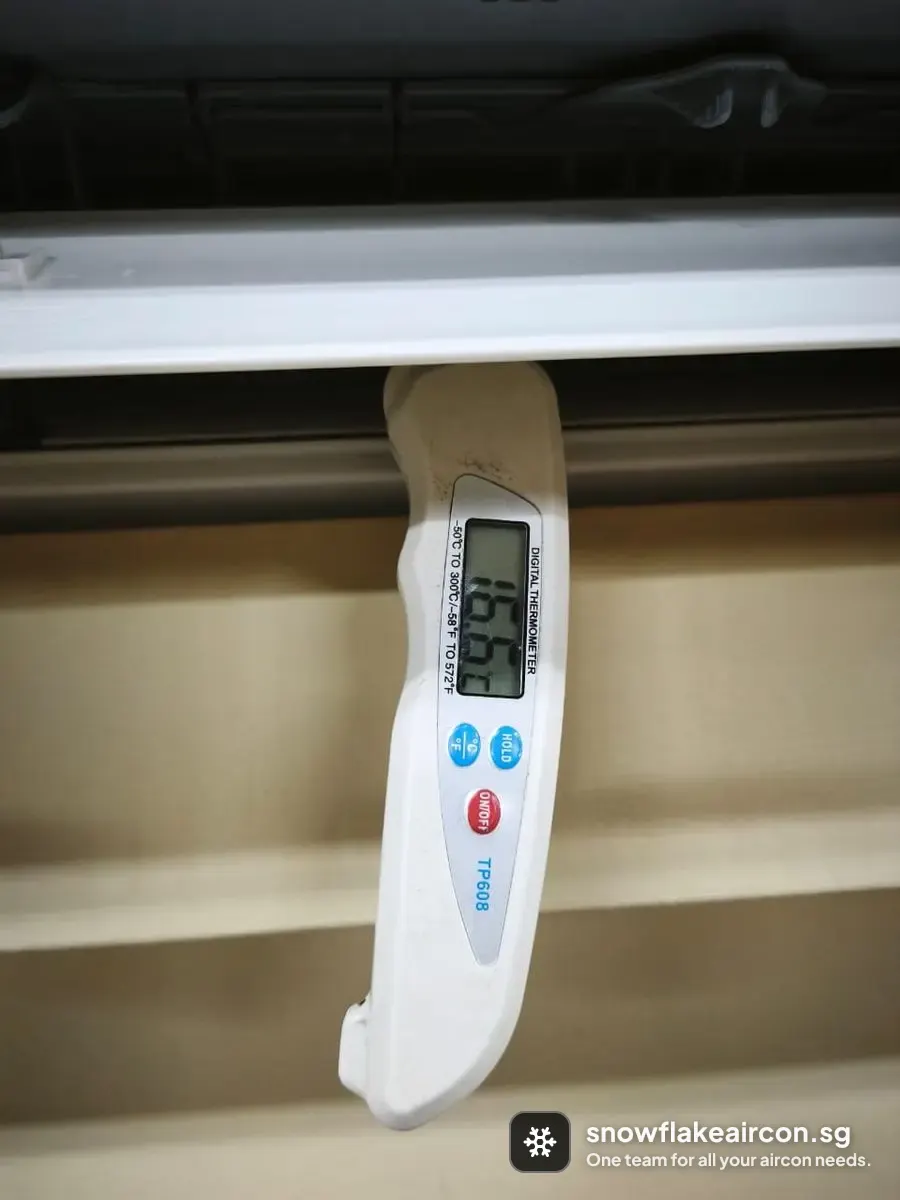
Digital probe at the supply vent settles at 15.5°C against a 26.5°C room intake, giving only an 11°C temperature drop.
Outdoor condenser runs steadily with normal rated current and cool, evenly sweating insulated suction copper at the service yard ledge.
Lifting the front plastic cover shows clean front mesh filters but dark biofilm bridging the upper inner rows of the evaporator fins.
Fan blower blades carry a light fuzzy coat that narrows air velocity across the chilled coil.
Why It Happens
Over five years of nightly running in Singapore humidity, fine bedroom lint slips past standard filter edges and binds with condensed moisture inside the middle fin rows. That damp mat insulates the cold copper tubes from passing air, leaving the compressor healthy while supply temperature climbs toward 15.5°C.
What Resolution Involves
Refrigerant charging is skipped because the sealed circuit already produces proper coil temperature. Dismantling the cover, washing the blower wheel, and applying a thorough chemical overhaul clears the full fin depth and flushes the drain tray in one visit.
How to Tell It Worked
Re-test with the same digital probe at the supply louver after ten minutes on medium fan. Outlet temperature should drop below 12°C with a steady 13°C to 15°C split below room return air.
Before You Approve a Quote
An outlet thermometer settles whether the coil is transferring cold
- Supply air hovering around 15.5°C in a humid Singapore flat shows weak heat transfer even when the outdoor compressor runs normally.
- Rinsing mesh filters clears surface dust while leaving jelly-like biofilm packed across the deeper fin rows.
- Checking cold return-pipe sweat and running draw before attaching gas hoses stops unnecessary refrigerant top-ups.