On this page
How This Presents
Cooling near the shop counter fades every afternoon even with the thermostat set to 18 degrees Celsius and fan speed maxed. Staff rinse both removable mesh screens fortnightly. Despite steady effort, monthly electricity bills climb while the counter stays muggy.
- Setup
- Midea Wall-mounted4-6 yearsRetailBukit Merah
- Misread as
- Expecting a costly refrigerant leak search or premature replacement because fortnightly filter rinsing stopped making any difference.
- Check first
- Removing the full front casing to inspect aluminium coil fins behind the washable plastic filters
What Else Produces This
A unit running continuously at low setpoint with clean filters either lacks refrigerant heat capacity or cannot pass room air through its evaporator fins. Taking the full front cover off inspects the aluminium coil face directly without guessing.
Outdoor condenser runs smoothly with warm exhaust air, ruling out an electrical lockout or dead compressor.
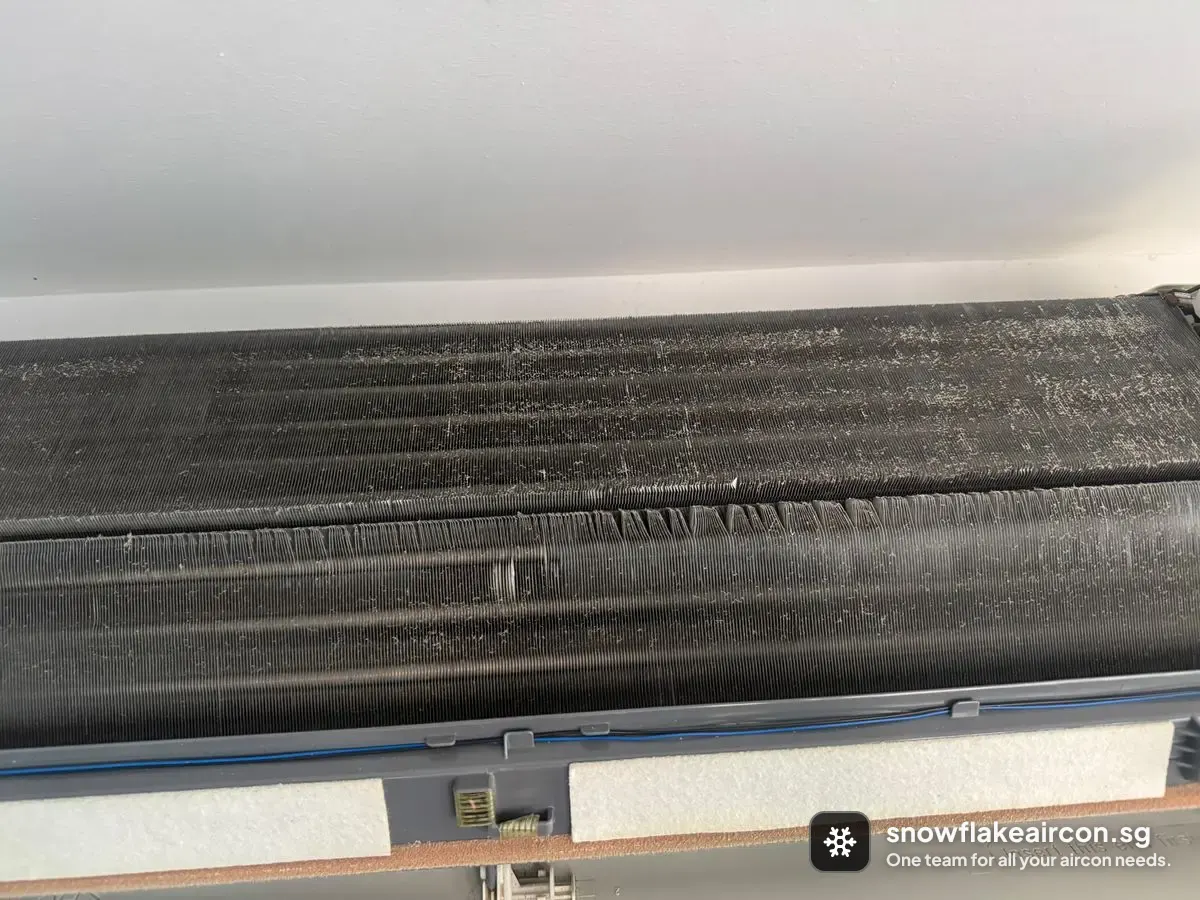
Lifting off the front plastic casing exposes a thick grey lint mat plastered across the upper two-thirds of the aluminium coil.
Fine dust packed deep between fin gaps keeps the copper header icy cold while starving downstream air flow.
Drain pan beneath the coil holds grey slurry washed off the fouled fin surface during humid afternoons.
Why It Happens
Bukit Merah neighbourhood shops with steady street-facing foot traffic pull high volumes of textile lint, paper dust, and humid corridor air through the intake daily. Fine fibres slip straight past rinsed plastic meshes. Damp evaporator fins trap that lint into a dense felt skin, blocking heat pickup while forcing nonstop compressor run. Routine filter washing alone never reaches that bonded layer.
What Resolution Involves
Wrapping the wall and shielding electrical boards with a wash canvas protects the retail counter below. Applying non-corrosive alkaline coil cleaner across the exposed fins lets foam lift embedded dust from deep between rows. Thorough clean-water rinsing and drain-tray flushing restore open airflow without touching refrigerant. Checking blower vanes during the same visit keeps airflow balanced.
How to Tell It Worked
Bright, clean aluminium fins become visible across the entire coil face with clear gaps between every row. Supply air temperature drops sharply below 12 degrees Celsius. The shop counter reaches target comfort smoothly without nonstop maximum ramping, cutting afternoon power draw immediately. Staff feel brisk, even chilled airflow reaching cleanly across the entire front entrance.
Before You Approve a Quote
Mesh filters never stop fine retail lint reaching fins
- Open-door Singapore shops pull constant corridor dust and cloth fibres past coarse plastic filter screens every trading day.
- Wet aluminium fins act like flypaper, turning microscopic lint into an insulating blanket that blocks heat pickup.
- A proper coil chemical wash restores full shop cooling without opening sealed copper lines or adding gas.