On this page
How This Presents
Hall cooling inside a Bukit Merah HDB home cuts out unpredictably after twenty to forty minutes, leaving the indoor indicator blinking. Flicking the wall isolator off and back on revives cold airflow briefly before the exact same dropout returns. Afternoon heat makes each shutdown arrive even sooner.
- Setup
- Mitsubishi Electric Wall-mounted7-9 yearsHDBBukit Merah
- Misread as
- Ordering a S$450 outdoor inverter PCB swap because a high-mounted ledge condenser keeps cutting out.
- Check first
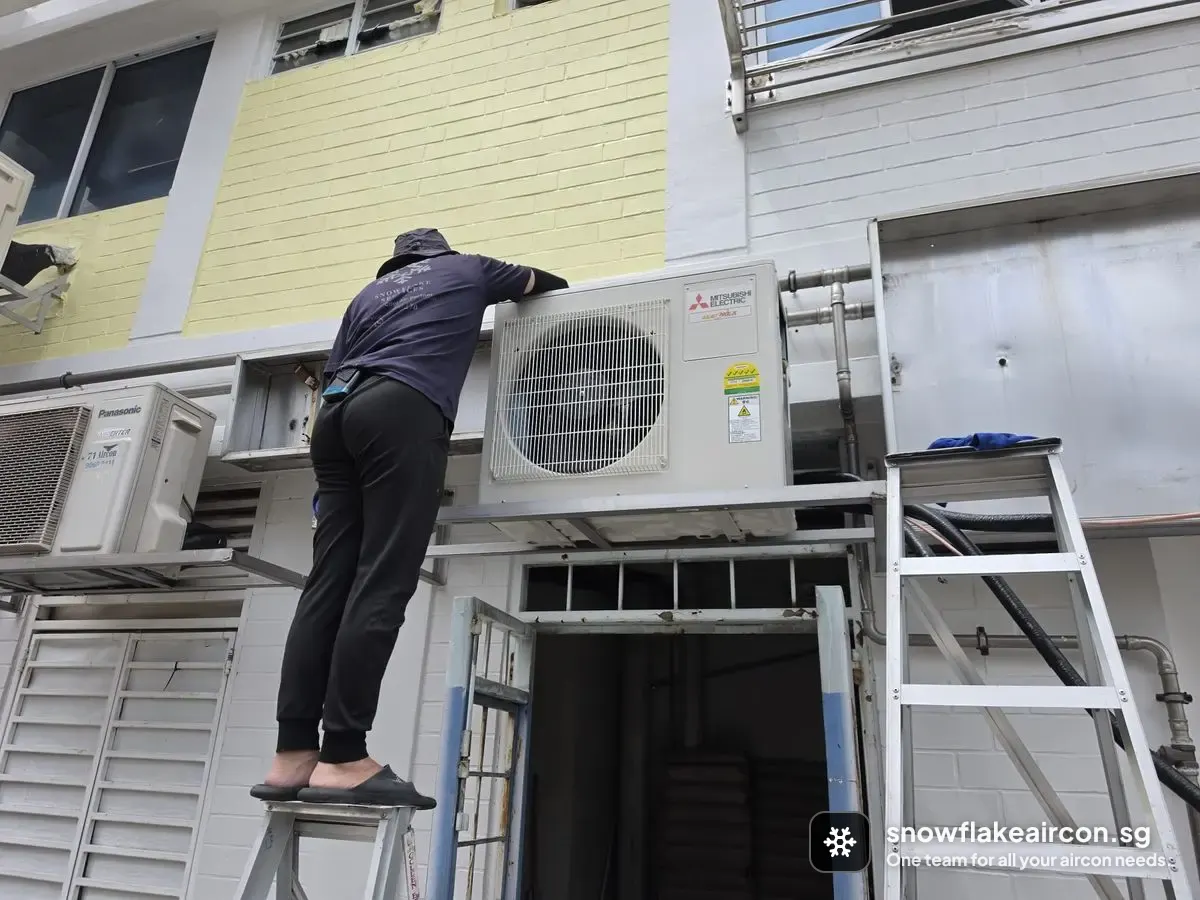
- Climbing safely to open the Bukit Merah outdoor side cover and measuring unstable communication pulses across the oxidised terminal screw versus clean upstream cable
- Actual finding
- Loose, rain-oxidised copper strand on the S3 communication wire inside the high-mounted outdoor terminal block breaking indoor-outdoor handshake under thermal load
- Scope saved
- Servicing or adjustment with no parts replaced
What Else Produces This
Intermittent blinking shutdowns on high-mounted HDB condensers frequently trigger immediate outdoor PCB quotes from ground level. Climbing up to inspect the terminal block directly checks the simplest failure point first.
Setting a steady ladder up to the Bukit Merah HDB ledge lets technicians unscrew the side access plate over the outdoor electrical terminals.
Opening the cover exposes dull green oxidation and dark heat tarnish gripping the S3 communication wire under a backed-out brass screw.
Tugging gently on the affected interconnect core shifts the stripped strands freely beneath the loosened clamp plate.
Metering communication pulses at the healthy Mitsubishi Electric outdoor board output confirms crisp factory signal once a clean jumper bridges the block.
Inspecting the indoor control terminal strip shows tight, bright terminations, confirming the weather damage stayed strictly outdoors.
Why It Happens
Driving rain and humid heat on an exposed Bukit Merah HDB ledge seeped past the outdoor cable gland over several years. Moisture oxidised the stripped copper communication tip while daily thermal expansion backed out the brass clamp screw. Rising contact resistance eventually broke the indoor-outdoor handshake under afternoon load.
What Resolution Involves
Retain the intact outdoor inverter PCB instead of ordering a S$450 board replacement. Isolate mains power, snip all three interconnect cores back to clean uncorroded copper, and crimp fresh insulated fork lugs. Wire-brush the brass terminal strip, tighten each screw firmly, and reseal the weatherproof cable clamp.
How to Tell It Worked
Close the wall isolator switch and test the Bukit Merah hall Starmex continuously at 23°C for forty-five minutes. Signal readings stay rock-steady across the outdoor terminal block with zero voltage drop. The condenser holds steady cooling output without trips while indoor status lights stay solid.
Before You Approve a Quote
Inspect outdoor terminal screws before replacing an inverter control board
- Monsoon spray and tropical heat oxidise exposed copper wire tips inside outdoor side covers until signal contact drops intermittently.
- Random shutdowns that reset briefly after switching off the isolator often trace to a loose communication screw rather than dead electronics.
- Trimming back corroded strands and seating fresh crimped lugs fixes the fault cleanly without buying expensive spare boards.