On this page
How This Presents
One bedroom unit inside this Ang Mo Kio estate flat fails to beep, swing its louvre, or show indicator lights despite fresh remote batteries. Neighbouring rooms running on the shared outdoor condenser still start and cool normally every evening.
- Setup
- Panasonic Wall-mounted7-9 yearsHDBAng Mo Kio
- Misread as
- Receiving a S$230 to S$360 indoor circuit board replacement quote simply because one bedroom unit refuses to beep or light up.
- Check first
- Removing the front electrical box cover to measure incoming AC supply across the terminal block before condemning the indoor circuit board
- Actual finding
- Backed-out incoming live feed conductor at the indoor terminal block inside the Panasonic electrical box cutting power upstream of a healthy indoor PCB
- Scope saved
- Targeted repair instead of full replacement
What Else Produces This
A totally silent indoor unit quickly invites assumptions of a fried mainboard. Testing incoming power straight at the electrical box separates simple wiring loss from true board damage.
Pressing the manual emergency switch under the Ang Mo Kio Panasonic cover produces zero chime. That immediately rules out a dead remote or blocked receiver.
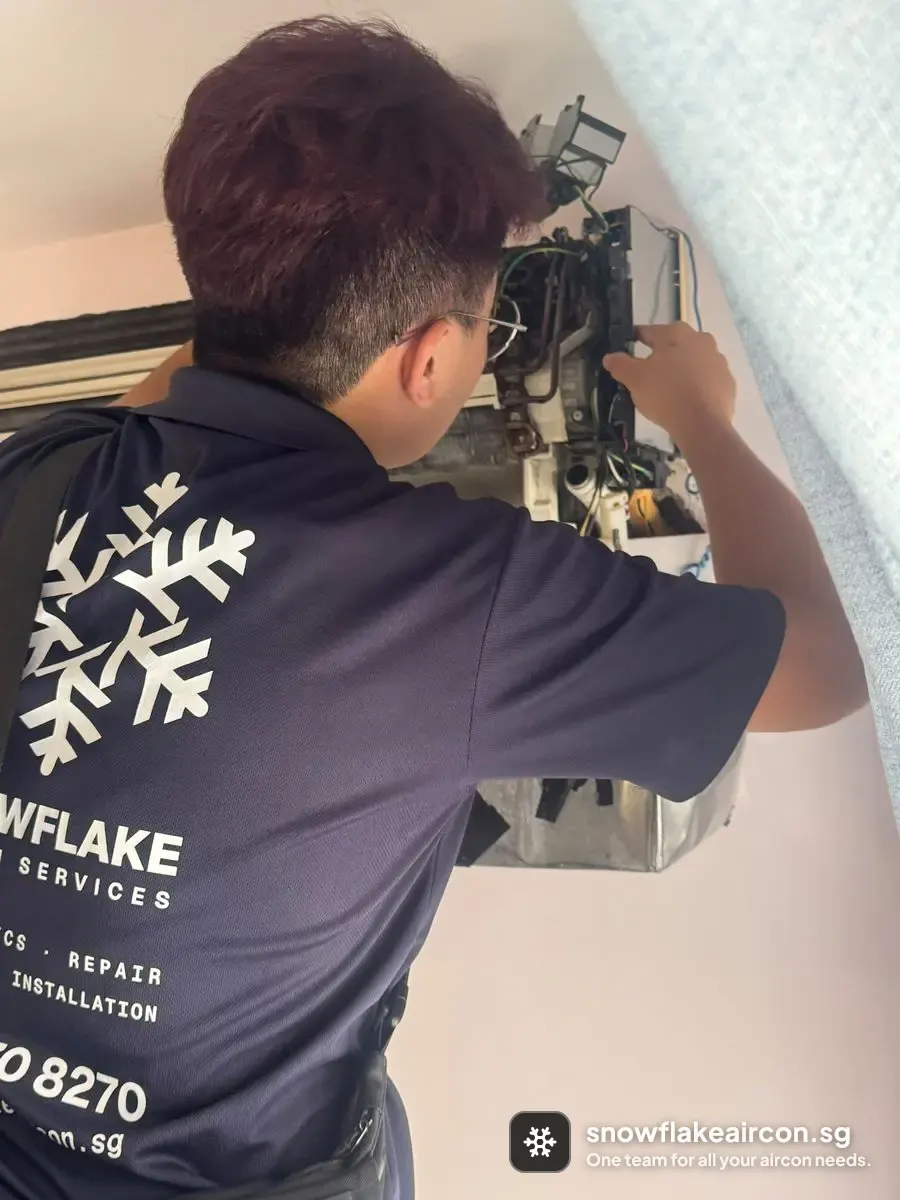
Unscrewing the right-side electrical cover exposes the three-way interconnect terminal block and main indoor board assembly clearly.
Probing the incoming feed side shows live AC supply on the cable insulation end, yet zero continuity into the board input lead.
Gently tugging the live conductor pulls a tarnished, loosely clamped copper tip right out from under its brass screw. The Panasonic PCB components look spotless.
Inspecting the onboard glass fuse and power relay confirms intact solder joints with zero burn marks or moisture residue.
Why It Happens
Years of warm-cool load cycles and gentle blower shake inside the Ang Mo Kio HDB bedroom relaxed the brass clamp screw on the incoming live feed wire. Oxidised copper strands lost firm grip at the terminal block, starving a healthy Panasonic indoor board.
What Resolution Involves
Preserve the working Panasonic PCB instead of spending S$230 to S$360 on an unnecessary board swap. Switch off the wall breaker before opening wiring terminals. Snip back the oxidised copper tip, strip bright fresh strands, crimp a snug spade ferrule, and seat every clamp screw tightly.
How to Tell It Worked
Secure the side electrical lid, switch mains back on, and test this Ang Mo Kio Panasonic across several start-stop cycles. The power chime sounds crisply on every single remote command. Both the indoor relay and steady cool bedroom airflow hold strong without intermittent drop-outs or flicker.
Before You Approve a Quote
Inspect indoor feed terminals before replacing a lifeless control board
- Zero power lights and zero remote beeps often mean electricity stopped at a loose screw terminal before reaching the circuit board.
- Opening the side electrical cover and checking each clamped wire takes minutes and exposes tarnished or backed-out copper ends.
- Trimming and re-seating one loose feed wire saves Singapore HDB households from paying hundreds for an unneeded board swap.