On this page
How This Presents
An older bedroom split in a Pasir Ris HDB flat cools strongly after startup, then switches off completely with no beep or error blink. Flipping the wall switch off and back on restores power for another unpredictable stretch.
- Setup
- Toshiba Wall-mounted10-12 yearsHDBPasir Ris
- Misread as
- Assuming a ten-year bedroom split that powers off at random has obsolete parts and demands a S$1,200-plus replacement unit.
- Check first
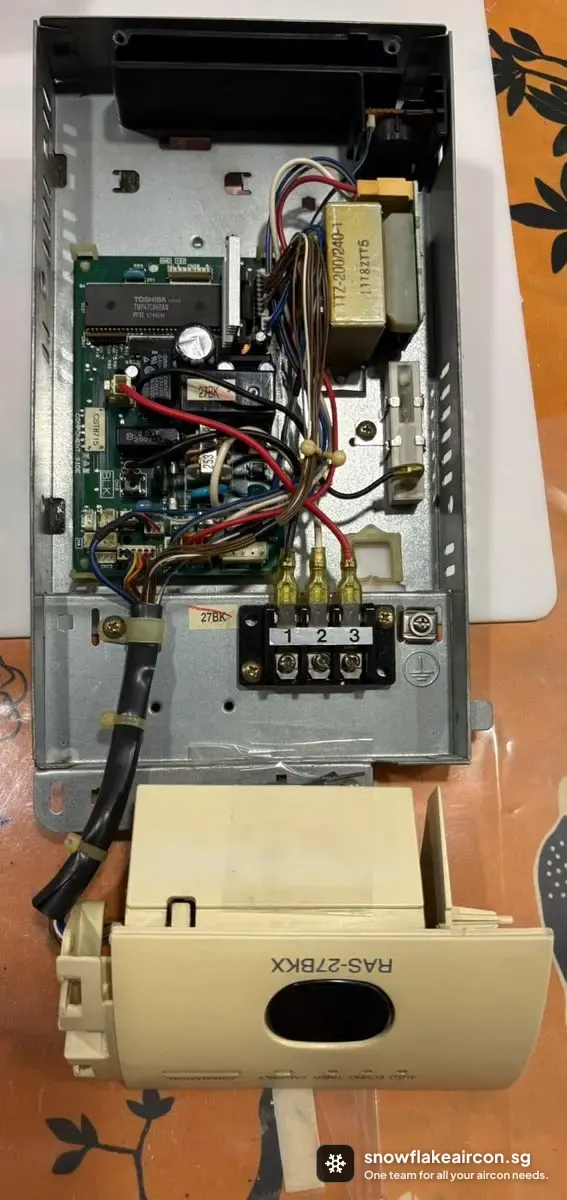
- Detaching the full indoor electrical box from the chassis to inspect fuse-clip spring tension and power plug pins under bright light instead of condemning the aged split
- Actual finding
- Relaxed mains fuse holder clip and scorched power input connector inside the Toshiba indoor electrical box breaking contact as the chassis warmed up
- Scope saved
- Targeted repair instead of full replacement
What Else Produces This
Age alone often pushes random shutdowns straight toward full replacement quotes. Pulling the indoor electrical box clear lets technicians inspect every mains joint directly.
Testing the Pasir Ris Toshiba during an initial run confirms cold coil temperatures and steady indoor blower speed before power cuts out.
Removing the entire electrical box from the right chassis side exposes the mains entry plug and onboard fuse clips in clear view.
Checking the glass fuse holder reveals one fatigued metal tang gripping the end cap loosely with faint arcing marks.
Pulling the adjacent two-pin power connector uncovers browned plastic housing and tarnished wire strands that grew hot under load while the Toshiba PCB tracks stayed clean.
Why It Happens
A decade of coastal Pasir Ris humidity and nightly load cycles relaxed the spring tension on the indoor fuse clip and oxidised the adjacent mains connector. Rising contact resistance heated the joint until thermal expansion momentarily broke power to the Toshiba board.
What Resolution Involves
Avoid replacing a cold-blowing unit over degraded wire hardware. Cut back the heat-darkened copper ends, crimp fresh insulated connectors, install a tight replacement fuse holder assembly inside the electrical box, and verify solid mechanical grip.
How to Tell It Worked
Refit the electrical box neatly into the Pasir Ris chassis and test the Toshiba across sustained high-cool operation while gently flexing the harness. Power holds steady without flicker, connector housing stays cool, and bedroom airflow runs uninterrupted.
Before You Approve a Quote
Inspect fuse clips and power plugs before retiring an older bedroom split
- Heat-loosened metal clips drop power once a unit warms up, then reconnect after cooling to mimic mysterious board failure.
- Removing the whole indoor electrical box reveals darkened plastic plugs and loose fuse holders hidden behind the front trim.
- Renewing a tired fuse clip and burnt wire plug keeps a still-cold Singapore HDB Toshiba running reliably without full replacement.