On this page
How This Presents
Midway through warm Hougang evenings, the bedroom blower keeps pushing room air while its orange timer lamp flashes nonstop. Switching off the wall isolator clears the blink for two minutes before the same flashing returns. Outdoors on the ledge, the condenser never receives a start command.
- Setup
- Panasonic Wall-mounted7-9 yearsHDBHougang
- Misread as
- Anticipating an expensive S$220 to S$350 indoor board replacement quote whenever the bedroom Panasonic starts flashing its orange timer lamp.
- Check first
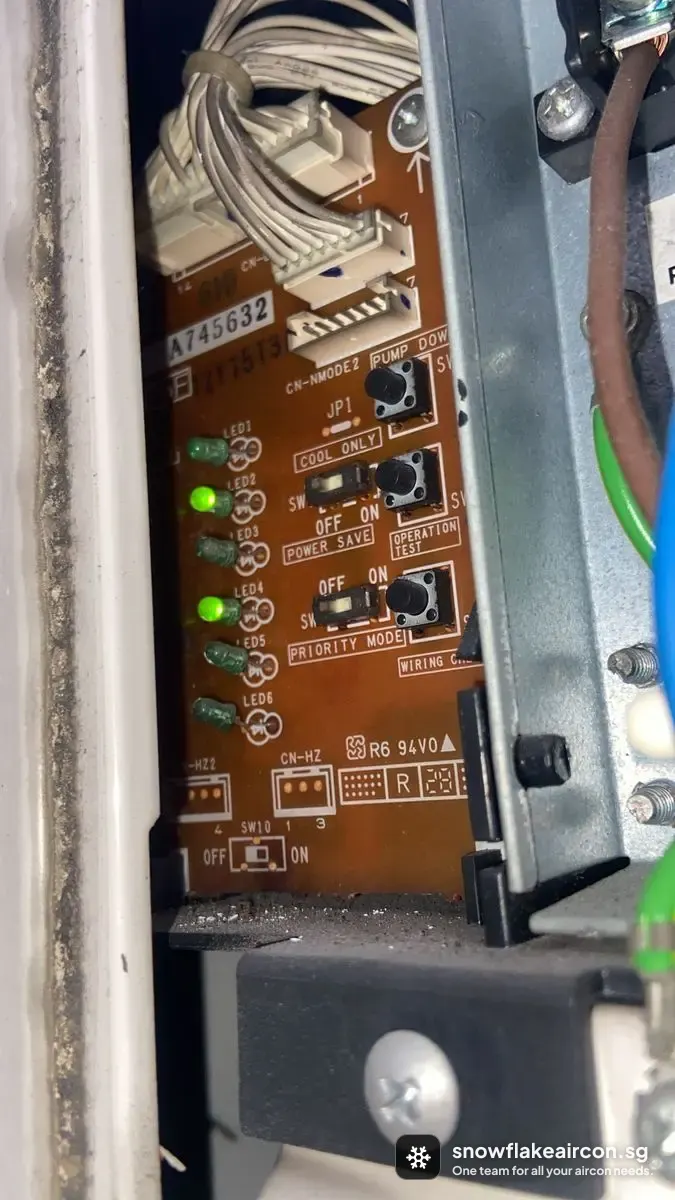
- Inspecting live green status LEDs on the opened indoor board and checking terminal block tightness before quoting an indoor PCB swap
- Actual finding
- Loose communication wire screw on terminal 3 of the Panasonic indoor terminal block dropping the outdoor data pulse while the indoor PCB remains powered and healthy
- Scope saved
- Servicing or adjustment with no parts replaced
What Else Produces This
Blinking timer lamps often trigger instant indoor PCB replacement quotes across older estates. Checking live board status lights and every wire terminal first separates loose cabling from failed electronics.
Reading the stored code on the Hougang Panasonic remote returns H11, indicating an indoor-outdoor communication dropout.
Opening the right-hand electrical panel exposes bright green status LEDs glowing steadily on the indoor board, proving healthy power rails.
Probing the interconnect signal wire at terminal 3 shows erratic data pulses whenever the wiring bundle moves slightly.
Checking the terminal strip uncovers a slack clamping screw barely holding an oxidized communication conductor.
Verifying matching terminals outside on the Hougang ledge confirms clean, tight connections at the outdoor board.
Why It Happens
Nightly blower vibration across nearly eight years in the Hougang bedroom gradually backed out the Panasonic terminal 3 clamping screw. Humid evening air darkened the loose copper strands until indoor-outdoor data pulses broke apart, triggering the flashing timer safety lockout. Throughout that entire fault, the indoor control board itself stayed electrically healthy and powered.
What Resolution Involves
Retain the working Panasonic indoor PCB in service and skip costly board replacement quotes. Switch off mains power cleanly, strip fresh bright copper on the signal wire, crimp a tight ferrule, torque terminal 3 down firmly, and verify snug screws on terminals 1 and 2.
How to Tell It Worked
Switch the Hougang isolator back on and run the bedroom Panasonic at 23 degrees cool mode. Confirm the orange timer lamp stays dark, the outdoor condenser ramps up smoothly within a minute, and cold air holds steady all evening with clean data pulses. Toggle power once to verify clean restart.
Before You Approve a Quote
Check live board lights and signal screws before replacing a PCB
- A blinking Panasonic timer light flags a lost link between indoor and outdoor units, not automatic indoor circuit board death.
- Steady green status lights inside the control box show the board brain is still awake and waiting for a clean signal.
- Trimming and tightening one loose wall-unit terminal wire restores reliable cooling in Singapore HDB rooms with zero new parts.