On this page
How This Presents
Inside a Hougang HDB master bedroom, the indoor fan coil ignores fresh remote batteries and clicks its relay sharply once powered. Two adjacent rooms on that outdoor condenser keep chilling normally.
- Setup
- Panasonic Wall-mounted7-9 yearsHDBHougang
- Misread as
- Ripping out an entire eight-year-old Panasonic System 3 across a Hougang flat when only the master-bedroom wall unit went unresponsive.
- Check first
- Testing the handset infrared emitter, confirming clean 230V indoor power, and decoding the chassis model code to bench-match an exact replacement PCB
- Actual finding
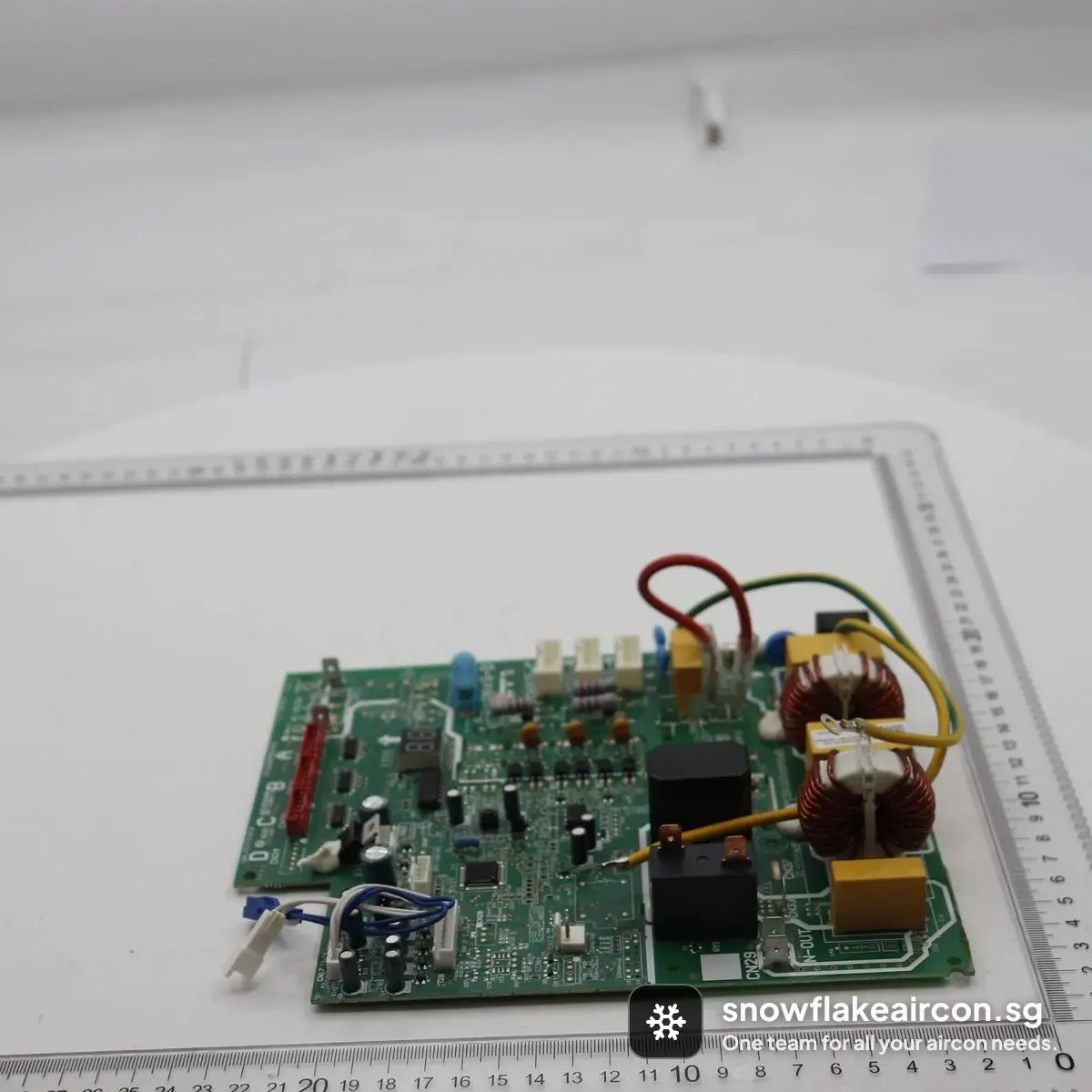
- Failed low-voltage logic regulator and chattering power relay on the Panasonic indoor control board while the outdoor condenser and sister rooms stay healthy
- Scope saved
- Targeted repair instead of full replacement
What Else Produces This
One dead room unit calls for checking the handset and receiver first, then testing power supply before blaming the circuit board.
Testing the handset through a phone lens confirms a bright remote beam on every button press.
Pressing the manual button under the lid fails to start the fan and makes the relay click hard.
Checking the indoor wire block confirms steady 230V mains arriving from outdoors, ruling out a loose feed line.
Lifting the indoor PCB out of its tray shows burnt solder spots by the relay coil and dead 5-volt logic power.
Reading the full model number off the side sticker confirms the right board match before bench-testing a new part.
Why It Happens
Years of humid bedroom nights wore down the small power stage and relay switch on the master-bedroom board. With low-volt power dropping out under load, the board could not read remote commands or hold its relay shut.
What Resolution Involves
Leave the healthy outdoor unit, copper lines, and sister rooms completely untouched. Turn off mains power, check plug shapes and part codes on the bench-matched replacement indoor PCB, move every sensor and motor plug over cleanly, and clip the new board into place.
How to Tell It Worked
Switch mains power back on and test power, mode changes, louver swing, and setpoints from across the Hougang bedroom. Confirm crisp remote beeps, smooth relay clicks, and cold airflow alongside both sister rooms.
Before You Approve a Quote
Match the exact Panasonic model code before swapping an indoor PCB
- One dead bedroom unit alongside cool sister rooms isolates the fault to that single indoor board.
- Panasonic units share similar front shells across years while using different plugs and board versions.
- Bench-matching the new board to the side model sticker protects the healthy outdoor set and trunking.