On this page
How This Presents
Master-bedroom cooling in a Tampines HDB flat drops out at random while the indoor wall fan keeps blowing room-temperature air. Outside on the ledge, the condenser sits quiet with zero hum. Switching the bedroom unit off and back on sometimes brings cold air back for an evening.
- Setup
- Mitsubishi Electric Wall-mounted7-9 yearsHDBTampines
- Misread as
- Facing an expensive outdoor condenser replacement when the master-bedroom Starmex stopped sending steady power outside.
- Check first
- Opening the indoor electrical control box and probing live relay output voltage and terminal tightness under cooling demand
What Else Produces This
An outdoor unit that runs strongly one night and stays silent the next rarely has a seized compressor. Opening the indoor electrical box checks whether power actually leaves the wall unit.
Setting the bedroom remote to cool triggers a faint indoor relay click, yet meter probes across the outdoor feed show erratic voltage.
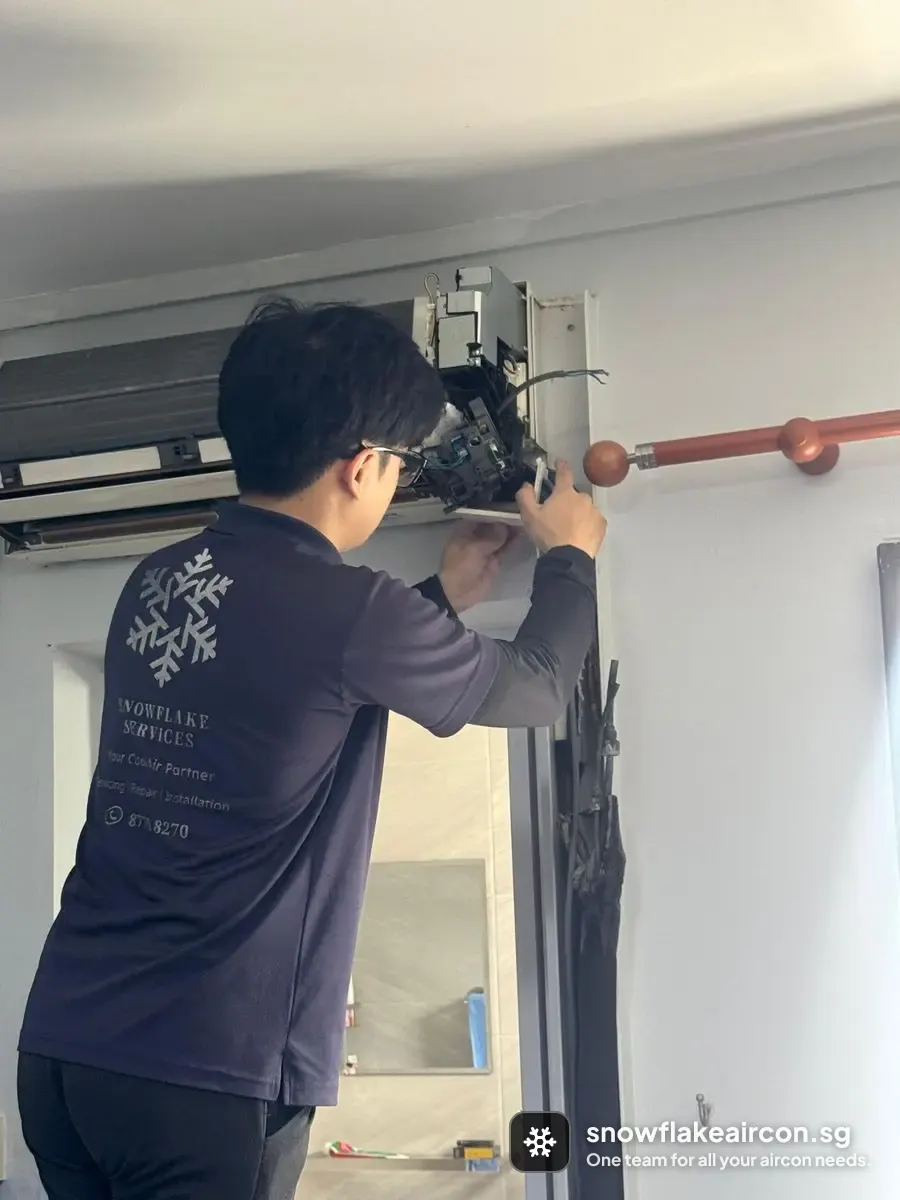
Removing the metal control box lid reveals heat discolouration along the neutral spade terminal next to the output relay.
Gently tugging the neutral wire shows a loose crimp sliding inside its sleeve with dull darkened copper strands.
Bench checks confirm the indoor output relay contact has pitted from arcing while outdoor compressor windings remain balanced.
Why It Happens
Years of nightly cooling cycles in a humid Tampines bedroom slowly relax brass spade crimps inside the side electrical box. A loose neutral joint builds resistance heat every time the condenser draws load. That extra heat and voltage chatter pit the indoor relay contact until the outdoor feed drops intermittently.
What Resolution Involves
Leave the healthy outdoor compressor untouched and isolate mains power at the bedroom switch. Cut back the darkened neutral wire end, crimp a fresh snug copper lug, and replace the pitted relay assembly cleanly. Torque every terminal screw firmly and inspect neighbouring wire sleeves for heat marks.
How to Tell It Worked
Restore mains power and cycle cooling demand off and on several times from the Starmex remote. Meter probes show crisp full supply voltage reaching the outdoor ledge on every start, the neutral joint stays cool, and the Tampines bedroom cools evenly with zero dropout.
Before You Approve a Quote
Check indoor relay output before condemning an outdoor compressor
- An outdoor unit that starts cleanly on some nights and stays silent on others points to a weak power switch rather than a seized compressor.
- Loose wire crimps build heat inside cramped Singapore HDB indoor boxes, slowly pitting relay contacts over seven to nine years.
- Re-crimping the neutral terminal and replacing the worn relay restores reliable outdoor power without touching the condenser.