On this page
How This Presents
Master bedroom cooling stops abruptly past midnight with a blank status light and zero beep from the remote control. Sibling bedrooms on the same outdoor condenser keep cooling smoothly all night. The condo circuit breaker remains upright, and fresh remote batteries bring no life back.
- Setup
- LG Wall-mounted4-6 yearsCondoPasir Ris
- Misread as
- Worrying that random dead-display blackouts mean a burnt indoor unit requiring full FCU replacement and wall trunking work.
- Check first
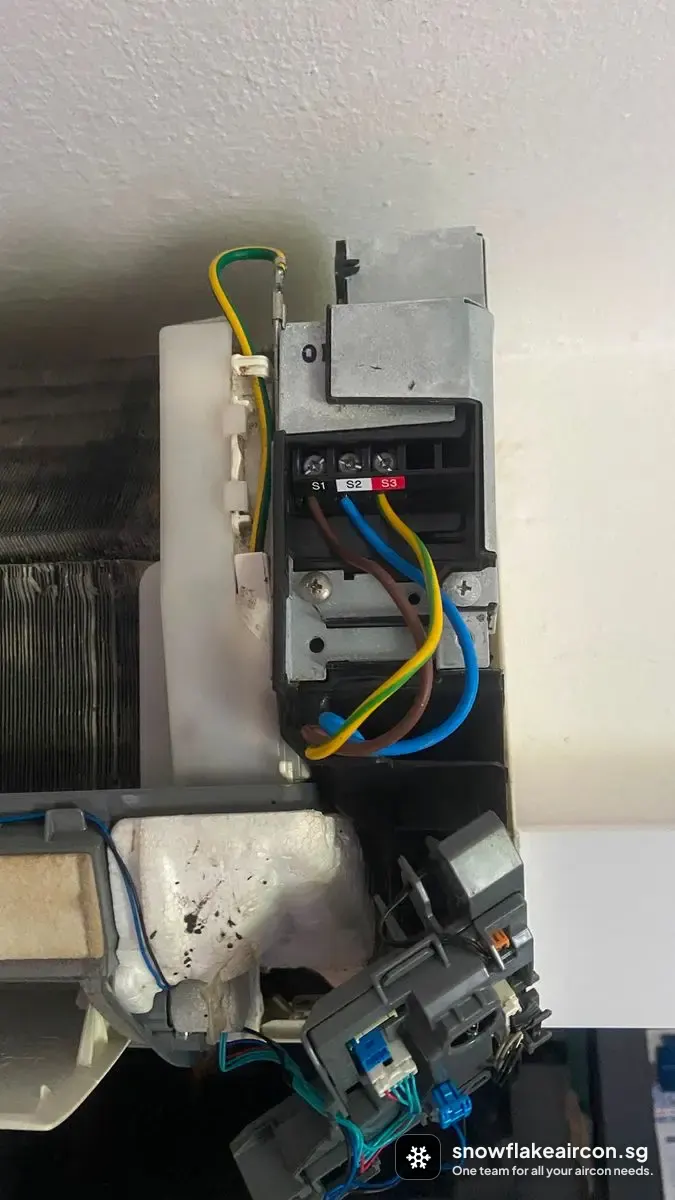
- Opening the indoor electrical enclosure to inspect terminal screws and board harness plugs under load
What Else Produces This
A silent indoor unit with intact upstream power splits into two distinct possibilities: a failed indoor control board or an interrupted connection feeding it. Lifting the front shroud and exposing the indoor electrical box distinguishes them immediately without guessing.
Mains voltage arrives steadily at the outdoor distribution terminal for that bedroom circuit.
Pulling the metal cover off the indoor electrical box reveals browned plastic around the neutral terminal screw and a half-seated harness plug.
Copper wire strands at the neutral clamp show dark heat oxidation and pull free with minimal tug.
Main indoor PCB components show no blown fuses, burst capacitors, or burnt traces once fed clean test power.
Why It Happens
Slight vibration and nightly load cycling backed off an under-tightened terminal clamp installed years earlier. Coastal Pasir Ris air accelerated fine oxidation along the loose copper strands, raising electrical resistance at the neutral pin. Heat baked the nylon block until thermal expansion broke contact intermittently during prolonged overnight runs. Morning cooling shrank the metal back enough for brief restarts.
What Resolution Involves
With the condo isolator locked off, the browned terminal strip is swapped for a fresh rated block. Oxidised cable insulation is trimmed back cleanly to bright copper strands and fitted with insulated spade crimps. Every screw is tightened firmly, and the loosened board harness plug clicks securely into its header. The intact indoor PCB stays right in place.
How to Tell It Worked
Restoring power brings an instant start chime and responsive remote control across all modes. After thirty minutes under cooling load, checking the terminal block with an infrared thermometer confirms cool, steady contact temperatures. Zero warmth, buzz, or flicker returns during extended overnight operation. Sibling bedrooms stay online reliably without interruption.
Before You Approve a Quote
Check indoor box terminals before condemning the whole unit
- A blank display with an upright breaker and running sibling rooms points straight to local power delivery at that indoor casing.
- Micro-arcing on a slightly loose screw oxidises brass lugs quickly in coastal Pasir Ris humidity.
- Replacing a terminal block and harness lug costs a fraction of swapping an entire indoor FCU.