On this page
How This Presents
One bedroom indoor unit on a shared System 3 condenser blinks and shuts down mid-evening while adjacent rooms keep running. Power resets clear the stall briefly across the Bedok HDB flat. Within an hour the same bedroom trips out again.
- Setup
- Daikin Multi-split7-9 yearsHDBBedok
- Misread as
- Paying for a pricey outdoor inverter control board when intermittent shutdowns hit one bedroom zone.
- Check first
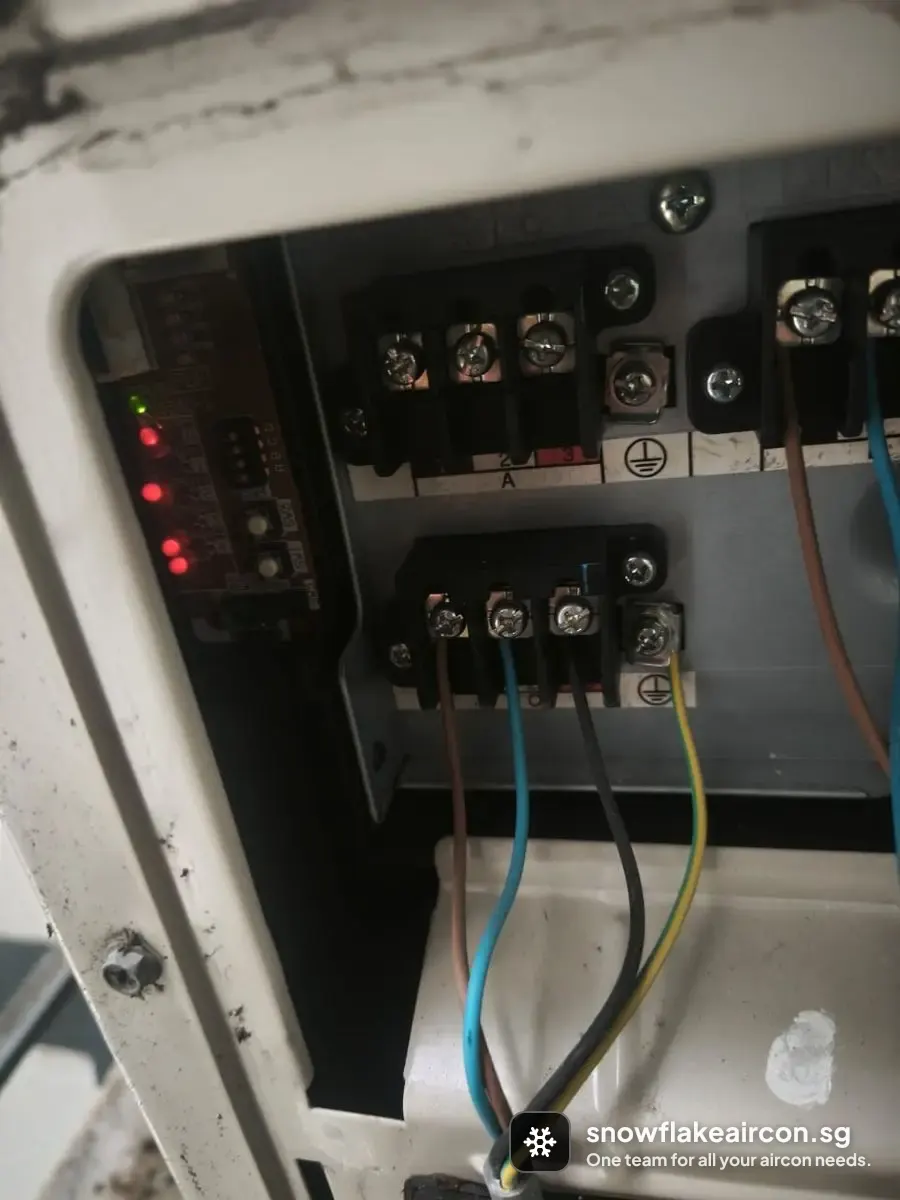
- Inspecting terminal block screw tightness and stripped copper ends beside the lit diagnostic LEDs
What Else Produces This
One zone locking out while sibling bedrooms cool normally points to that branch's communication link, not a dead shared inverter board. Opening the outdoor service cover exposes both the diagnostic LED strip and numbered terminal blocks side by side.
The vertical outdoor PCB shows its green power LED alive alongside four red fault LEDs, proving the board boots normally.
Terminal blocks B and C hold clean, tight conductors matching the two bedrooms that still cool steadily.
On terminal block A, the signal lug turns easily under a driver and reveals darkened, oxidised copper strands.
Measuring continuity along the room cable confirms intact insulation through the trunking, isolating the fault to the terminal end.
Why It Happens
Exposed Bedok HDB ledges subject outdoor wiring bays to humid east-coast air and steady compressor vibration every night. Years of thermal cycling gradually relax lightly clamped brass screws inside the terminal strip. Moisture creeps onto the slack communication wire, oxidising copper strands until handshake signals drop intermittently and trigger outdoor diagnostic red LEDs.
What Resolution Involves
Isolate the main electrical switch and verify zero live supply before touching conductors on terminal block A. Trim back twenty millimetres of darkened wire to bright fresh copper and crimp clean insulated fork lugs. Wipe the brass terminal contact face clean and tighten every screw securely. Inspect neighbouring blocks B and C as a precaution while keeping the healthy outdoor inverter PCB in service.
How to Tell It Worked
Restore power and run all three Bedok HDB bedrooms simultaneously for twenty minutes under full cooling demand. Watch the outdoor diagnostic LED bank closely during compressor ramp-up and modulation. Verify indoor wall units hold steady set points without blinking indicator lamps. Steady green status without returning red fault patterns confirms stable branch communication.
Before You Approve a Quote
Red diagnostic LEDs point to a fault path, never automatically to a dead board
- A live green indicator alongside red fault LEDs confirms the outdoor board still powers up and runs self-diagnostics.
- Humid HDB aircon ledges oxidise exposed copper wire strands under terminal screws over seven to nine years.
- Trimming back dull copper and re-tightening terminal lugs restores clean signals at a fraction of board replacement cost.