On this page
How This Presents
Master-bedroom cooling cuts off without warning in a Queenstown HDB flat after running well, leaving the flap shut and the green lamp blinking. Flipping the wall switch off and back on brings cold air back briefly before another stop hits nights later.
- Setup
- Mitsubishi Electric Wall-mounted7-9 yearsHDBQueenstown
- Misread as
- Facing a pricey indoor board swap when sudden nighttime stoppages disturb sleep in an older Queenstown flat.
- Check first
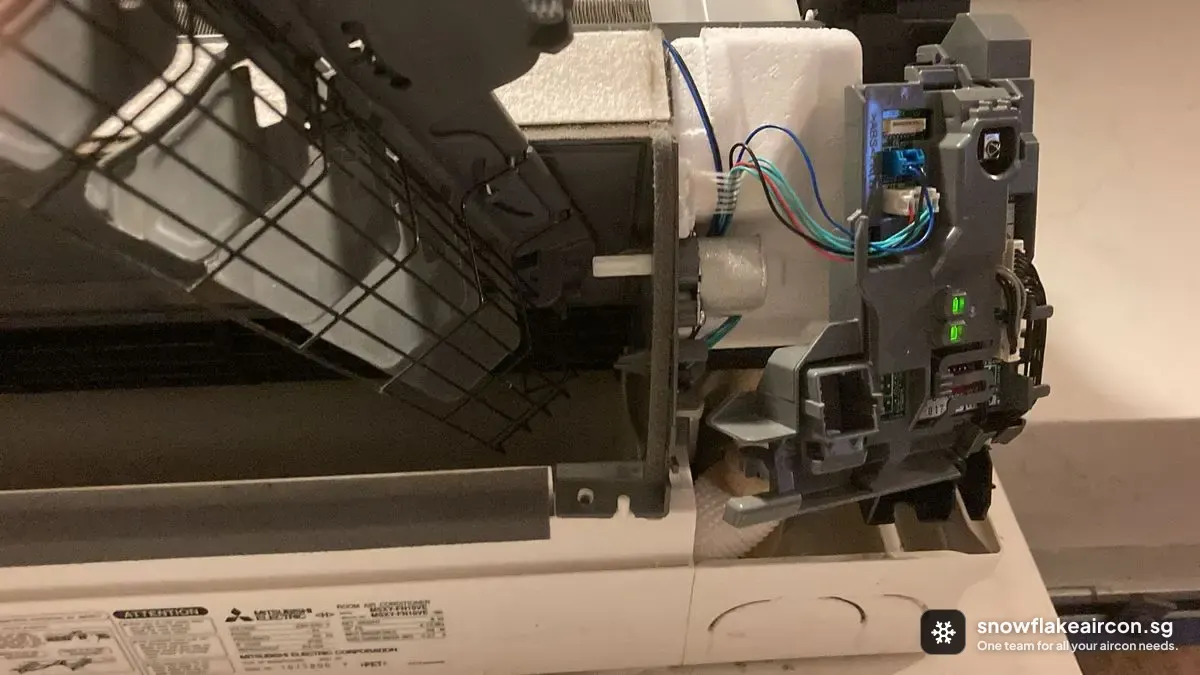
- Opening the indoor electrical bay and checking sensor harness continuity and pin oxidation before ordering a main PCB
What Else Produces This
Sudden stops that clear after a quick power reset point to a shaky wire link rather than a burnt board. Opening the indoor wire bay separates dull plug pins from true PCB failure.
Lifting the front shell and metal box lid shows clean board paths with zero burn marks or swollen parts.
Touching the white sensor plug shows one corner sitting loose above its plastic latch.
Pulling the plug reveals dull green tarnish on the thin metal pins where damp bedroom air sat.
Testing both probes on a meter gives clean readings once checked straight on bright wire tips.
Why It Happens
Damp air in a cool Singapore bedroom slowly dulls tiny sensor pins tucked beside the cold coil. When past cover pulls nudge the plastic plug slightly loose, mild fan shake breaks the link mid-run. The board then locks out for safety and mimics a dead PCB.
What Resolution Involves
Skip buying a new indoor control board and switch off power at the wall first. Spray dull pins with contact cleaner, gently tighten the tiny socket clips, and seat the sensor plug until it clicks home. Tuck stray wires clear of damp coil edges.
How to Tell It Worked
Turn power back on and test the Queenstown bedroom unit across fan speeds while lightly tapping the side wire box. Board signals hold rock steady with zero blink faults, and crisp chilled air runs smoothly for thirty full minutes with no cut-out.
Before You Approve a Quote
Test sensor plugs before condemning the indoor board
- Random stoppages that clear after a wall switch reset point to loose low-power plugs rather than a burnt main board.
- Damp Singapore air slowly tarnishes open wire pins inside the side board box, most often after rough cover pulls.
- Cleaning dull header pins and locking the sensor plug firmly brings back steady sleep with zero spare parts.