On this page
How This Presents
A master-bedroom split in a Queenstown condo starts beeping on its own late at night and turns itself on with no remote pressed. Even after taking out the remote batteries, the random chimes return on humid nights.
- Setup
- Panasonic Wall-mounted7-9 yearsCondoQueenstown
- Misread as
- Facing sudden circuit-board burnout or electrical tripping whenever a master-bedroom unit chimes on its own in the middle of the night.
- Check first
- Opening the indoor control box cover to inspect board tracks and adjacent pipe insulation before the moisture caused permanent PCB burnout
- Actual finding
- Condensation droplets from a sweating cold refrigerant stub beside the indoor electrical box tracking onto the control board and triggering phantom switch-on commands
- Scope saved
- Targeted repair instead of full replacement
What Else Produces This
Ghost beeping with the remote batteries removed points inside the indoor receiver or control box. Opening the cover quickly checks for water before electrical burnout hits.
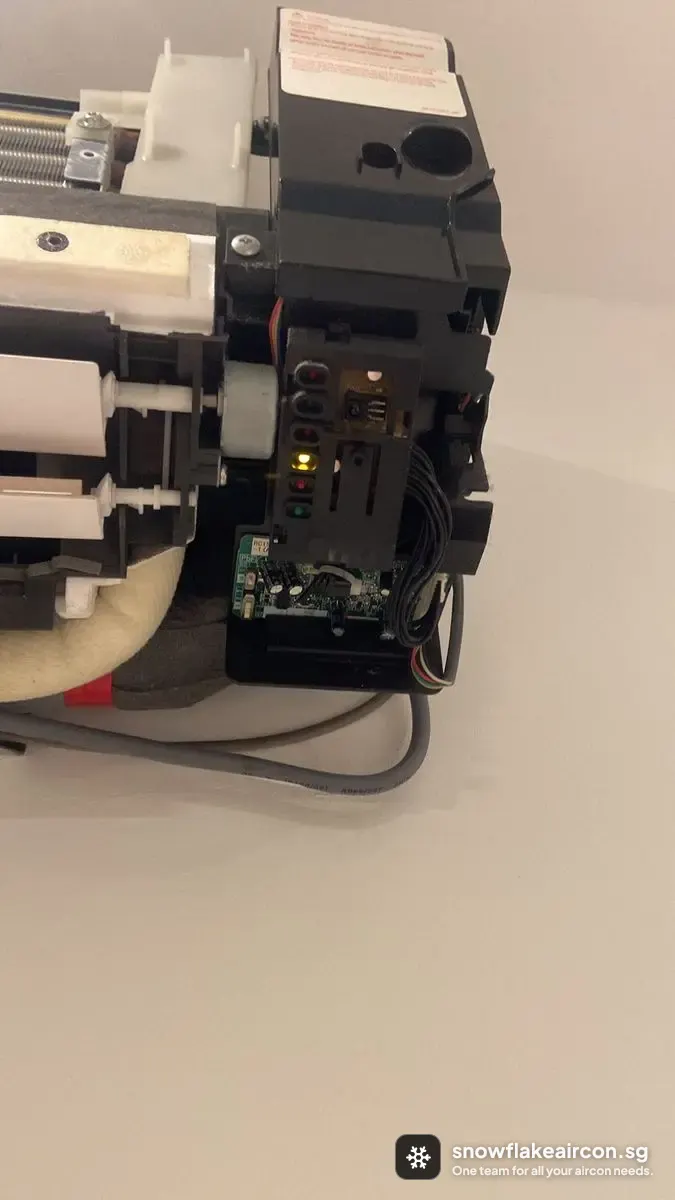
Cutting wall power and lifting the front casing in the Queenstown condo exposes the Panasonic control box on the right.
Opening the electrical cover reveals fine water beads along the lower edge of the green board and receiver plug.
Tracing the wet path up exposes a split foam seam on the cold pipe stub right beside the box, sweating in condo humidity.
Checking the board shows clean copper tracks with zero burn marks, proving the PCB was caught before burnout.
Why It Happens
Aged foam insulation around the cold pipe joint beside the Queenstown condo unit had shrunk open, leaving cold metal exposed to humid bedroom air. Sweat drops tracked down the sensor wires straight into the Panasonic control box and bridged receiver contacts.
What Resolution Involves
Avoid a S$180 to S$320 indoor PCB swap by acting before short damage set in. Dry and clean the control board and plug pins thoroughly, wrap the cold pipe stub tight with fresh closed-cell foam taped vapour-tight, and loop entering wires downward.
How to Tell It Worked
Shut the control box, restore mains power, and test the Queenstown master-bedroom Panasonic across long cool and standby cycles. The housing stays dry, pipe foam shows zero sweat, and the unit answers only real remote presses with no ghost beeps.
Before You Approve a Quote
Switch off a randomly beeping aircon before moisture burns the board
- Ghost beeps and sudden starts often mean stray water drops are bridging small paths inside the indoor control box.
- Split pipe foam beside the electrical box sweats fast in humid Singapore condos and runs straight onto electronics.
- Cutting wall power early lets a technician dry the board and seal the foam before a full board swap is needed.