On this page
How This Presents
One bedroom wall unit in a Sengkang HDB flat emits random double beeps after midnight, closes its louvre, and flashes the orange timer LED. Other rooms on the same System 3 keep chilling smoothly all night. Flipping the isolator switch restarts the room briefly before the next cut-out.
- Setup
- Panasonic Wall-mounted4-6 yearsHDBSengkang
- Misread as
- Replacing an entire five-year-old System 3 setup when one bedroom fan coil started beeping and shutting down overnight.
- Check first
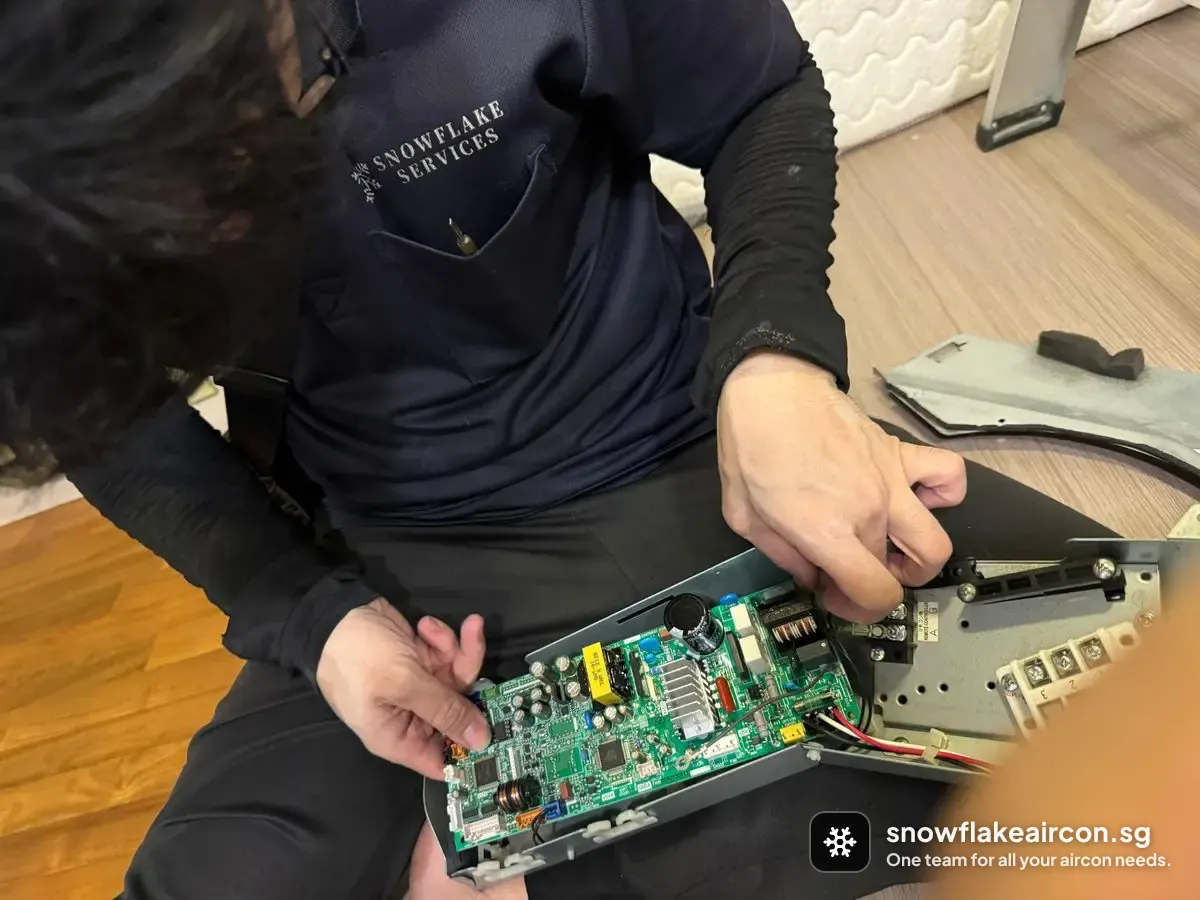
- Removing the indoor control board for close underside trace inspection after verifying healthy sensors and steady mains power
What Else Produces This
Isolated timer-LED lockouts on a single fan coil while sibling rooms run cleanly narrow the fault inside that bedroom unit. Pulling the indoor board out for close underside inspection separates a loose sensor from board damage.
Incoming wall supply voltage and communication wiring from the outdoor ledge test clean and steady.
Both coil and room temperature sensors read normal resistance with crisp clean plug pins.
Lifting the indoor PCB onto the lap exposes carbon tracking and tiny lizard remains bridging two low-voltage solder paths on the rear.
Outdoor condenser, shared gas charge, and sibling indoor units run within normal operating range.
Why It Happens
Small house lizards common across Singapore HDB estates crawl along rear trunking into warm standby electronics. Bridging low-voltage copper traces on the indoor PCB leaves conductive char across the board lacquer. Even slight overnight moisture lets current creep across that scorched path, causing random beeps and safety lockouts.
What Resolution Involves
Leave the healthy System 3 condenser and sibling indoor units untouched. Isolate mains power, disconnect harnesses cleanly, and fit a matching replacement Panasonic indoor PCB into the dry housing. Clean residue from the plastic tray and pack sealing putty into the rear pipe-entry gap to block future pests.
How to Tell It Worked
Power the Sengkang System 3 back on and test every mode, fan speed, and louvre swing on the repaired bedroom unit. Remote beeps respond cleanly with zero stray chimes, the timer LED stays dark, and the room holds steady chill through an extended cooling run.
Before You Approve a Quote
One failing indoor PCB does not condemn a healthy System 3
- Healthy cooling in neighbouring bedrooms shows the shared outdoor condenser and gas charge are still working properly.
- Warm electrical bays inside Singapore HDB wall units attract house geckos that can bridge fine indoor board circuits.
- Swapping the single damaged indoor PCB and sealing pipe-hole entry gaps saves the rest of the Panasonic multi-split.