On this page
How This Presents
A bedroom split inside a Jurong East HDB home keeps humming and blowing cold after switching off by remote, leaving the coil frosted solid by morning. Only flicking the wall isolator switch stops operation, pointing toward full indoor unit replacement.
- Setup
- Midea Wall-mounted4-6 yearsHDBJurong East
- Misread as
- Cutting the wall isolator every morning to stop a runaway bedroom split and worrying the entire indoor fan coil needed replacement.
- Check first
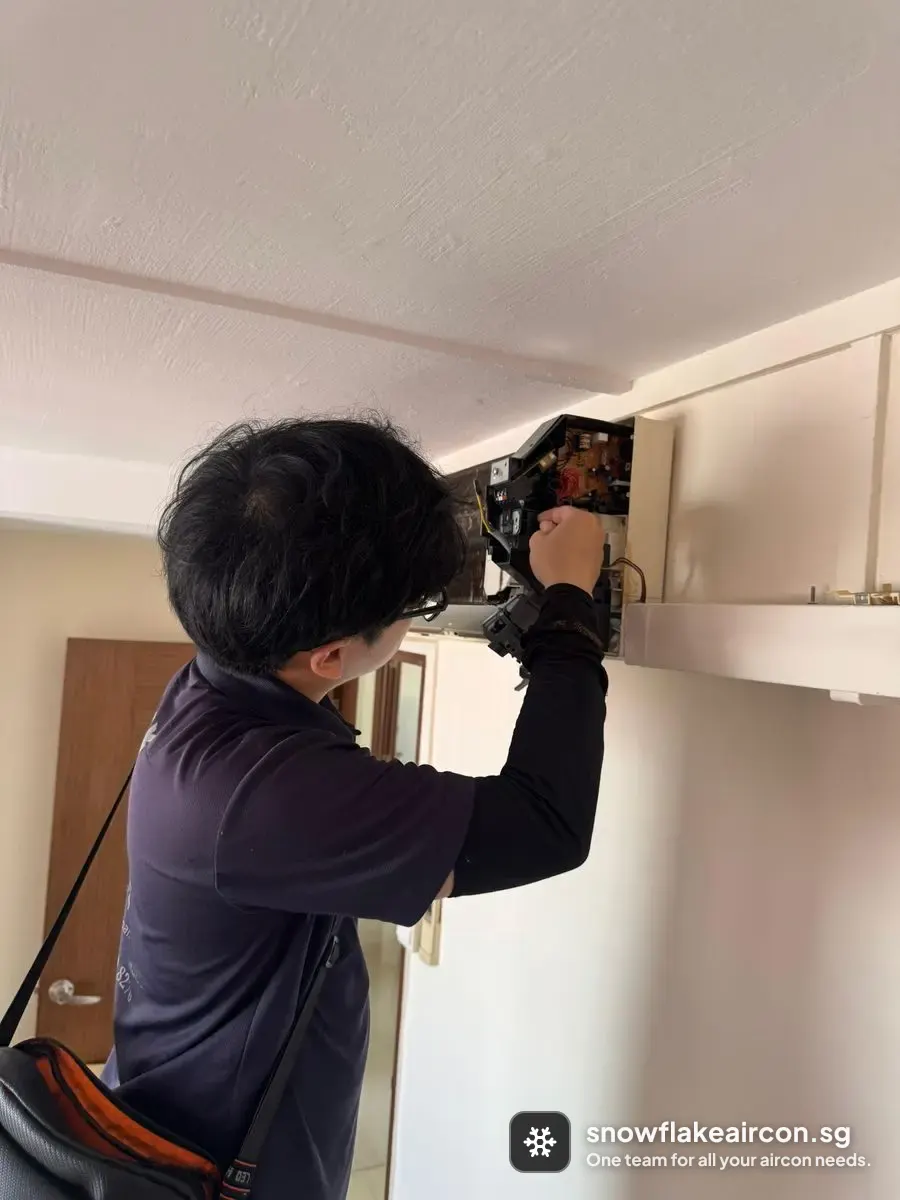
- Opening the indoor casing to test relay contact continuity on the exposed PCB with the unit switched off by remote
- Actual finding
- Internally welded switching relay on the Midea indoor PCB keeping power latched even after remote shutdown, driving continuous operation and overnight coil icing
- Scope saved
- Targeted repair instead of full replacement
What Else Produces This
A unit that accepts the remote beep and shuts its display yet refuses to stop running has a stuck switching path on the indoor board. Testing the exposed PCB confirms the welded contact directly.
Pressing off on the remote produces a crisp beep and closes the front louver, confirming the handset and infrared receiver both work properly.
Leaving the unit in standby still passes live voltage out through the indoor control terminal while the display stays dark.
Turning off the wall switch and lifting the right side cover shows faint heat marks beside the board relay.
Checking continuity across the unpowered relay contacts reads dead closed, proving the internal switch plates have welded together.
Why It Happens
Repeated nightly switching cycles in a Jurong East bedroom create microscopic sparks across the relay contacts inside the Midea indoor board. Over four to six years, pitted contact faces fuse shut under load, locking output power on regardless of remote commands.
What Resolution Involves
Keep the sound blower motor, evaporator coil, and casing installed. Label every sensor and motor plug, lift out the failed board, and fit a matched replacement Midea indoor PCB within the published S$180 to S$320 wall-mount PCB range.
How to Tell It Worked
Close the electrical cover, turn on the Jurong East wall isolator, and cycle power on and off three times by remote. Cooling starts promptly, shuts off completely within seconds on standby, and leaves zero voltage across the switched output.
Before You Approve a Quote
Isolate the wall switch when a unit runs past remote shutoff
- When the vane shuts by remote yet airflow keeps running, the handset works and a board relay is stuck shut.
- Leaving a stuck unit powered overnight freezes the evaporator solid and floods the bedroom wall once the ice block melts.
- Swapping the affected indoor control board fixes welded relay contacts cleanly without replacing the whole fan coil unit.