On this page
How This Presents
A living-room wall unit in a Toa Payoh HDB flat stops responding overnight. Fresh remote batteries produce zero beep, the louvre stays shut, and no panel LED lights up. The main distribution breaker stays up, making the indoor board look dead.
- Setup
- Daikin Wall-mounted7-9 yearsHDBToa Payoh
- Misread as
- Facing a costly indoor mainboard replacement when the living-room Daikin went dark with no beep or indicator light.
- Check first
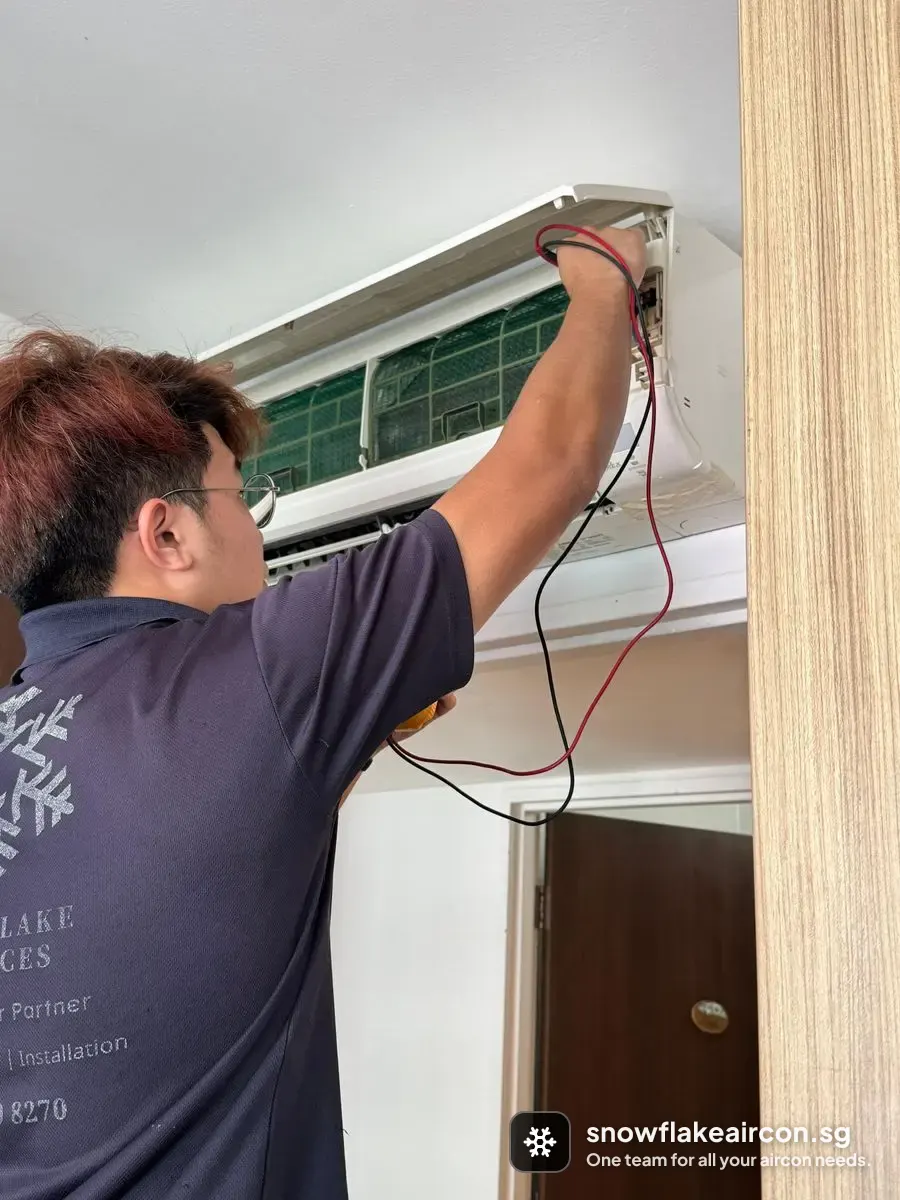
- Probing live supply voltage across the indoor terminal block and testing glass fuse continuity with multimeter leads
What Else Produces This
A totally dead indoor unit splits cleanly into missing mains supply, a popped input fuse, or a failed power stage on the mainboard. Probing live terminals with meter leads answers all three in minutes.
Opening the right-hand indoor electrical cover and probing live-to-neutral terminals shows unstable fluctuating voltage under load.
Tracing the feed back to the wall isolator switch uncovers a half-backed-out neutral terminal screw with light heat tarnish.
Switching power off and probing continuity across the indoor board glass protective fuse returns an open circuit.
Resistance checks across the board rectifier and power rails show zero dead shorts, confirming the mainboard circuitry stayed intact.
Why It Happens
Thermal expansion across seven to nine years of daily Singapore living-room cooling slowly backed out the neutral screw inside the isolator switch. Erratic contact resistance sent sharp voltage fluctuations into the Daikin indoor supply. The small glass protective fuse did its job and sacrificed itself before the mainboard suffered damage.
What Resolution Involves
Keep the original Daikin mainboard installed. Isolate mains power at the distribution board, trim back the tarnished copper tip at the wall isolator, and torque every neutral and live screw firmly. Fit a matched rated glass protective fuse into the indoor holder and refit the metal electrical cover.
How to Tell It Worked
Switch the isolator back on and verify steady full mains voltage across the indoor terminal block with meter leads. The Toa Payoh Daikin chimes immediately on remote press, opens the louvre smoothly, brings the outdoor unit online, and cools the living room cleanly.
Before You Approve a Quote
Check mains power and the glass fuse before replacing a PCB
- Zero panel lights and silence from the remote do not prove the indoor control board has burned out.
- Loose isolator neutral screws in older Singapore HDB flats create unstable power spikes that pop the small indoor glass fuse.
- Testing input terminals with meter leads separates a quick fuse and screw fix from a major board swap.