On this page
How This Presents
Outdoor condenser sitting inside a narrow steel ledge cage at a Yishun HDB block emits a sharp metallic rattle every evening as bedrooms cool down. Earlier surface checks from the window blame tired compressor mounts.
- Setup
- LG Multi-split4-6 yearsHDBYishun
- Misread as
- A dying compressor or replacing outdoor brackets inside a cramped HDB ledge cage.
- Check first
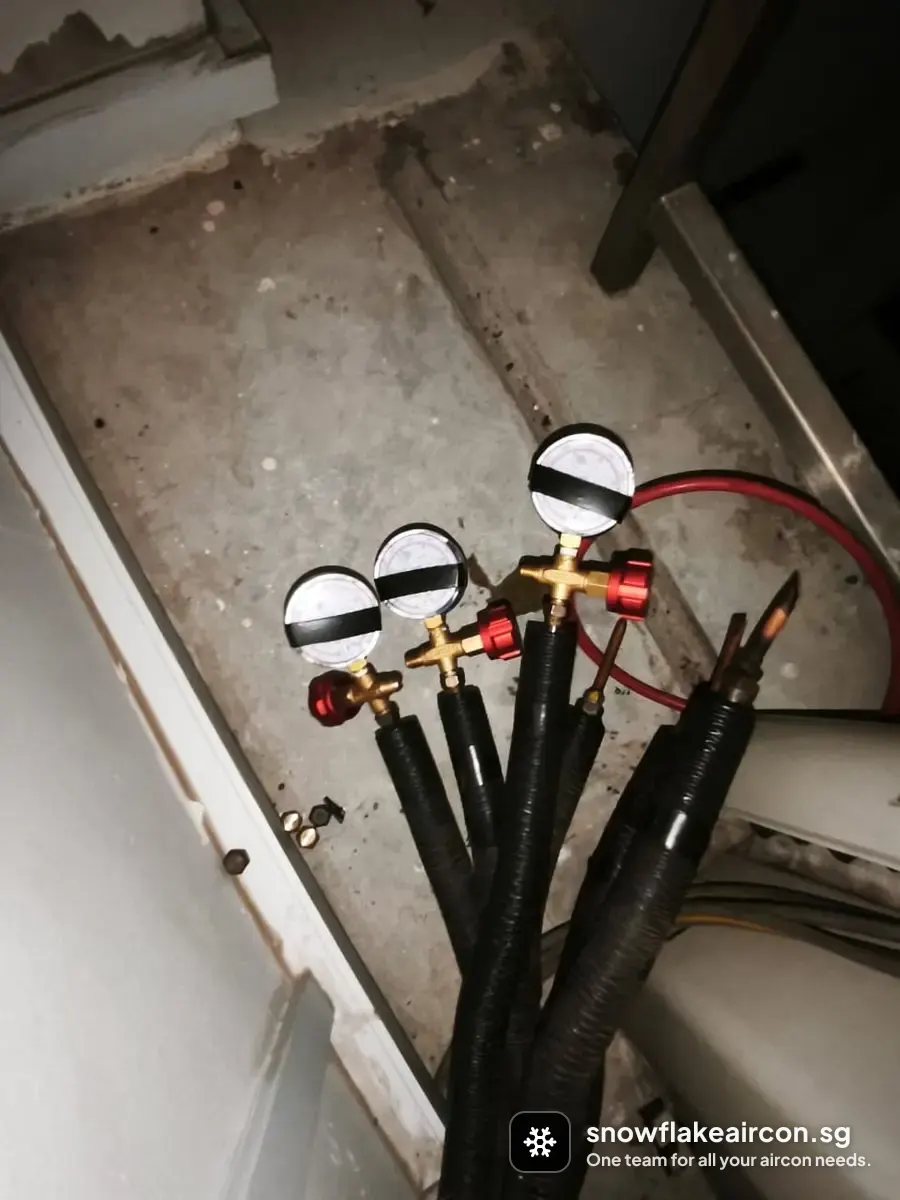
- Removing the condenser top lid inside the ledge cage to inspect pipe clearances while running
What Else Produces This
Sharp metallic buzzing inside an outdoor unit separates into external bracket looseness, fan-guard contact, or internal copper pipe resonance. Lifting the top lid inside the cage exposes the real contact point immediately.
Cooling performance and compressor amp draw remain steady, showing the refrigeration circuit itself is still healthy.
Base bracket nuts inside the white steel cage sit tight on intact rubber anti-vibration pads, ruling out a rocking chassis.
Removing the condenser top cover reveals a loosened saddle clamp on the high-pressure copper discharge bend beside the compressor bay.
Bright rub marks show the vibrating copper tube tapping against the steel divider panel whenever inverter speed dips to mid-range.
Why It Happens
Five years of nightly inverter speed cycling on a Singapore HDB ledge slowly backed out the small machine screw holding the internal pipe clamp. Left unchecked, persistent steel-against-copper friction would eventually wear a pinhole through the discharge line and empty the entire multi-split refrigerant circuit.
What Resolution Involves
Keep the healthy compressor and white steel bracket frame untouched. Fit a fresh closed-cell vibration sleeve around the copper discharge bend, re-seat and lock the saddle clamp with a thread-locked machine screw, and tighten every top-panel casing screw squarely.
How to Tell It Worked
Cycle both bedroom units across high and low temperature set points so the inverter sweeps through its full frequency band. The sharp metallic buzz should vanish completely inside both the ledge cage and the adjacent bedroom.
Before You Approve a Quote
Fix metallic outdoor rattles early before copper rubs through
- A sharp buzzing rattle that peaks only at specific inverter speeds points to resonant sheet-metal or pipe contact, not worn compressor internals.
- Tight HDB bracket cages discourage quick inspections, so technicians must lift the top cover to view the compressor bay properly.
- Sleeving and clamping a vibrating copper line takes minutes and prevents expensive copper rub-through refrigerant leaks.