On this page
Quick summary
When a Singapore aircon remote displays numbers normally yet the wall unit never beeps, a phone-camera IR test separates weak handset signals from a dead indoor receiver eye or main PCB. Checking fresh alkaline batteries, resetting the wall isolator, and pressing the manual flap button pinpoints the fault safely.
Test the Remote IR Emitter with Your Phone Camera First
A remote display screen needs almost no battery current to show temperature digits, while firing an infrared signal across a bedroom takes a sharp pulse. Half-spent batteries therefore light the screen clearly yet fail to wake the indoor unit.
Swap in two fresh brand-name alkaline cells first, checking the battery springs for chalky corrosion. Then open your phone's front selfie camera, point the top tip of the handset directly at the lens, and press the power key repeatedly.
A healthy IR emitter flashes a clear pinkish-white or violet pulse on screen. No visible blink with fresh batteries means the remote handset itself has failed, and you can verify the wall unit using an identical handset from another room.
Match Each Test Result to Remote, IR Receiver, or PCB Faults
Combining the phone-camera check with the indoor manual emergency button separates cheap handset swaps from board repairs:
Scroll to see more columns
| Home check outcome | What still works | Most probable fault | Next Singapore step |
|---|---|---|---|
| No violet flash on phone camera | Handset screen shows normal numbers | Dead remote IR diode or weak battery | Replace alkaline cells or handset |
| Strong flash, manual flap button starts unit | Compressor cools fine after manual start | Failed indoor IR receiver eye or ribbon | Book S$30 check to replace receiver |
| Strong flash, manual button does nothing | Wall isolator light stays lit normally | Blown indoor PCB fuse or dead main board | Book S$30 board and power test |
| Strong flash, another room remote works | Wall unit responds to spare identical handset | Wrong channel address or damaged keypad | Reset handset channel code A or B |
Reset the Wall Isolator and Try the Manual Emergency Button
Confirm the dedicated HDB or condo aircon isolator switch beside the indoor unit or inside the DB box is switched on. Flip that isolator off for five full minutes, then switch it back on and listen closely for a startup chime or louver sweep.
If the remote still gets zero response after rebooting, lift the hinged front intake panel and locate the tiny recessed emergency operation button on the right side of the indoor coil frame. Press it once gently with a dry wooden chopstick or plastic pen.
When the unit starts and blows cool air via the manual button, the main indoor PCB and compressor are healthy, pointing cleanly to a dead IR receiver sensor or mismatched remote channel.
Decide When to Book a Diagnostic Check and See Flat Costs
Avoid buying unverified universal remotes or guessing at board swaps once your phone camera confirms a healthy IR beam:
- Snowflake charges S$30 for on-site IR receiver and board testing, waiving that visit fee whenever you proceed with the quoted repair.
- When a silent wall unit turns out to need routine post-fault cleaning alongside other bedrooms, general servicing runs S$50 solo, S$30 per pair, or S$25 per head across three or more (14-day cover).
- Adding chemical washes while technicians are already on site costs S$80 for one indoor unit, S$70 apiece for two, and S$60 each for three upward (60-day cover).
- Full barrel-removed overhauls remain flat-rated at S$150 single, S$125 per unit for two, or S$115 apiece once three wall heads are booked (90-day cover).
Diagnostic Cases for This Fault
Singapore jobs showing what we checked on-site before quoting parts or gas.
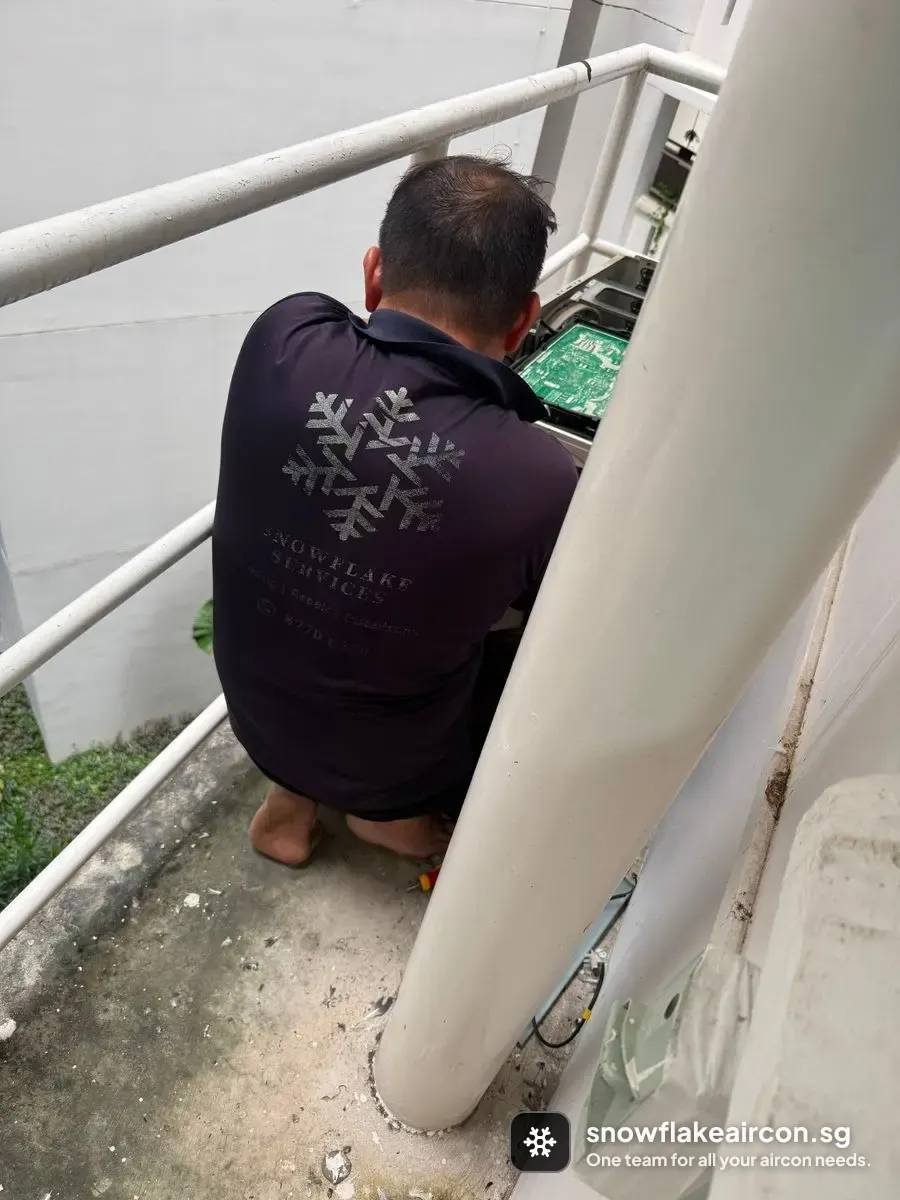
Clementi HDB · Daikin
Clementi HDB Voltage Dip: Outdoor PCB, Not Compressor
Burnt power-supply rail on the outdoor inverter control board caused by a mains voltage dip while the compressor windings and all three indoor fan coils remain healthy
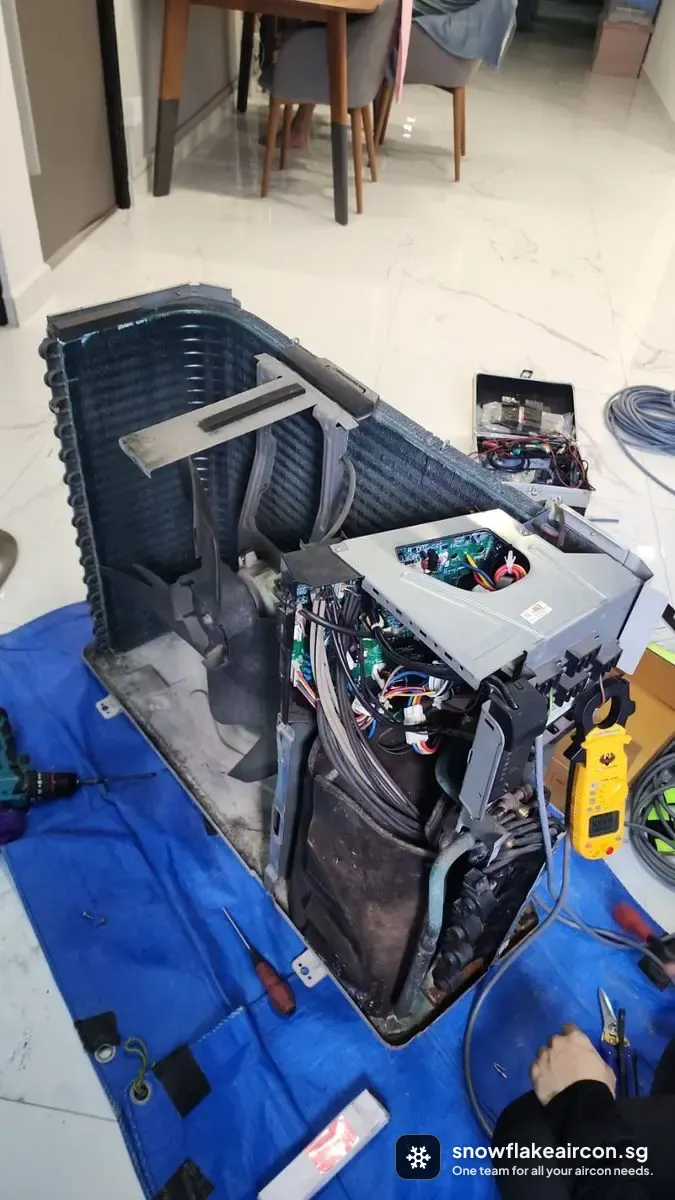
Tampines HDB · Daikin
Daikin Outdoor Unit Dead: Burnt PCB Relay, Not Condenser
House lizard bridging the outdoor Daikin PCB power relay traces, scorching the circuit track while the compressor windings and refrigerant loop remain undamaged