On this page
Quick summary
Older adults in Singapore flats sleep better at 26 to 27 degrees with louvers aimed high along the ceiling to prevent chilly joint drafts. Pair gentle dehumidification with a slow ceiling fan, pick high-contrast wall remotes, and keep quarterly servicing steady so bedrooms never swing hot and cold.
Why Older Adults Feel Direct Aircon Drafts More Sharply
Thinner skin and slower peripheral circulation make seniors sensitive to fast moving cold air even during humid Singapore afternoons. A 24 degree breeze striking bare shoulders or knees feels uncomfortable long before a younger family member notices.
Yet switching cooling off completely during hot May or June spells raises dehydration and heat stress risks inside enclosed HDB bedrooms. The sweet spot removes sticky indoor moisture without turning the room frigid.
Raising the remote to 26 or 27 degrees while angling horizontal blades straight toward the ceiling lets cooler air drift down softly. Pairing that setting with a wall or ceiling fan on speed one spreads comfort evenly.
Compare Dehumidifying, Quiet Cooling, and Fan Pairings
Use this setting matrix to match Singapore weather shifts to comfortable, draft-free senior sleep:
Scroll to see more columns
| Bedroom weather condition | Recommended setting | Louver and fan setup | Comfort benefit |
|---|---|---|---|
| Hot afternoon with west sun | Cool at 26 degrees, low fan | Blades flat to ceiling, curtains closed | Steady heat removal without cold gusts |
| Clammy rainy monsoon evening | Dry cycle for 60 minutes, then cool at 27 | Top-angle louver plus gentle floor fan | Cuts sticky air without overcooling joints |
| Overnight sleep after 11pm | Cool at 27 degrees with sleep step-up | Quiet fan speed, zero auto-swing | Prevents 3am chill that wakes light sleepers |
| Mild breezy morning | Off with windows ajar and standing fan | Run fan-only 15 minutes before shutdown | Dries coil fins and refreshes bedroom air |
Make Controls Readable and Keep Room Sensors Accurate
Tiny grey icons on multi-function handsets confuse older eyes at night. One accidental press switches cool mode to dry or fan-only, leaving parents sweating or shivering until morning.
Mount a backlit wall holder near bedside height and stick bold colour dots beside the power and temperature arrows. Large-button universal controllers or simplified smart wall switches also stop accidental mode changes.
Clean room thermistors matter just as much as handset ergonomics. Thick dust covering the indoor intake sensor tricks the inverter into overshooting setpoints by two or three degrees, causing jarring cold surges.
Decide Your Servicing Rhythm and Cost for Senior Bedrooms
Preventive upkeep keeps elderly bedrooms quiet, steady, and free from sudden midday breakdowns:
- Quarterly cleaning keeps bills light: one wall head is S$50, two rooms drop to S$30 apiece, and booking three upward lowers it to S$25 per room under a 14-day guarantee.
- Damp lint gripping deep fins clears with chemical flushing priced at S$80 solo, S$70 apiece on pairs, or S$60 per room for triple bookings (60-day guarantee).
- Neglected units dripping over beds need full teardown servicing. Rates sit at S$150 single, S$125 apiece on pairs, or S$115 per room for three-plus setups (90-day guarantee).
- Schedule a S$30 troubleshooting visit whenever bedroom warmth swings despite clean screens; Snowflake offsets that callout charge against approved sensor or fan repairs.
Diagnostic Cases for This Fault
Singapore jobs showing what we checked on-site before quoting parts or gas.
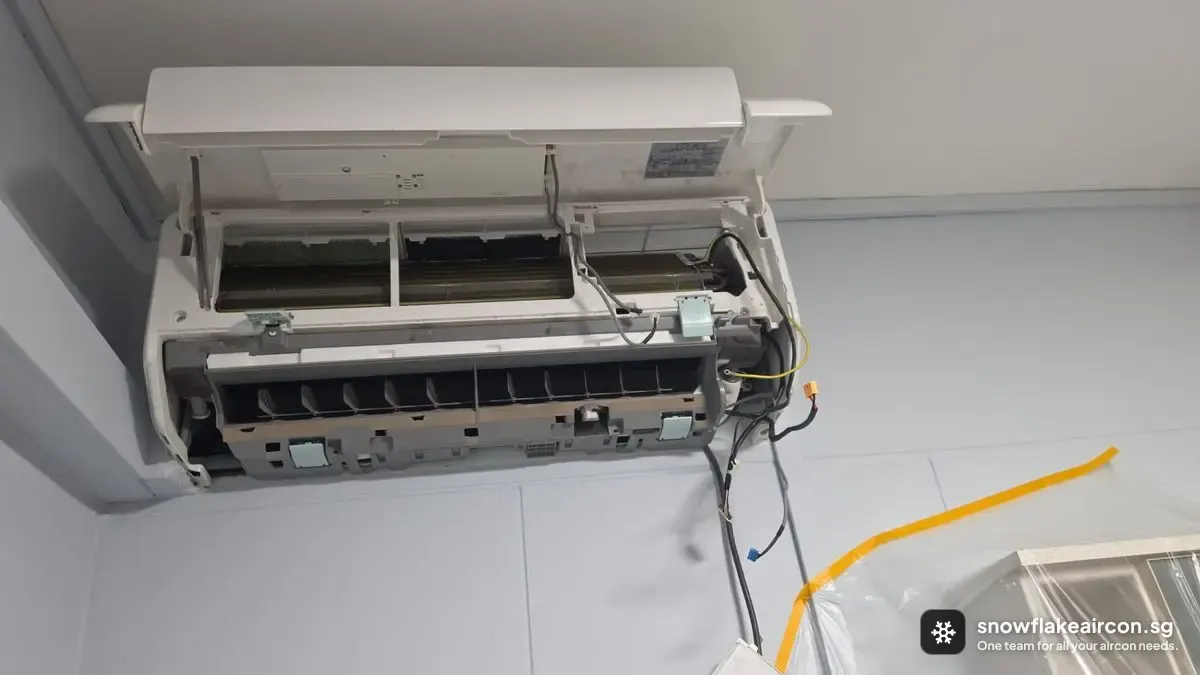
Serangoon HDB · Daikin
Daikin Flashing Lamp and No Cold: Chafed Thermistor Wire
Chafed indoor coil thermistor insulation shorting intermittently against the metal chassis frame, triggering Daikin lamp flashes while the indoor PCB stayed healthy
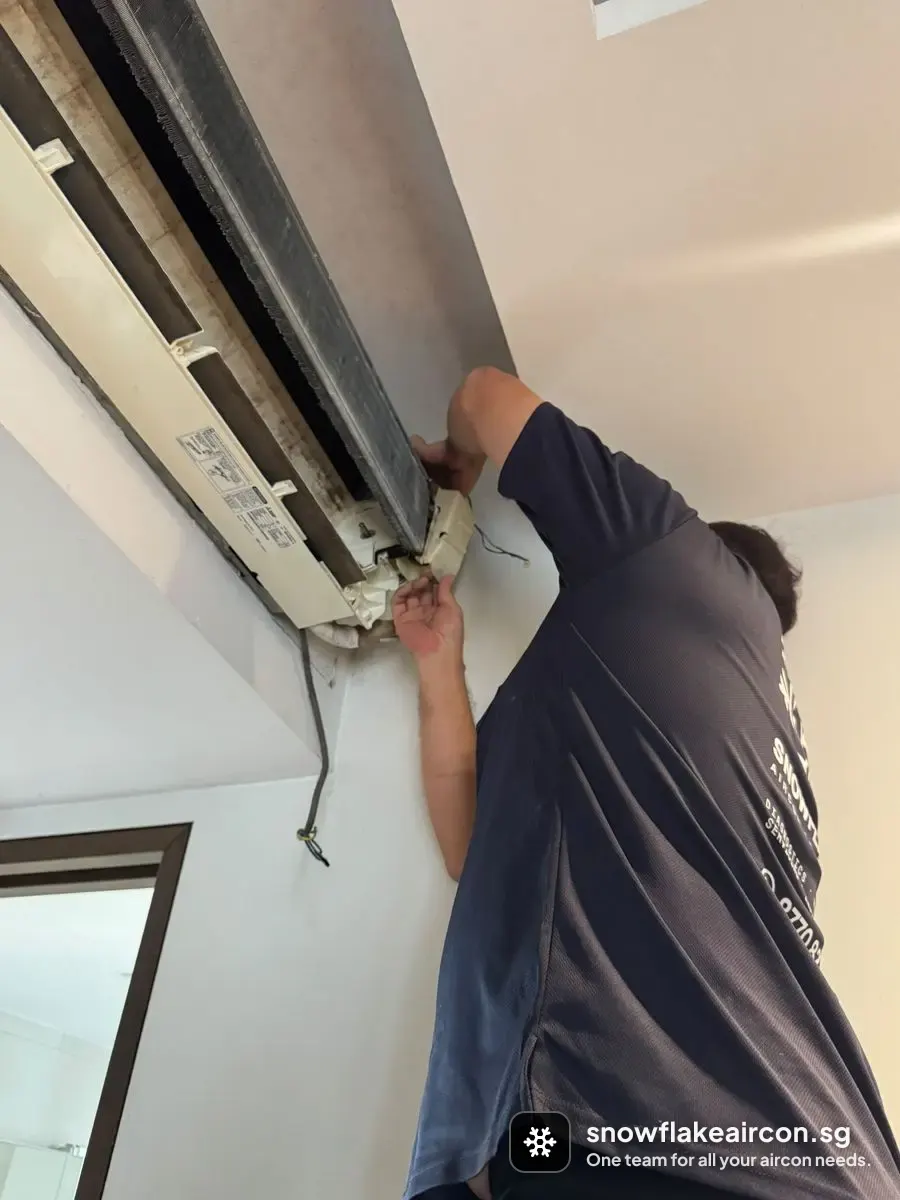
Hougang HDB · Daikin
Daikin Right-Wall Drip: Drain-Side Jelly, Not Trunking
Translucent algae jelly wedged right inside the right-hand flexible drain elbow where the Daikin tray meets the PVC run, overflowing down the side casing while the concealed trunking stayed intact