On this page
How This Presents
A bedroom split in a Serangoon HDB flat cools well for half an hour, then stops cold air while its green operation lamp blinks. Resetting the wall switch clears the blink for a bit, yet the sudden cutoff returns later that night.
- Setup
- Daikin Wall-mounted7-9 yearsHDBSerangoon
- Misread as
- Facing a S$180 to S$320 indoor PCB replacement quote whenever a bedroom unit stops cooling and starts flashing its green lamp.
- Check first
- Removing the full indoor casing to trace the exposed sensor harness end to end and testing thermistor resistance before condemning the control board
- Actual finding
- Chafed indoor coil thermistor insulation shorting intermittently against the metal chassis frame, triggering Daikin lamp flashes while the indoor PCB stayed healthy
- Scope saved
- Targeted repair instead of full replacement
What Else Produces This
Random blinking faults often get blamed on the indoor circuit board right away. Taking off the casing to trace every sensor lead stops costly guesswork.
Pulling the stored Daikin error code through the remote points to an indoor coil sensor fault.
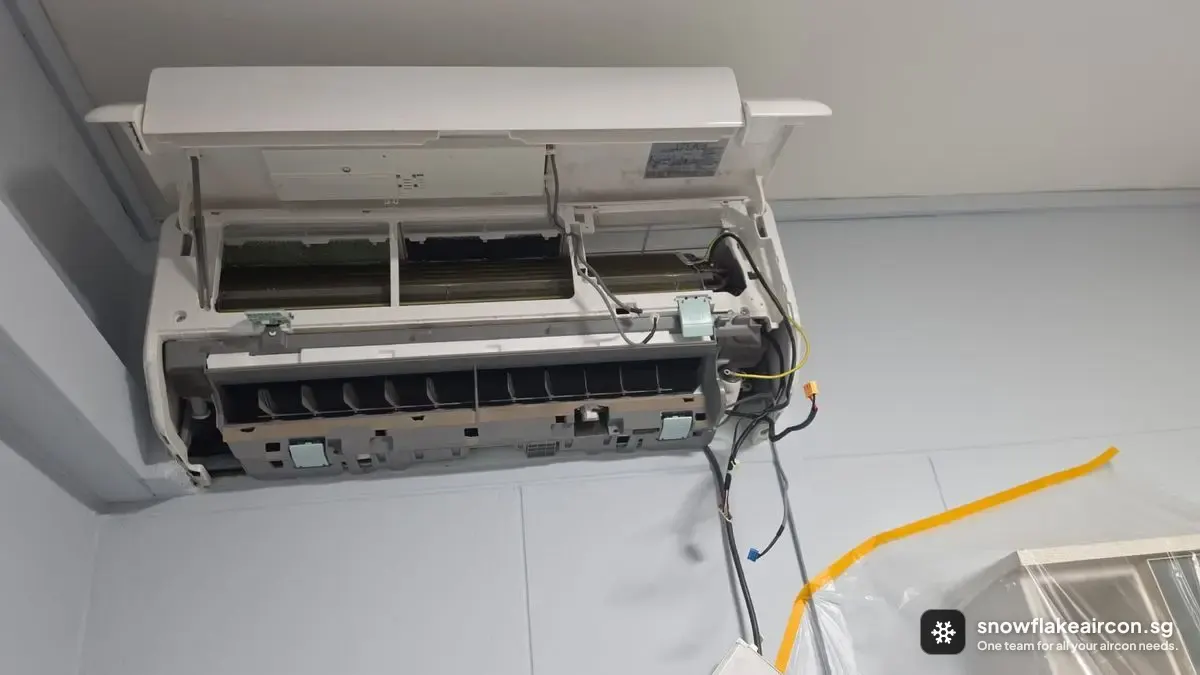
Removing the outer casing in the Serangoon flat exposes the full wiring loom running from the control box to the coil.
Tracing the thin black thermistor lead past a sharp metal bracket reveals a chafed spot showing shiny copper.
Testing the sensor unplugged shows jumpy resistance when moved, while the Daikin indoor PCB sends clean signals.
Why It Happens
Years of nightly blower shake inside the Serangoon bedroom unit slowly rubbed the thin thermistor jacket against a sharp metal chassis edge. Each time vibration or coil moisture touched the copper strand to the frame, the Daikin board sensed a short and stopped cooling.
What Resolution Involves
Leave the sound Daikin indoor PCB alone instead of quoting a S$180 to S$320 board repair. Fit a fresh matched indoor thermistor, sleeve the lead clear of sharp metal edges, and clip the wiring loom neatly into its guides.
How to Tell It Worked
Refit the indoor casing and test the Serangoon bedroom Daikin across repeated start and fan-speed cycles on 23°C cool mode. The green lamp stays solid, coil readings stay smooth, and steady cold air runs all night.
Before You Approve a Quote
Trace exposed sensor wiring before replacing a flashing Daikin board
- One rubbed sensor wire touching the metal frame sends false fault signals that look just like a dead circuit board.
- Pulling off the full front casing shows hidden pinched or chafed leads that quick remote checks miss.
- Swapping a worn sensor and routing its cable away from sharp edges saves Singapore HDB owners from big board bills.