On this page
How This Presents
An aging Woodlands HDB bedroom split turns on, moves air briefly for roughly 40 seconds, and then stops spinning. Its upper green operation lamp blinks three times, pauses, and repeats until switched off at the wall.
- Setup
- Mitsubishi Electric Wall-mounted7-9 yearsHDBWoodlands
- Misread as
- Swapping an entire Starmex indoor circuit board or replacing the wall unit because the bedroom blower kept halting after 40 seconds.
- Check first
- Counting the 3-blink upper-lamp cycle, removing the side casing, and inspecting the fan-motor connector pins before ordering an indoor board
- Actual finding
- Loose, heat-tarnished indoor fan-motor harness plug dropping speed feedback to the Starmex board while both motor windings and indoor PCB stay sound
- Scope saved
- Targeted repair instead of full replacement
What Else Produces This
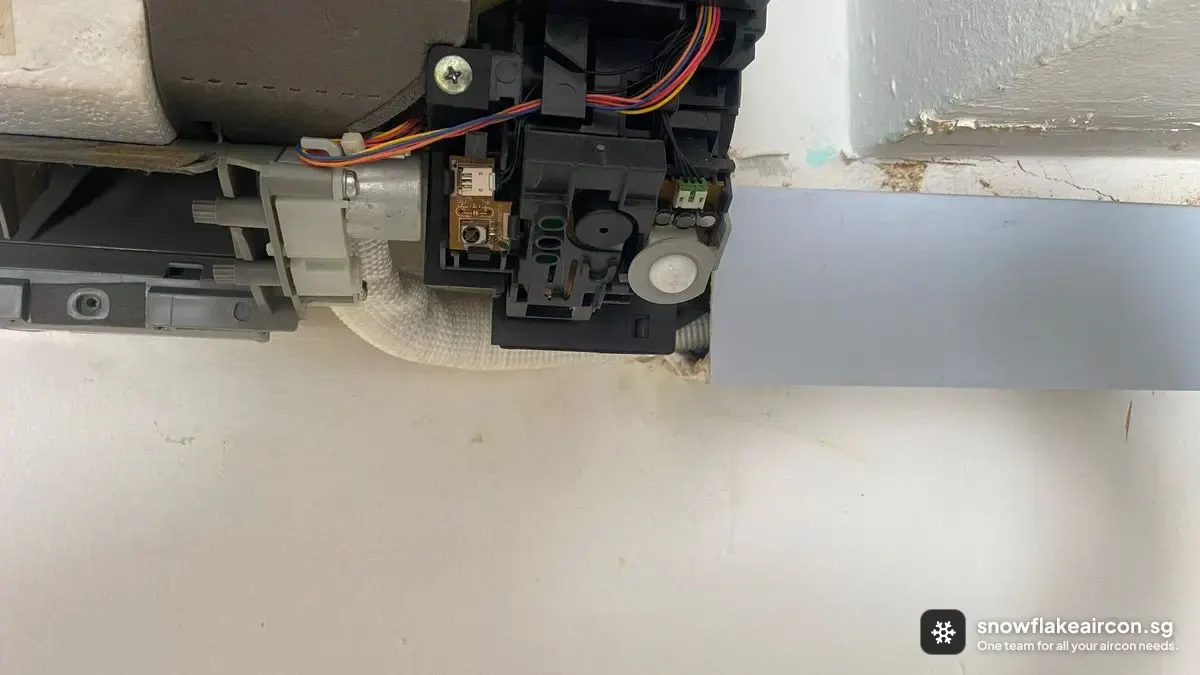
An immediate 3-blink shutdown narrows inspection to the indoor fan feedback path before condemning any circuit board. Opening the right-hand side casing gives direct access to the motor loom and plug.
Observing startup confirms the blower wheel turns smoothly at first before shutting off right around the 40-second feedback timeout.
Spinning the drum by hand with power off shows free rotation with no seized bearing drag or rubbing shroud.
Removing the side electrical cover reveals the multi-pin fan motor plug sitting slightly backed out with brown heat tarnish across two feedback pins.
Measuring across the motor winding leads and verifying clean DC supply at the indoor board header confirms both parts remain within specification.
Why It Happens
Eight years of nightly Singapore humidity and gentle chassis vibration loosened the locking tab on the indoor fan harness connector. Contact resistance warmed the tarnished feedback pins until the speed signal broke intermittently, tripping the Starmex 3-blink protection.
What Resolution Involves
Leave the intact indoor PCB and DC fan motor installed. Isolate the flat aircon switch, release the tarnished pins from the plug housing, clean off surface oxidation, and re-tension the metal terminals tightly. Re-seat the harness plug until its latch clicks home and secure the loom away from vibration.
How to Tell It Worked
Switch the bedroom breaker back on and cycle through low, mid, and high blower speeds. Confirm continuous airflow well past the 40-second startup window with zero upper-lamp blinks and steady cool delivery.
Before You Approve a Quote
Inspect the fan harness plug before replacing a Starmex board
- Three upper-lamp blinks on a Starmex indoor unit flag an indoor fan motor feedback fault in Mitsubishi Electric service tables.
- Poor contact inside an aged, heat-tarnished plug drops the motor speed signal after roughly 40 seconds of operation.
- Cleaning and firmly reseating the harness pins saves both the healthy motor and indoor PCB on older Singapore HDB systems.