What gas leak detection covers
Low refrigerant is a symptom, not the fault. Topping up without finding the leak means paying again in months. We confirm the gas is actually dropping, then track down where it's escaping, so the repair fixes the cause instead of refilling around it. Common situations where leak detection fits:
Gas dropped again within months
Repeated top-ups mean refrigerant's escaping somewhere in the circuit.
System is completely empty
A full loss needs the leak found before recharging, or the new gas escapes again.
A low-refrigerant code that keeps coming back
A fault code cleared by a top-up and returning months later is the leak announcing itself.
When gas leak detection isn't suitable
Hunting for a leak isn't the first move for every weak-cooling complaint.
Pressure dropped slowly over several years
There's still a leak, but at that rate finding it costs more than the occasional measured top-up.
Pressure is normal but cooling is weak
The fault's more likely airflow, compressor, sensor, or control related, not a leak.
The leak point is already obvious
Visible oil or ice at a specific joint often means we can quote the repair directly, without a full detection.
What you get
Stop repeat top-ups by proving whether the system's leaking and where.
Leak confirmed before repair
You don't pay for leak repair when the gauges and tests show the system's holding.
Fault location identified
Joint, valve, coil, or pipe run narrowed down before any repair is quoted.
Retest after repair
After the fix, we pressure-test again and confirm it holds before recharging.
What we check before quoting
Leak detection is a sequence of methods, not a single test. We work from the cheapest, fastest check to the most thorough.
Confirm the drop
Gauges tell us whether the charge is genuinely low and how far it's fallen, before we go hunting for a leak.
Check the accessible joints
A soap test on the flare joints and service valves catches the leaks sitting at the connections we can reach.
Pressure-test to find the line
If the joints are clean, dry nitrogen at controlled pressure isolates which line or section is losing pressure, the hidden leaks behind walls or in the coil.
Locate, then quote
We only quote the repair once the leak's location and access requirements are clear.
Gauges confirm the charge is actually low before anything else, the flare joints and service valves are soap-tested first, and a dry-nitrogen pressure test finds the line that will not hold. After the repair, the circuit is pressure-tested again before it is recharged. How a job runs, from first message to booking.
Brand-specific gas leak repair
Each brand page lists the models we see, that brand’s fault codes, parts lead times and when replacement makes more sense.
- Carrier gas leak repair5 codes
- Daikin gas leak repair6 codes
- Gree gas leak repair3 codes
- Midea gas leak repair6 codes
- Mitsubishi Electric gas leak repair4 codes
- Mitsubishi Heavy Industries gas leak repair8 codes
- Samsung gas leak repair6 codes
- Toshiba gas leak repair6 codes
- Panasonic gas leak repair2 codes
- Hitachi gas leak repair2 codes
- LG gas leak repair1 codes
- Sharp gas leak repair1 codes
From the field
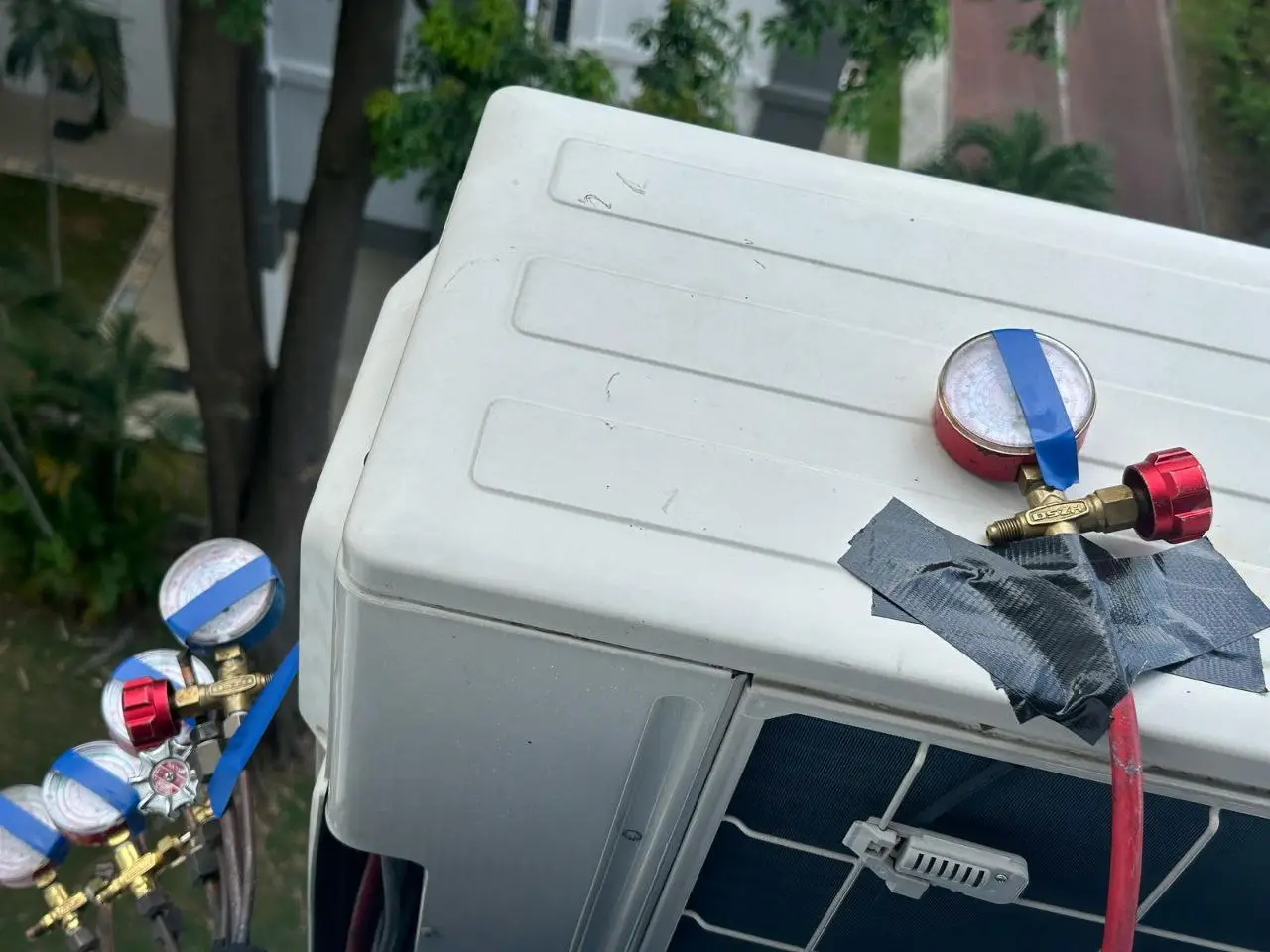
Gauges on the outdoor unit, confirming the charge is dropping before the leak hunt starts.
Workmanship warranty
We stand behind the repair we carry out, and we are straight about the part of the cover we do not set ourselves.
Labour
30-day workmanship warranty. If the same fault returns from our repair, we come back and the labour is on us, with no second diagnostic visit fee.
Parts
Parts carry the distributor's warranty for that component, so the term varies by part. We tell you both terms before you approve the work.
Leak detection case patterns
Diagnosis-led case notes, not generic service claims. Open the case if the symptom looks familiar.
Frequently asked questions about aircon gas leak detection and repair in Singapore
How much does leak detection cost?
How long does leak detection take?
What happens after the leak is found?
Why not just keep topping up the gas?
We cover all of Singapore. Find aircon services in your area.
Describe your situation
Tell us what’s going on. Symptoms, setup, photos, anything we should know. We’ll assess and come back with the right next step.