On this page
How This Presents
Steady water droplets fall from the outdoor concrete ledge onto the lower storey's drying rack whenever the living room cools overnight. Indoor wall trunking stays dry across every room. Cooling output remains brisk, and no indoor drip tray overflows onto the floor.
- Setup
- Mitsubishi Electric Multi-split7-9 yearsHDBBishan
- Misread as
- Fear of a cracked outdoor condenser pan or full concealed repiping triggering Town Council notices over ledge drips.
- Check first
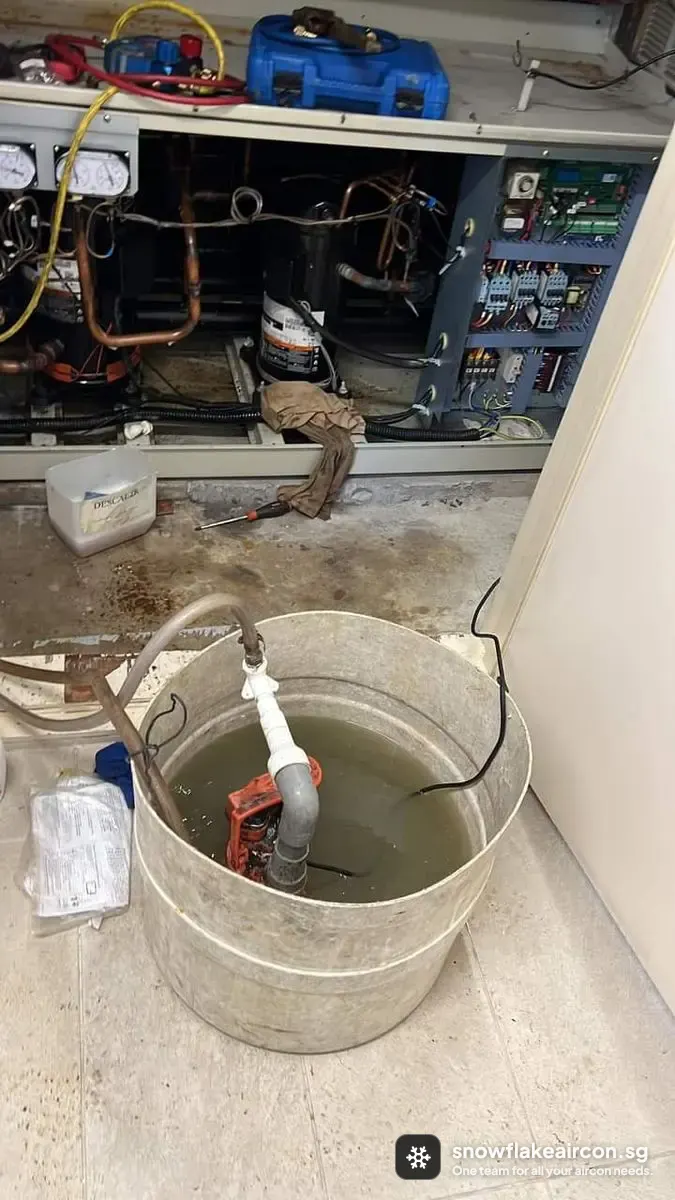
- Pressurised water flush into a catchment bucket beneath the outdoor outlet
What Else Produces This
Water dropping off an HDB ledge splits into two paths: sweating along uninsulated outdoor copper pipes, or condensate escaping from the PVC drain line past the service yard. Running a controlled flush into a catchment bucket separates both branches quickly.
Suction-pipe insulation along the outdoor ledge remains intact with no heavy frosting or condensation pooling underneath.
Indoor drain tray holds clean water with no overflow marks along the living-room wall or bedroom trunking.
Pressurised flushing drives dark algae plugs out through a hairline split at the outdoor PVC elbow before water reaches the floor trap.
Condenser base pan stays completely dry once the split stub is diverted into the test bucket.
Why It Happens
Exterior PVC condensate piping on west-facing Bishan HDB ledges endures harsh tropical sun and daily heat cycling. Over years of exposure, the exterior elbow turns brittle and develops a fine longitudinal crack. Once biofilm narrows the floor-trap end, gentle back-pressure forces condensate out through that split and down the ledge lip. Indoor drains rarely show any warning while water escapes outside.
What Resolution Involves
Flushing clears the slime plug from the discharge line first. Next, the sun-brittled outdoor elbow and perished flexible sleeve are cut back cleanly to solid indoor PVC. A new solvent-welded elbow restores positive fall straight into the service-yard floor trap. Clipping the replacement stub firmly against the ledge wall prevents wind sway from flexing the joint. Nothing on the condenser needs dismantling.
How to Tell It Worked
Pouring two full litres through the indoor drain tray produces brisk, unbroken flow into the floor trap. The concrete ledge below stays completely dry. A ten-minute cooling run confirms zero stray droplets beneath the repaired elbow or along the wall stub. Neighbours below see dry laundry poles again.
Before You Approve a Quote
Ledge drips trace back to drain stubs before hardware
- Continuous water dropping off an HDB ledge during humid Singapore evenings almost always involves the outdoor condensate outlet.
- Testing the drain line with controlled flow into a bucket confirms where water escapes before quoting major work.
- Sun-brittled PVC elbows outside the service yard split years earlier than indoor copper or drain runs.