On this page
How This Presents
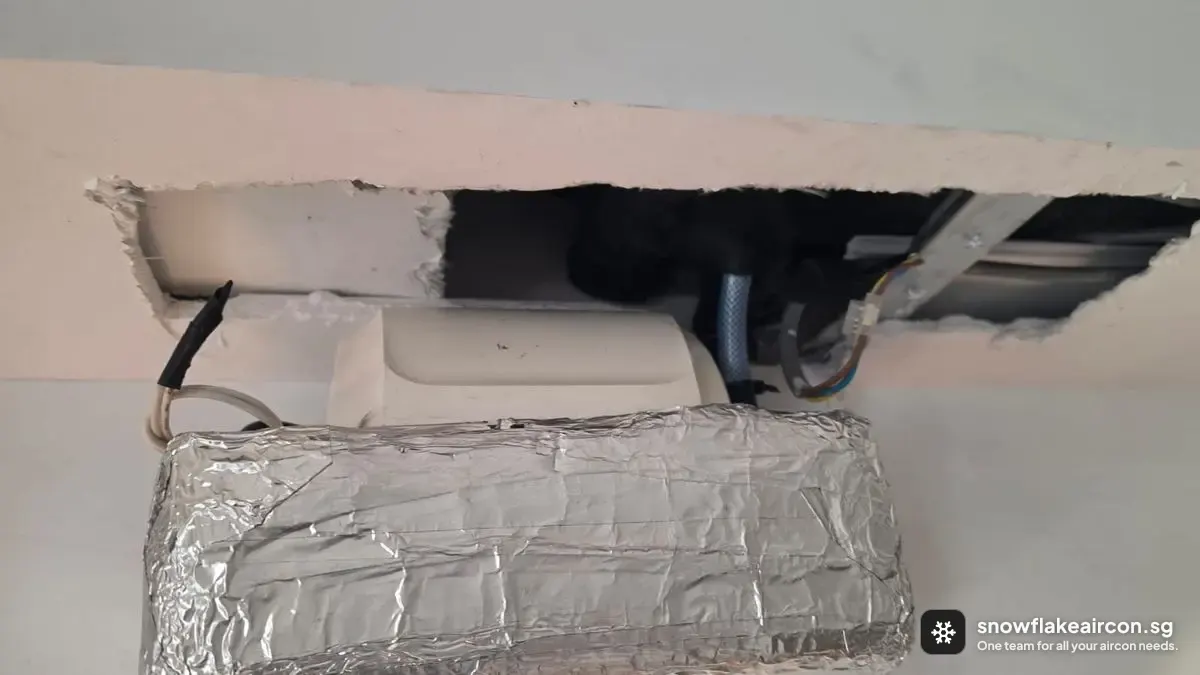
A living-room false ceiling develops slow brown water rings beside the square service hatch after humid evening runs. Routine drain flushing cleared nothing inside the Clementi condominium apartment. Paint near the hatch lip begins bubbling after every rainy weekend.
- Setup
- Mitsubishi Electric Ceiling-concealed4-6 yearsCondoClementi
- Misread as
- Hacking open living-room false plasterboard to replace a suspected cracked concealed drain pan.
- Check first
- Tracing wet droplets along the insulated pipe sleeves inside the ceiling hatch during peak cooling
What Else Produces This
Staining that continues right after a clean drain flush points away from pan overflow and toward external condensation. Opening the existing access hatch during active cooling shows where droplets actually form. Feeling every pipe sleeve dry or wet avoids guessing behind plaster.
The concealed drain pan and corrugated condensate hose feel dry along their lower seams under active cooling.
Reaching into the hatch reveals soaking-wet black foam wrapped around the twin vertical refrigerant lines beside the foil duct.
Peeling back loose black vinyl tape uncovers a split insulation joint where cold copper meets humid void air.
Droplets track straight down the outer insulation skin and pool onto the plasterboard lip next to the hatch.
Why It Happens
Condominium ceiling voids in Singapore stay warm and humid because unconditioned air leaks around downlights and corridor risers. Thin vinyl tape relaxes over butt joints in closed-cell pipe foam after a few years of cooling cycles. Humid cavity air then sneaks straight onto chilled copper, saturating the foam sleeve until heavy droplets form and track outside the drain tray.
What Resolution Involves
Work directly through the existing plasterboard access hatch without cutting new holes in the living-room ceiling. Strip the saturated insulation section completely and wipe the cold copper dry with clean cloths. Slip on fresh thick-walled closed-cell sleeves with glued longitudinal seams, then wrap every junction tightly with continuous vapour-seal tape clear of the foil duct and ceiling framing.
How to Tell It Worked
Run the Clementi living-room system at low set point for thirty minutes during humid evening air. Reach back through the access hatch and run dry fingers along every re-taped seam and vertical pipe collar. Confirm the painted plasterboard rim beside the metal service frame stays spotless and dry under full load. Cool, completely dry outer foam confirms the condensation drip is eliminated.
Before You Approve a Quote
Trace moisture through the hatch before cutting condo false ceilings
- A dry drain pan next to soaking-wet pipe foam immediately clears the condensate tray of blame.
- Unsealed tape seams on cold copper lines pull heavy condensation from stagnant, humid Singapore ceiling voids.
- Re-sleeving and vapour-sealing exposed pipe runs through the existing access hatch stops ceiling stains cleanly.