On this page
How This Presents
Hall cooling in a Toa Payoh HDB home starts crisp around dinner time, then shifts to warm fan breeze after an hour while the outdoor condenser falls silent. Cycling the isolator restores cold air for another short spell before another sudden shutdown hits.
- Setup
- Daikin Wall-mounted7-9 yearsHDBToa Payoh
- Misread as
- Quoting a S$480 to S$780 outdoor inverter PCB swap simply because the condenser locks out after an hour of evening running.
- Check first
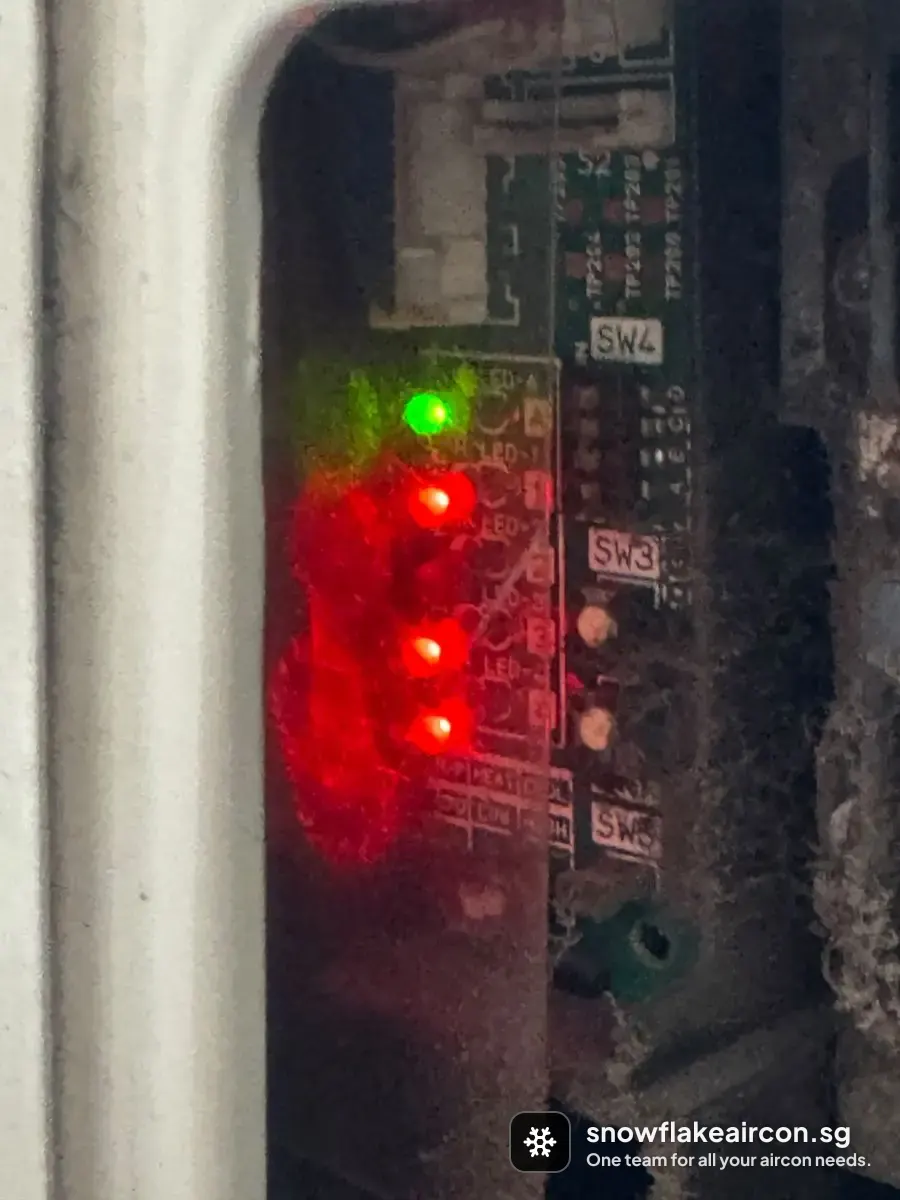
- Removing the top outdoor service lid while the fault was active to read the red diagnostic LED bank and test each thermistor lead unplugged before condemning the outdoor PCB
- Actual finding
- Drifted outdoor condenser pipe thermistor reporting false overheat values to the healthy Daikin inverter board, triggering protective red-LED shutdowns mid-evening
- Scope saved
- Targeted repair instead of full replacement
What Else Produces This
Recurring outdoor shutdowns often draw instant quotes for a whole new inverter control board. Opening the condenser lid while the fault stays latched reveals what actually triggered safety protection.
Inspecting the Toa Payoh ledge unit mid-lockout shows the outdoor fan and compressor halted while the indoor blower keeps circulating room air.
Lifting the top Daikin service cover reveals the red diagnostic LED bank signalling an outdoor pipe temperature protection trip.
Checking the condenser coil fins and airflow path confirms clear ventilation and warm-not-scorching metal pipes with zero overheat.
Unplugging the copper-clipped outdoor thermistor shows wild high-heat resistance drift against ambient warmth. Meanwhile, the Daikin outdoor PCB outputs clean logic.
Inspecting the inverter module and capacitor bank confirms zero scorch marks, swollen tops, or moisture damage across the main board.
Why It Happens
Afternoon ledge heat and storm spray around the Toa Payoh HDB block slowly degraded the sealed metal tip of the outdoor Daikin thermistor. Once evening cooling warmed the condenser pipes slightly, the drifted sensor signalled false overheating and forced the intact board to halt the compressor.
What Resolution Involves
Skip an unneeded S$480 to S$780 board swap and leave the working Daikin outdoor PCB mounted. Fit a fresh matched outdoor thermistor assembly firmly into its copper sensing pocket, clip the sensor harness clear of hot discharge tubing, and restore mains power cleanly.
How to Tell It Worked
Close the outdoor lid and run the Toa Payoh Daikin hall unit steadily across a full evening cooling load. The outdoor compressor ramps smoothly without sudden mid-evening cut-outs. Red fault lights stay completely dark and crisp cold air holds steady across the entire living area through midnight.
Before You Approve a Quote
Read outdoor board red fault lights before swapping an inverter PCB
- Red warning lights on an outdoor circuit board mean the board is actively protecting the compressor, not that the board itself died.
- A single weather-worn pipe sensor on a hot ledge can feed fake heat readings that trip protective shutdowns every evening.
- Testing and replacing one outdoor sensor costs a fraction of a full condenser board swap in Singapore HDB flats.