On this page
How This Presents
A wall unit in a Pasir Ris HDB bedroom takes over an hour to bring the room down from warm evening heat. Air feels lightly cool right at the vent, yet the far side of the bed stays muggy. Other rooms on the same outdoor set cool normally.
- Setup
- Panasonic Wall-mounted4-6 yearsHDBPasir Ris
- Misread as
- Spending money on an avoidable R32 refill that overcharges a tight sealed loop without solving slow bedroom cooling.
- Check first
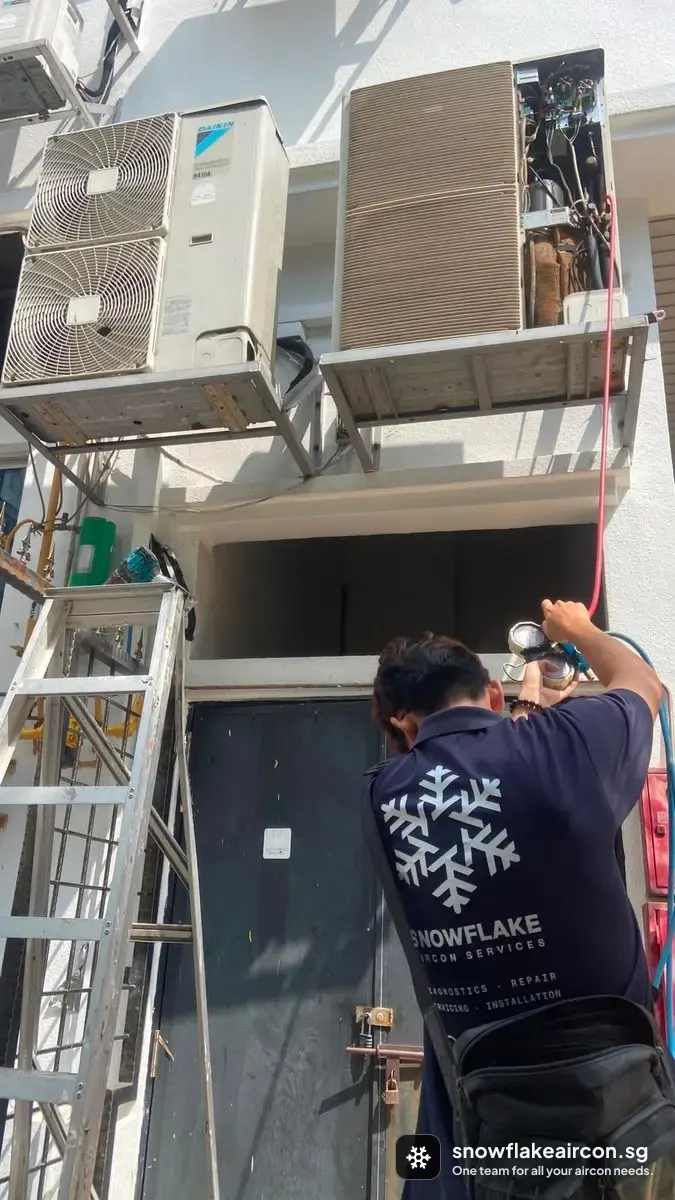
- Hooking manifold gauges onto the ledge outdoor service port under steady load to prove normal R32 operating pressure before inspecting the indoor coil and sensor clip
What Else Produces This
Slow bedroom cooling often prompts quick calls for an R32 gas refill. Putting manifold gauges on the ledge condenser first proves whether the refrigerant side is actually short.
Hooking manifold gauges to the ledge valve under full load shows R32 suction pressure sitting right in normal range.
Checking the insulated suction copper line confirms cold, steady return flow back to the outdoor unit with no frost.
Lifting the indoor bedroom cover exposes the room sensor popped free from its clip and touching the chilled coil fins.
Shining a torch behind the lower louver shows a thick grey coat of bedroom lint packed along every blade of the blower wheel.
Why It Happens
Two indoor airflow and sensing issues worked together while the gas circuit stayed completely tight. First, the dislodged thermistor sensed cold coil metal instead of warm room air, making the inverter throttle down far too soon. Second, lint packed onto the blower wheel cut airflow volume across the humid Singapore bedroom.
What Resolution Involves
Disconnect the manifold gauges without adding a single gram of R32 gas. Seat the room-temperature thermistor firmly back inside its plastic standoff clip clear of the evaporator fins. Mount a catchment shroud below the fan coil, clean the blower wheel blades thoroughly, and flush the coil fins clean.
How to Tell It Worked
Restart the Pasir Ris bedroom unit at 24°C on medium fan and check supply-air drop across the vent with a digital thermometer. Confirm strong, even airflow reaches the far wall and the compressor holds steady output until the entire room settles comfortably cool.
Before You Approve a Quote
Check live gas pressure before paying for a top-up
- Healthy R32 pressure on the HDB ledge proves the sealed gas circuit is full, so adding gas only harms cooling.
- An indoor room sensor that slips against the cold coil tricks the unit into slowing down before the room cools.
- Clipping the sensor back in place and washing the dusty blower wheel restores brisk Singapore bedroom cooling cleanly.