On this page
How This Presents
Living-room air from a wall unit in a Woodlands HDB flat feels lukewarm even on the lowest temperature setting. A quick phone enquiry points straight toward a refrigerant top-up. Front mesh filters look rinsed, yet airflow out of the louvre feels uneven and soft.
- Setup
- Mitsubishi Electric Wall-mounted4-6 yearsHDBWoodlands
- Misread as
- Paying for an unnecessary refrigerant gas top-up over the phone when lukewarm living-room air actually needed coil cleaning.
- Check first
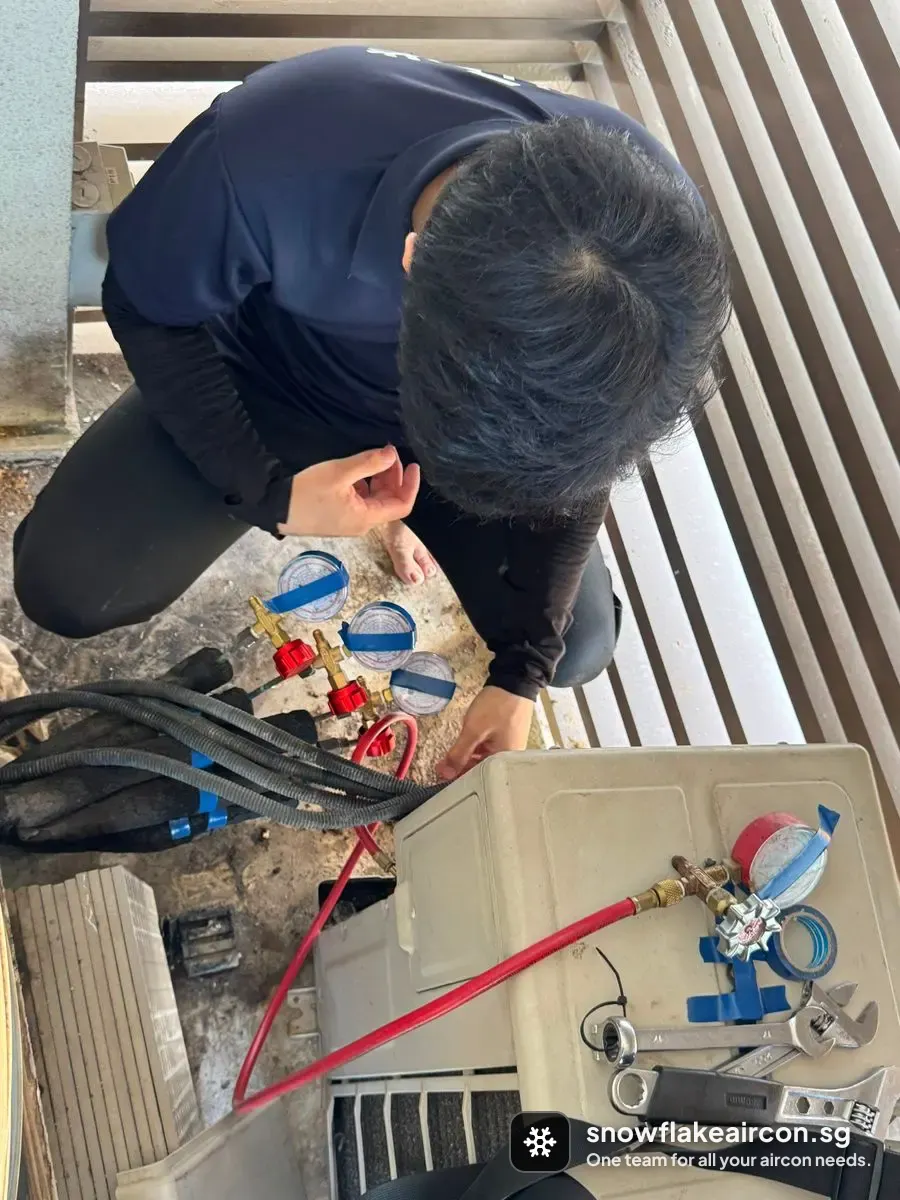
- Connecting manifold gauges to the outdoor condenser to verify normal pressures before opening the indoor shroud
What Else Produces This
Warm discharge air with sluggish throw splits cleanly into low gas charge or blocked heat transfer indoors. Connecting manifold gauges on the outdoor ledge settles the gas question before opening any wallets.
Hooking manifold gauges onto the outdoor condenser shows normal standing pressure and steady running suction pressure.
Outdoor suction tubing feels properly chilled and sweats evenly, ruling out refrigerant starvation.
Measuring intake versus outlet temperature indoors confirms a weak delta-T alongside restricted air throw.
Lifting the front casing exposes sticky grey lint and cooking film matting the evaporator fins and packing the blower wheel blades.
Why It Happens
Open-concept Woodlands HDB living rooms pull kitchen vapour and corridor dust straight into the wall unit daily. Even when front mesh screens are rinsed, fine oily dust slips past onto damp evaporator fins and blower vanes. Over four to six years, that sticky layer blocks heat exchange and mimics low gas.
What Resolution Involves
Skip adding any refrigerant so the sealed factory charge stays balanced. Fit a waterproof wash canvas around the living-room unit, apply diluted foaming chemical cleaner across the choked evaporator fins and blower wheel, and flush thoroughly with clean water until runoff runs clear. Clear the drain tray before reassembly.
How to Tell It Worked
Restart the Woodlands living-room unit and check supply temperature drop alongside louvre airflow throw. Crisp cold air sweeps smoothly across the sofa, intake-to-outlet delta-T rebounds sharply, and outdoor suction lines hold clean operating pressure with zero gas added.
Before You Approve a Quote
Verify refrigerant pressure outdoors before paying for gas
- Phone guesses cannot tell low refrigerant apart from a slime-choked indoor coil or clogged blower drum.
- Adding gas to a full Singapore split system raises head pressure, strains the compressor, and still leaves the living room warm.
- Confirming healthy outdoor pressure readings and booking a chemical wash at S$80 restores crisp airflow without touching sealed gas.