On this page
How This Presents
Master bedroom air feels cool for twenty minutes after switch-on, then turns lukewarm during humid nights. Running a second bedroom makes the warm-up happen even sooner. Mesh filters were washed recently, and the outdoor fan still spins briskly without tripping breakers.
- Setup
- Daikin Multi-split7-9 yearsHDBAng Mo Kio
- Misread as
- Worrying that fading cooling across a seven-year-old System 3 signals a dead compressor requiring full system replacement.
- Check first
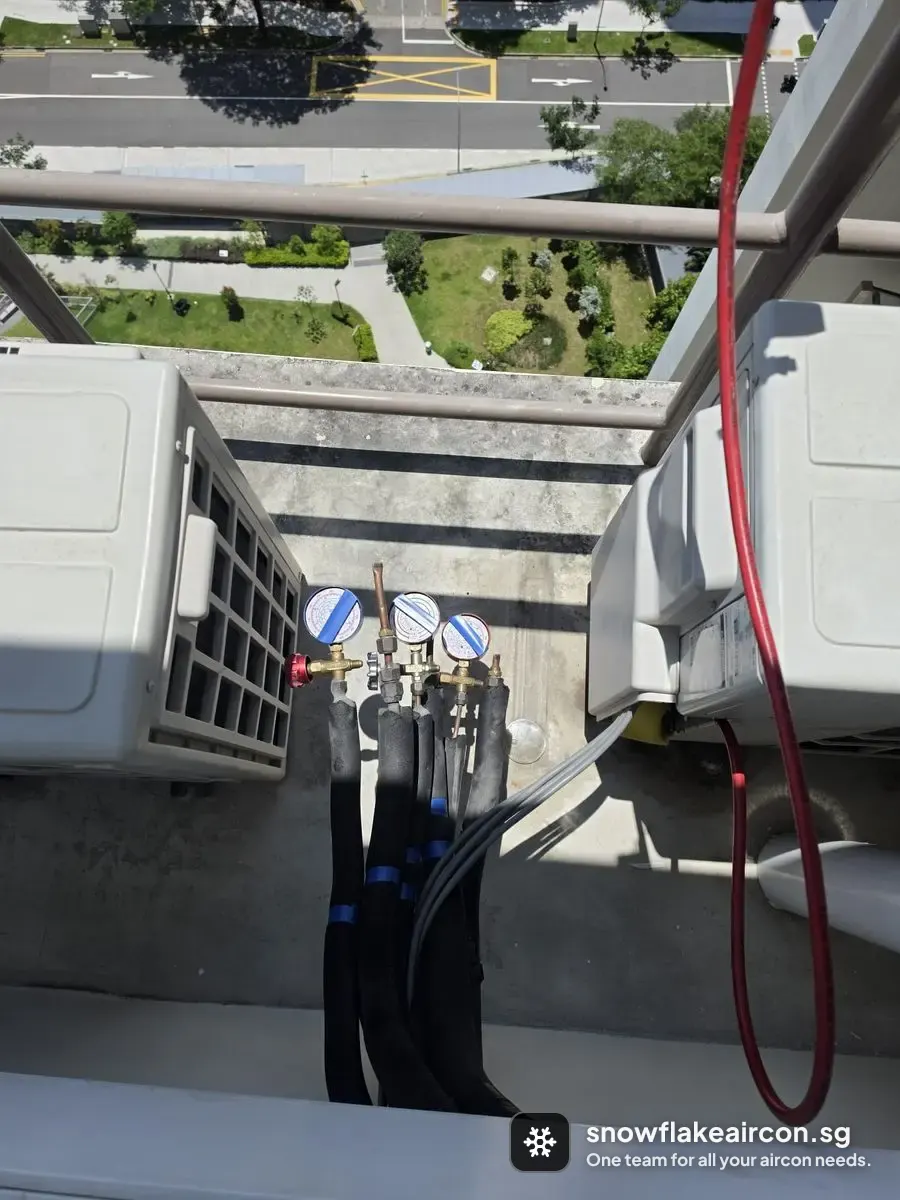
- Connecting manifold gauges on the ledge and matching low pressure to oily flare residue
What Else Produces This
Fading cooling on an older HDB System 3 splits into two costly branches: failing compressor compression or depleted refrigerant charge. Connecting manifold gauges on the outdoor ledge answers that branch within minutes before any parts are ordered.
Standing pressure sits well below expected R410A equilibrium for Singapore ambient air, ruling out an intact full charge.
Operating suction pressure drops sharply under load while the inverter compressor ramps smoothly with healthy current draw.
Removing the outdoor valve cover exposes tacky oil staining around the master-bedroom liquid-line brass flare nut.
Soap-bubble solution forms persistent fine foam along the nut threads, confirming the active escape point outdoors.
Why It Happens
Years of outdoor ledge vibration and daily tropical heat cycling loosened the original copper flare seat on the master-bedroom port. Refrigerant escaped gradually alongside compressor oil, leaving the indoor evaporator starved whenever two rooms ran together. Warm air returned slowly across months rather than failing overnight. Because the compressor itself remained mechanically sound, full system replacement quotes misread low charge as mechanical wear.
What Resolution Involves
Recovering the remaining charge allows cutting back the fatigued copper tip safely. A fresh, mirror-smooth flare cone is formed with a calibrated flaring tool and tightened evenly onto the brass valve. Next, dry nitrogen pressure testing confirms zero loss before deep vacuum evacuation and weighed R410A charging. Skipping the re-flare would waste fresh gas within months.
How to Tell It Worked
Standing nitrogen pressure holds rock-steady for thirty minutes prior to charging. Once running with two bedrooms active, supply air at the master-bedroom louvre drops cleanly below 12 degrees Celsius. Both insulated copper lines sweat evenly back to the outdoor ledge valves, and compressor current sits squarely inside nameplate range. Soap checks on the new brass flare show zero micro-bubbles across full load.
Before You Approve a Quote
Readings separate a cheap flare fix from replacement
- Gradual cooling loss over several humid Singapore months points toward a slow refrigerant escape rather than sudden hardware collapse.
- Topping up refrigerant without re-flaring the weeping brass nut guarantees another warm bedroom within months.
- Healthy compressor ramp-up and steady cooling once sealed prove the outdoor machine still has useful life.