On this page
How This Presents
Cooling across three shophouse rooms drops off steadily every four months despite repeated gas top-ups by different contractors. Indoor coils stay clean and frost-free. Operating hours run heavy six days a week, yet no indoor water leak or error light appears.
- Setup
- Toshiba Multi-split10-12 yearsShophouseHougang
- Misread as
- Dreading a quote to hack plastered shophouse walls for concealed copper pipework after repeated gas top-ups failed.
- Check first
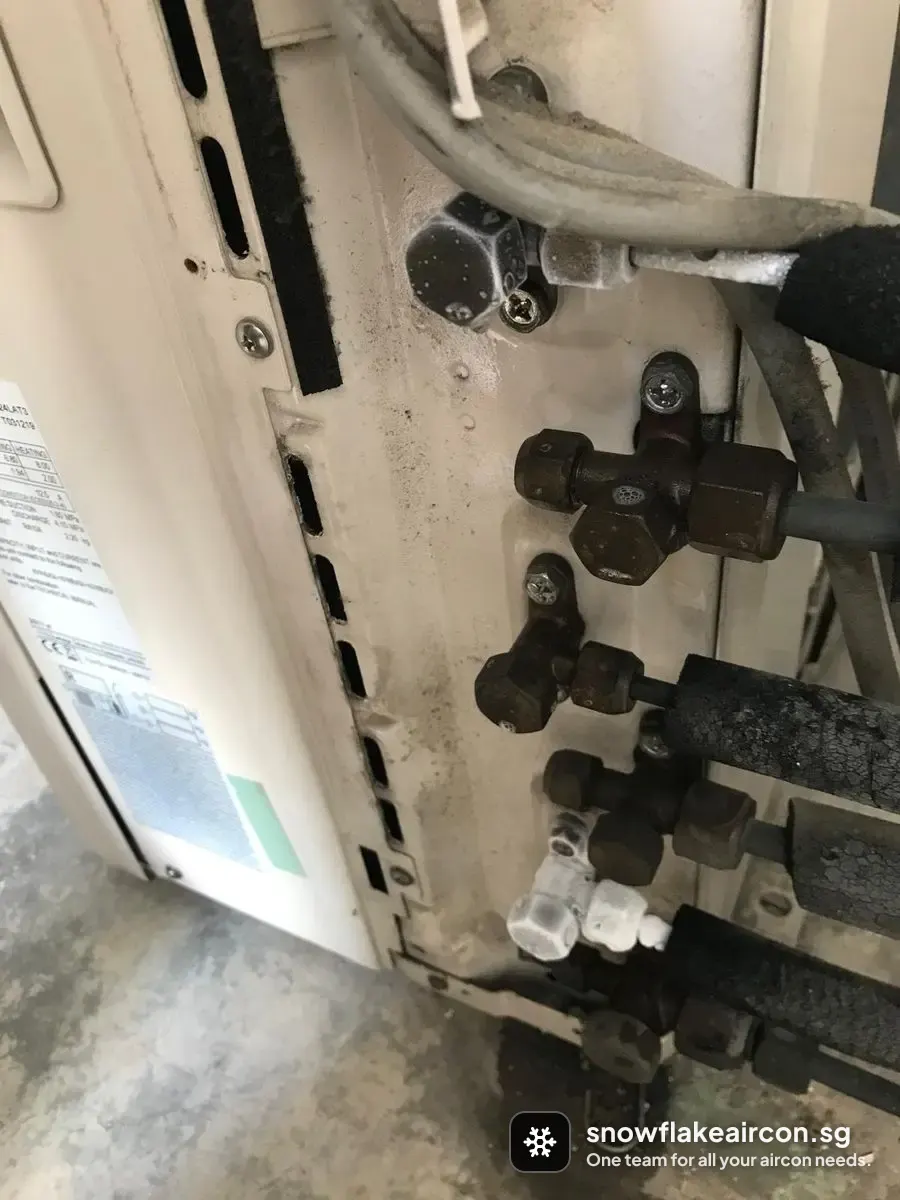
- Spotting oil-bound grime around the outdoor service valves and soap-testing beneath the brass caps
What Else Produces This
Recurring refrigerant shortage after multiple top-ups points to an unsealed escape point rather than normal wear. Before suspecting buried shophouse pipework, inspecting the exposed outdoor valve manifold often surfaces unmistakable physical evidence right at eye level.
Every indoor coil and accessible wall joint remains bone-dry and free of oil staining.
Outdoor valve bank carries thick, tacky soot and grease caked squarely across two suction-line brass service valves.
Degreasing the brass bodies and removing loose plastic-lined caps exposes active bubbling at both the Schrader core and stem gland.
Pressure isolation shows the indoor copper branches hold steady once the outdoor valve seals are addressed.
Why It Happens
Over ten to twelve years of Hougang shophouse operation, internal rubber O-rings inside the service-valve stems hardened and flattened. Repeated hose hook-ups during casual top-ups chewed the valve cores further. Loose caps stopped providing a tight secondary seal, letting gas and oil weep outdoors while roadside dust baked onto wet brass. Concealed copper pipes inside the plastered walls played no part.
What Resolution Involves
Recovering the circuit allows swapping worn Schrader cores and dressing damaged threads cleanly. Fresh brass flare caps with rated seal washers close the ports securely. Where a valve stem body itself leaks past internal packing, brazing in a new brass valve seals the leak before vacuuming and weighed charging. Skipping indoor wall hacking saves days of shophouse disruption.
How to Tell It Worked
Clean, degreased valves pass both electronic leak sniffing and twenty-minute soap-bubble inspection under full operating pressure. All three rooms pull down briskly together during humid afternoon heat. Fresh brass caps stay bone-dry at follow-up checks, ending the costly cycle of quarterly top-ups. Operating pressures match factory service charts across every indoor head without frosting or pressure drift.
Before You Approve a Quote
Oily grime on outdoor valves narrows the leak fast
- Refrigerant carries compressor oil along with it, so sticky black dirt clinging to brass fittings acts as a built-in leak marker.
- Every unsealed gas top-up stresses aging valve cores further and hides a simple outdoor repair behind repeat invoices.
- Inspecting accessible brass valves thoroughly always comes before blaming concealed copper runs inside shophouse walls.