On this page
How This Presents
Master bedroom R410A split system in a Bukit Timah landed terrace loses its chill every five to six months. Previous visits topped up gas at the timber balcony condenser without finding where refrigerant escaped.
- Setup
- Toshiba Wall-mounted7-9 yearsLandedBukit Timah
- Misread as
- Endless semi-annual gas top-ups or prematurely scrapping a working R410A condenser.
- Check first
- Gauge verification followed by inspecting bare brass unions under split outdoor insulation
What Else Produces This
Repeat refrigerant loss on an open balcony system rarely hides inside the house wall. Checking operating pressure first confirms undercharge, then following every exposed brass joint outside locates the leak cleanly.
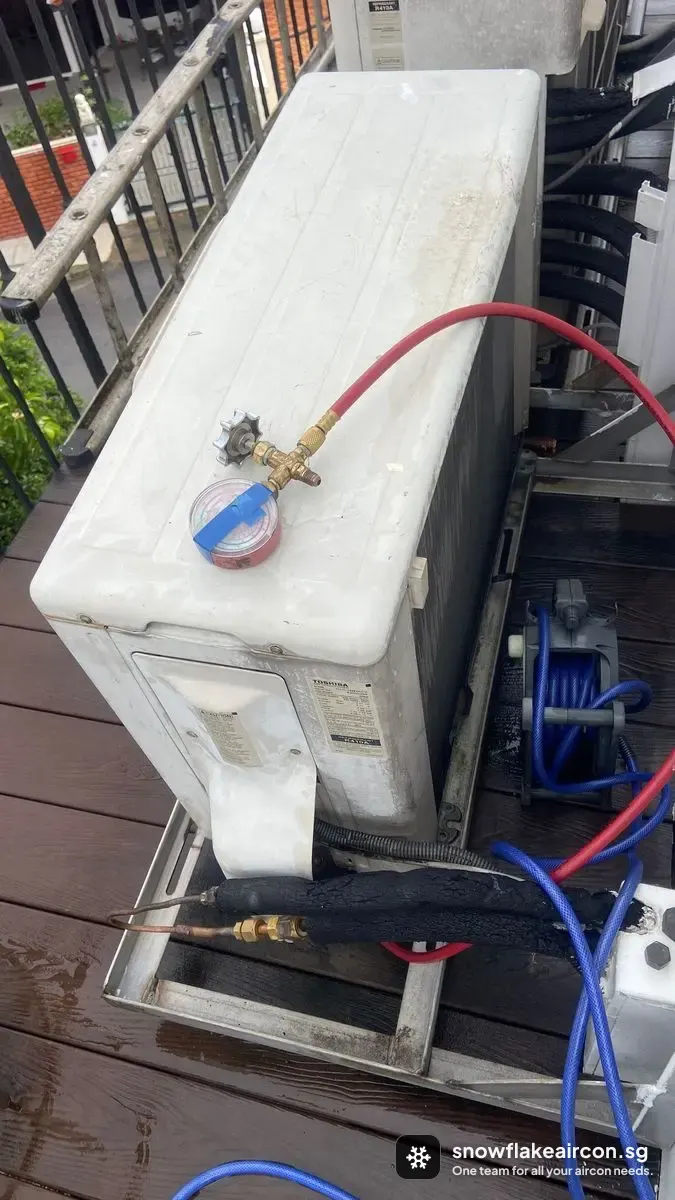
Connecting a manifold gauge and charging hose to the Toshiba service port shows running suction pressure sitting well below normal R410A range.
Black foam insulation lying along the steel balcony tray has hardened, split, and pulled away from the horizontal copper run.
Exposed brass flare coupling just outside the outdoor valve cover glistens with dark compressor oil and fine dust.
Soap solution produces continuous fine bubbles around the brass union collar while indoor joints and condenser fins stay tight.
Why It Happens
Direct afternoon sun and heavy rain on a Bukit Timah timber balcony degrade unprotected foam insulation within several years. Standing water trapped against the bare brass flare coupling accelerates surface oxidation and thermal expansion fatigue until R410A weeps steadily past the flared seat.
What Resolution Involves
Stop paying for blind top-ups. Recover the remaining blended R410A, cut back the pitted copper end, form a fresh flare onto a clean brass union, pressure-test with dry nitrogen, evacuate the circuit thoroughly, weigh in nameplate R410A, and seal the balcony pipes in UV-resistant weather tape.
How to Tell It Worked
Verify nitrogen pressure holds flat for thirty minutes with zero gauge creep before recharging, then confirm steady suction pressure and crisp 11°C supply air blowing inside the master bedroom.
Before You Approve a Quote
Never pay for a second gas top-up without a leak search
- Refrigerant runs inside a sealed loop, so needing gas twice in a year guarantees a physical leak somewhere in the circuit.
- Sun-baked Armaflex on Singapore landed balconies splits open and traps rainwater right against brass pipe couplings.
- Re-flaring the leaking coupling, pressure testing the line, vacuuming, and weighing in fresh R410A turns repeat callouts into a single fix.