On this page
How This Presents
Midday living-room air turns sluggish whenever sunny weather hits the mature Toa Payoh HDB block, yet bedrooms still chill easily after dark. Orange rust streaks bleed across the concrete aircon ledge below the outdoor casing. Recent indoor filter washes made zero difference.
- Setup
- Hitachi Multi-split10-12 yearsHDBToa Payoh
- Misread as
- Booking repeated gas top-ups or premature system replacement because afternoon living-room cooling faded.
- Check first
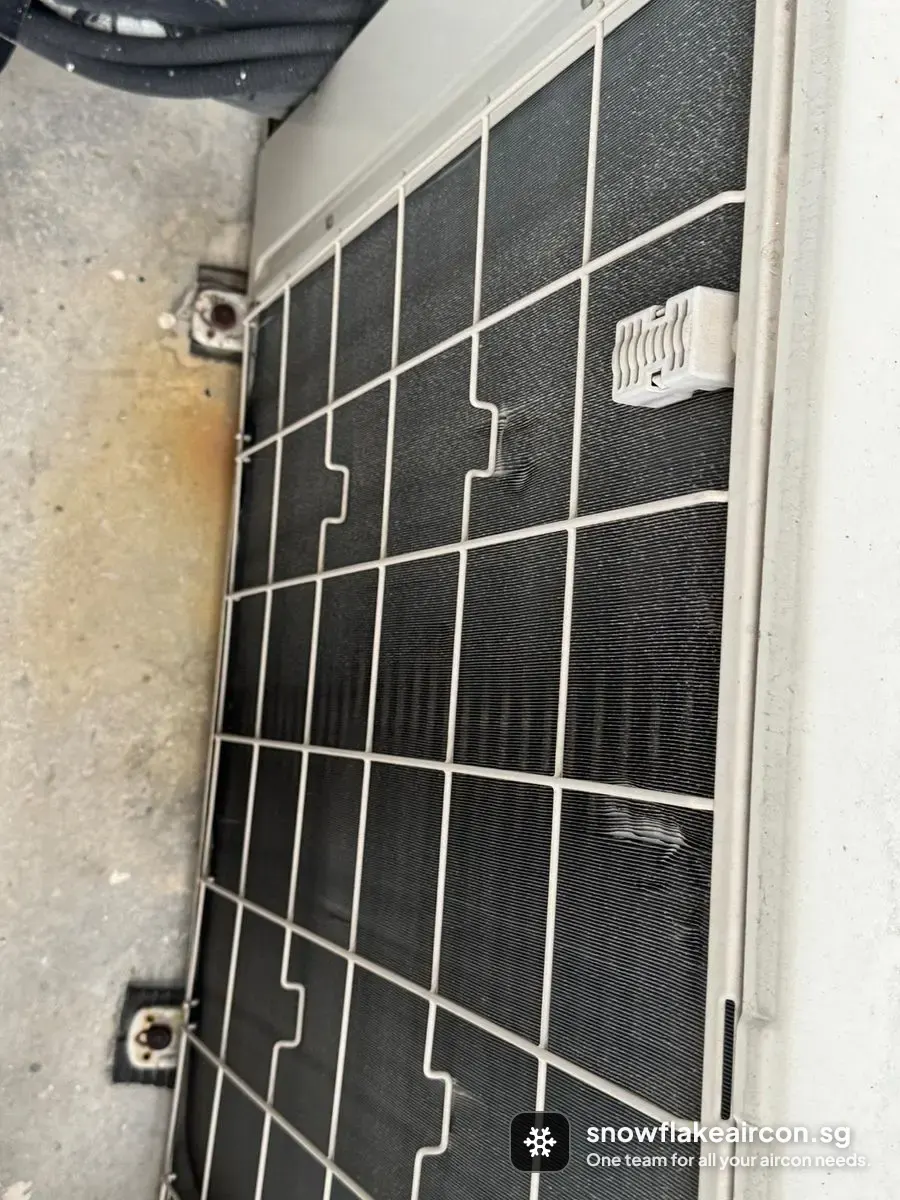
- Inspecting the rear condenser fin face and base bolt seating on the concrete HDB ledge
What Else Produces This
Strong night cooling paired with afternoon fade clears the indoor fan coils and points straight outside to heat rejection. Checking the rear fin face and mounting bolts on the concrete ledge explains both cooling drop and rust trails together.
Cool nighttime supply readings rule out refrigerant loss, since a leaking system struggles regardless of outdoor sun.
Behind the white rear wire guard, grey estate dust and lint blanket the closely spaced aluminium condenser fins.
Two small crushed fin patches beside the clipped ambient sensor housing further narrow airflow across the rear coil.
Heavily rusted anchor bolts have sunk slightly, tilting the base tray so rainwater pools and stains the HDB slab.
Why It Happens
Over ten years of urban dust, laundry lint, and tropical rain build a dense felt across rear HDB condenser coils facing narrow estate ledges. Meanwhile, corroded mild-steel base fasteners lose level and bleed orange rust across the concrete slab. Standing rainwater wets the lower tray while choked rear fins trap afternoon compressor heat and force thermal throttling.
What Resolution Involves
Isolate outdoor electrical power and detach the rear wire coil guard carefully from the ledge side without straining the clipped ambient sensor. Comb flattened fin patches straight and flush the full condenser bank clean from inside out until daylight clears every row. Swap the rusted base anchors for stainless fasteners on fresh level rubber pads, leaving the sealed refrigerant circuit untouched.
How to Tell It Worked
Run the Toa Payoh living-room unit during peak afternoon heat for thirty minutes. Feel hot, brisk exhaust leaving the front fan grille while checking indoor room temperature drop. Confirm the newly anchored outdoor casing sits rock-steady without rattling on the concrete HDB ledge. Steady chilled supply air and clean, level ledge drainage confirm restored outdoor heat rejection.
Before You Approve a Quote
Nighttime cold with afternoon fade points straight to the outdoor condenser
- Rooms that chill easily after sunset prove the refrigerant charge and indoor coils still work properly.
- Dense estate grit behind the rear wire guard traps heat once midday Singapore sun warms the HDB ledge.
- Flushing rear fins, combing crushed patches, and renewing rusted anchor feet restore steady daytime cooling.