On this page
How This Presents
Ten-year-old bedroom unit in a high-floor Sembawang HDB cools adequately at night but fades every sunny afternoon and runs hot. A quick visual glance from the service yard window triggers a push for immediate full replacement.
- Setup
- Panasonic Wall-mounted10-12 yearsHDBSembawang
- Misread as
- An immediate emergency system replacement quoted on the spot without checking coil integrity.
- Check first
- Harnessed inspection of condenser hairpin bends and operating head pressure
What Else Produces This
Afternoon-only cooling drop on an older high-floor unit points to restricted heat rejection at the outdoor condenser. Stepping onto the ledge in full safety harness lets a technician measure whether the copper circuit is still sound.
Operating discharge temperature and head pressure climb steeply under direct afternoon sun while indoor filters and blower stay clean.
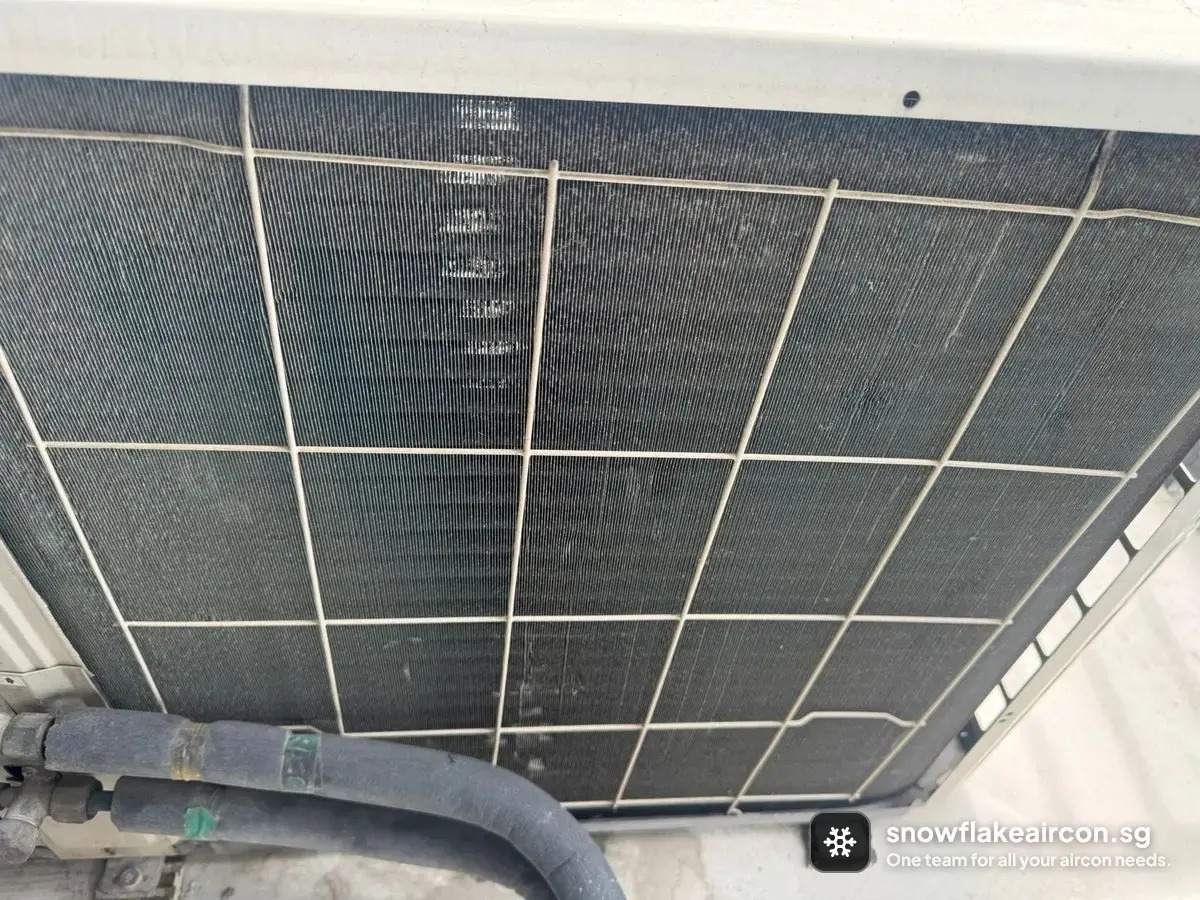
Aluminium fins along the exposed end hairpin bends have oxidized into flaky white powder matting the airflow slots shut.
Electronic leak checking along every exposed copper U-bend shows zero refrigerant seepage and completely dry metal.
Roughly eighty percent of the main condenser fin matrix remains intact once loose corroded flakes are brushed clear.
Why It Happens
Ten years of north-coast sea air blowing across Sembawang HDB blocks corrodes the galvanic seam between thin aluminium fins and copper return bends. Flaking white oxide packs tightly between adjacent fin channels, choking condenser airflow until afternoon heat triggers compressor thermal derating.
What Resolution Involves
Avoid high-pressure jetting or harsh acid chemicals. Carefully snip away detached, crumbled fin shards along the end rail, rinse the sound central coil gently with low-pressure fresh water, and photograph coil condition so the household can budget a calm replacement over the next 12 to 18 months.
How to Tell It Worked
Check condenser exhaust airflow and operating head pressure under hot afternoon load. Warm air should blow smoothly through the cleared fin core while bedroom supply temperature stays steady below 13°C.
Before You Approve a Quote
Crumbling fins demand gentle clearing and an honest replacement horizon
- Coastal wind in northern Singapore estates like Sembawang turns exposed condenser fins into chalky powder that blocks outdoor heat rejection.
- High-pressure water jets or harsh acid wash will shred corroded aluminium fins completely and puncture thinning copper hairpins.
- Trimming loose debris and confirming tight copper pressure buys safe breathing room to budget a planned swap over the next year.