On this page
How This Presents
Newly renovated River Valley condo bedroom unit cools sharply during handover, then blows warm room-temperature air three weeks after the resident moves in. One inspection blames concealed ceiling copper piping and quotes hacking open the newly painted plaster bulkhead.
- Setup
- Mitsubishi Electric Wall-mounted1-3 yearsCondoRiver Valley
- Misread as
- Hacking fresh condo walls and false ceilings to lay new concealed copper piping.
- Check first
- Unwrapping insulation at the indoor flare union to spot compressor oil residue
What Else Produces This
When a two-year-old Mitsubishi Electric Starmex loses charge right after renovation, the leak almost always sits at a mechanical joint touched during carpentry or painting rather than mid-run inside a wall.
Standing suction pressure at the condo aircon ledge reads well below normal R32 operating range, confirming genuine refrigerant loss.
Outdoor flare valves and condenser coil test completely dry under electronic leak detector and soap-bubble checks.
Tilting the indoor fan coil forward above the bedroom doorframe exposes damp, oily Armaflex tape wrapped around the liquid-line brass union.
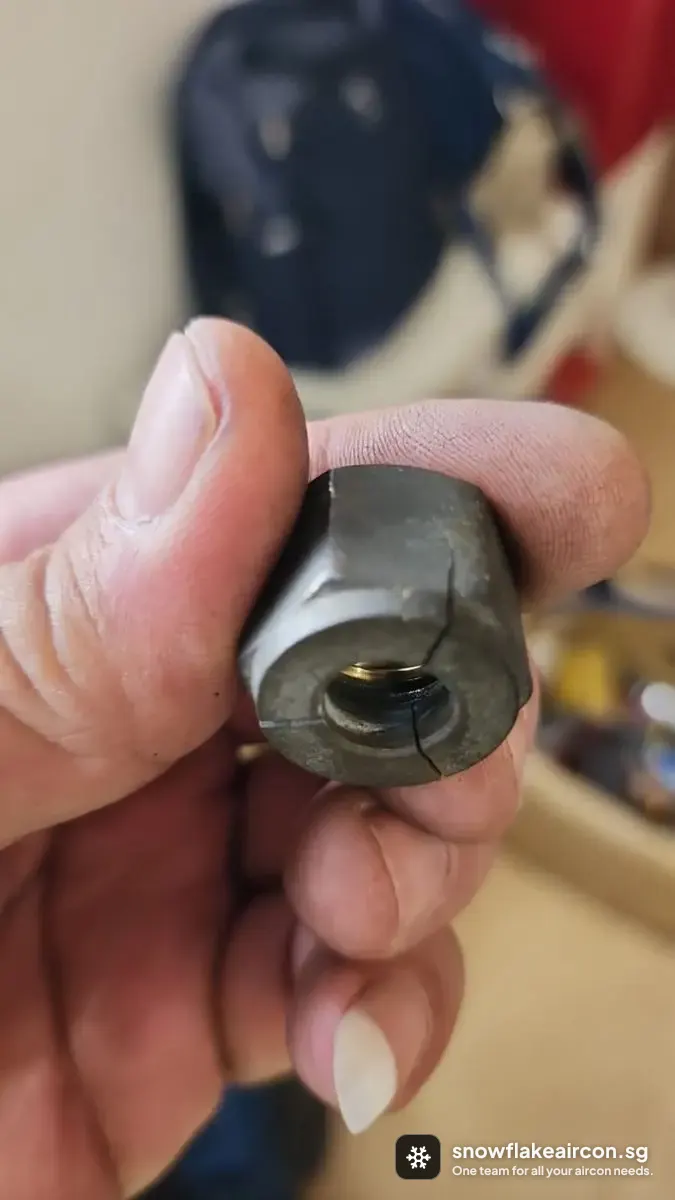
Soap solution forms steady micro-bubbles around the flare nut collar, showing an uneven seat from single-wrench re-tightening.
Why It Happens
During doorframe painting, the indoor unit was propped off its wall bracket, straining the brass flare connection underneath the evaporator. Because R32 operates at higher working pressures than older refrigerants, an off-square flare face weeps compressor oil and vapour steadily until indoor cooling vanishes completely.
What Resolution Involves
No wall hacking or pipe re-running is needed. Cutting back five millimetres of stressed copper, forming a clean 45-degree flare, torqueing the union with two wrenches, pressure-testing with dry nitrogen, evacuating moisture with a vacuum pump, and metering in R32 by scale seals the circuit permanently.
How to Tell It Worked
Confirm the dry nitrogen standing gauge holds rock-steady with zero pressure drop for thirty minutes before evacuation, then measure subcooling and indoor vent air below 12°C once charged.
Before You Approve a Quote
Check every disturbed flare joint before suspecting concealed pipes
- Unclipping an indoor fan coil for painting or doorframe carpentry stresses the flared copper union directly behind the unit.
- Fresh refrigerant oil soaking the foam insulation tape marks a leaking brass nut far faster than guessing at hidden wall runs.
- Re-flaring with a backup wrench, pressure testing the sealed line, and weighing in R32 restores factory seal without touching condo ceilings.