On this page
How This Presents
Air emerging from the bedroom outlet feels cold inches from the flap yet stalls halfway across the mattress on maximum speed. A faint pulsing whoosh accompanies a stale, damp smell despite regular filter rinsing. Lowering the setpoint changes nothing because wind never reaches the bed.
- Setup
- Fujitsu Wall-mounted4-6 yearsLandedSerangoon
- Misread as
- Fearing that noisy, feeble air throw at maximum fan speed means the indoor fan motor is failing and needs replacement.
- Check first
- Shining a torch through the louvre opening onto the rotating blower drum while comparing motor speed against air throw
What Else Produces This
Feeble air throw from a cold indoor coil narrows down to two culprits: a tired fan motor turning too slowly, or aerodynamic blockage across the rotating blower vanes. Inspecting the drum under torchlight settles the question before touching electronics.
Outlet air temperature registers briskly cold right at the grille, confirming healthy refrigeration and coil heat transfer.
Fan motor shifts cleanly across low, medium, and high speed steps with smooth shaft rotation and zero bearing grind.
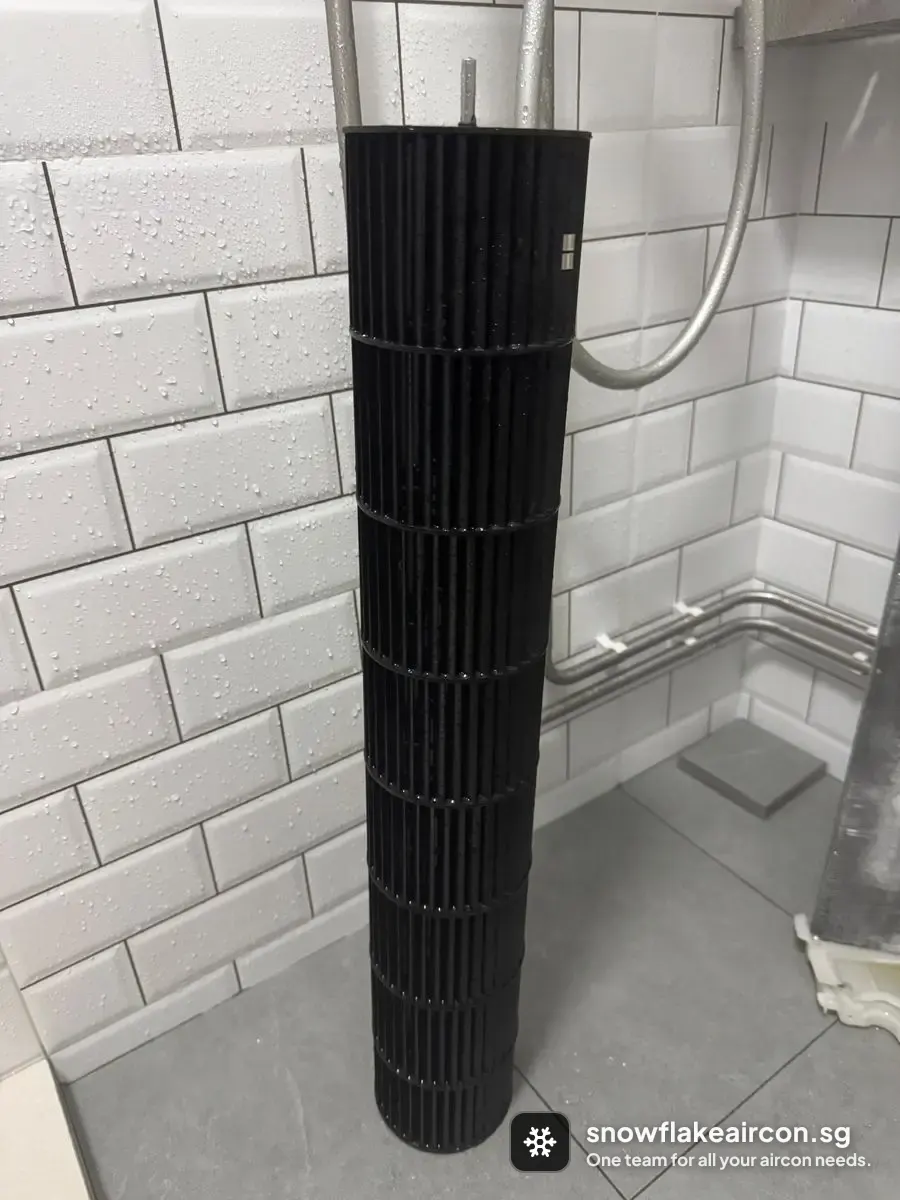
Shining a torch past the swing vane reveals thick grey lint ridges bridging almost every curved blade along the drum.
Uneven slime deposits create noticeable aerodynamic flutter whenever fan speed climbs past medium.
Why It Happens
Humid Serangoon landed bedrooms running nightly pull fine fabric lint past standard mesh screens onto damp plastic blades. Surface-only servicing misses the rear curve of each vane. Over several years, biofilm fills those concave pockets until the wheel spins like a smooth cylinder that stirs air without throwing it. Unbalanced grime patches also create faint flutter.
What Resolution Involves
Removing the outer casing, drain tray, and right-side set screw frees the entire blower wheel cleanly from the motor shaft. Washing and brushing the drum upright in the bathroom with coil-safe cleaner strips every vane down to clean plastic. Re-lubricating the left rubber bush before reassembly prevents shaft squeak. Motor windings stay completely dry throughout the scrub.
How to Tell It Worked
Restarting on medium fan sends even, quiet airflow across the far bedroom wall without any pulsing whoosh. Visual inspection through the outlet confirms clean, sharp vane edges along the full drum width. Room air smells fresh and cools down twice as fast. Low-speed operation runs whisper-quiet beside the bed.
Before You Approve a Quote
Packed blower vanes starve airflow even on healthy motors
- Air feels freezing right at the outlet yet fails to cross a humid Singapore bedroom whenever mould fills the curved wheel blades.
- Spraying through the front opening only rinses outer edges, leaving damp fuzz wedged behind the drum hub.
- Dismantling the wheel for a full upright bathroom scrub restores silent, balanced throw with zero new parts.