On this page
Quick summary
Black flakes spitting from a Singapore bedroom aircon onto pillows come from either damp mould caked on the hidden blower wheel or crumbling charcoal foam along the outlet lip. Shining a torch past the louver separates both causes safely, deciding between a general wash, overhaul, or foam strip fix.
Inspect the Flakes and Outlet Safely Before Touching the Unit
Switch the bedroom wall unit completely off at the remote and wall isolator before looking inside the air outlet. Never poke cotton buds, toothbrushes, or cloths past the swing louver while power remains live, as spinning cross-flow blades snap easily and can injure fingers.
Pick up a fallen speck on white tissue paper and press gently. Soft damp smears that smell earthy or musty point straight to biological mould and wet dust detaching from the dark cylindrical blower drum inside.
Dry, springy charcoal crumbs that rub into fine black soot without odour usually come from perished polyurethane insulation foam peeling off the inner discharge lip on units past six years old.
Match Bedroom Debris Clues to Blower Mould, Lint, or Foam
Each type of airborne debris points to a specific part inside the indoor fan coil and a clear service tier in Singapore:
Scroll to see more columns
| Debris seen on sheets | Most likely source | Torch check clue | Effective Singapore remedy |
|---|---|---|---|
| Dark damp flakes with musty odour | Thick biofilm crust on blower wheel fins | Fuzzy black build-up across roller blades | Full dismantled chemical overhaul |
| Dry grey cottony lint and hair | Torn or unclipped plastic mesh filter | Dust mat sitting across coil face | Rinse or replace mesh plus general wash |
| Dry spongy black crumbs, zero smell | Perished foam anti-sweat louver strip | Missing ragged gaps along outlet lip | Strip old foam and fit fresh insulation tape |
| Fine white chalky powder | Dried coil cleaner or corroded aluminium fins | Powdery crust along metal coil ribs | Deep water rinse and coil condition check |
Why DIY Foam Sprays Fail to Clear Caked Blower Drums
Supermarket aerosol sprays only reach the front aluminium evaporator fins and never wash the curved back side of the spinning plastic blower barrel. Worse, sticky un-rinsed detergent traps fresh bedroom textile lint and speeds up black flake shedding a month later.
In Singapore's high humidity, moisture lingers inside the blower housing every time cool mode stops abruptly. Running fan-only mode for fifteen minutes after overnight cooling dries the drum and slows fungal growth between professional visits.
Always check that both mesh screens clip flat into their tracks after rinsing. Even a five-millimetre gap lets bedsheet fuzz bypass the screen straight onto wet coils.
Choose Between General Wash, Overhaul, or Foam Fix by Cost
Picking the exact cleaning depth avoids paying twice when black flakes come back after a light wipe:
- Light dusty airflow clears under general servicing: S$50 covers one bedroom head, S$30 applies to each unit in a pair, and S$25 applies per head once three units are cleaned (14-day warranty).
- Stubborn sticky lint on fins and shallow trays needs chemical coil washing at S$80 on a standalone unit, S$70 apiece when booking two, or S$60 per indoor head from three units up (60-day cover).
- Heavy black blower-drum crust requires dismantling the indoor barrel via chemical overhaul: S$150 on a lone bedroom unit, S$125 each across two rooms, or S$115 apiece when three units get stripped (90-day cover).
- If crumbling casing foam needs replacement strips instead of washing, Snowflake checks the unit for S$30 and credits that sum toward approved fixes.
Diagnostic Cases for This Fault
Singapore jobs showing what we checked on-site before quoting parts or gas.
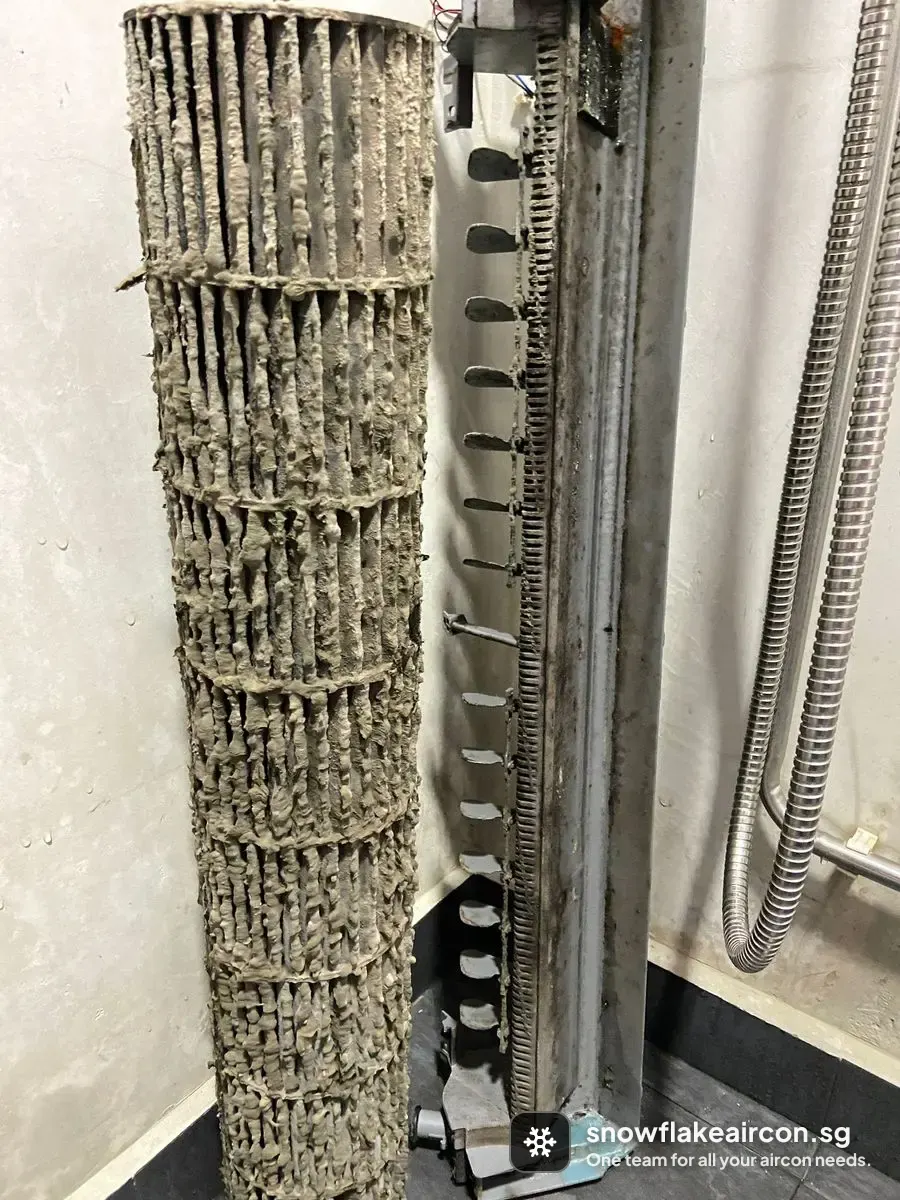
Hougang HDB · LG
Routine Filter Wash Failed: Blower Barrel Packed in Lint
Thick bedroom lint and fungal biofilm packing every concave vane of the indoor blower barrel
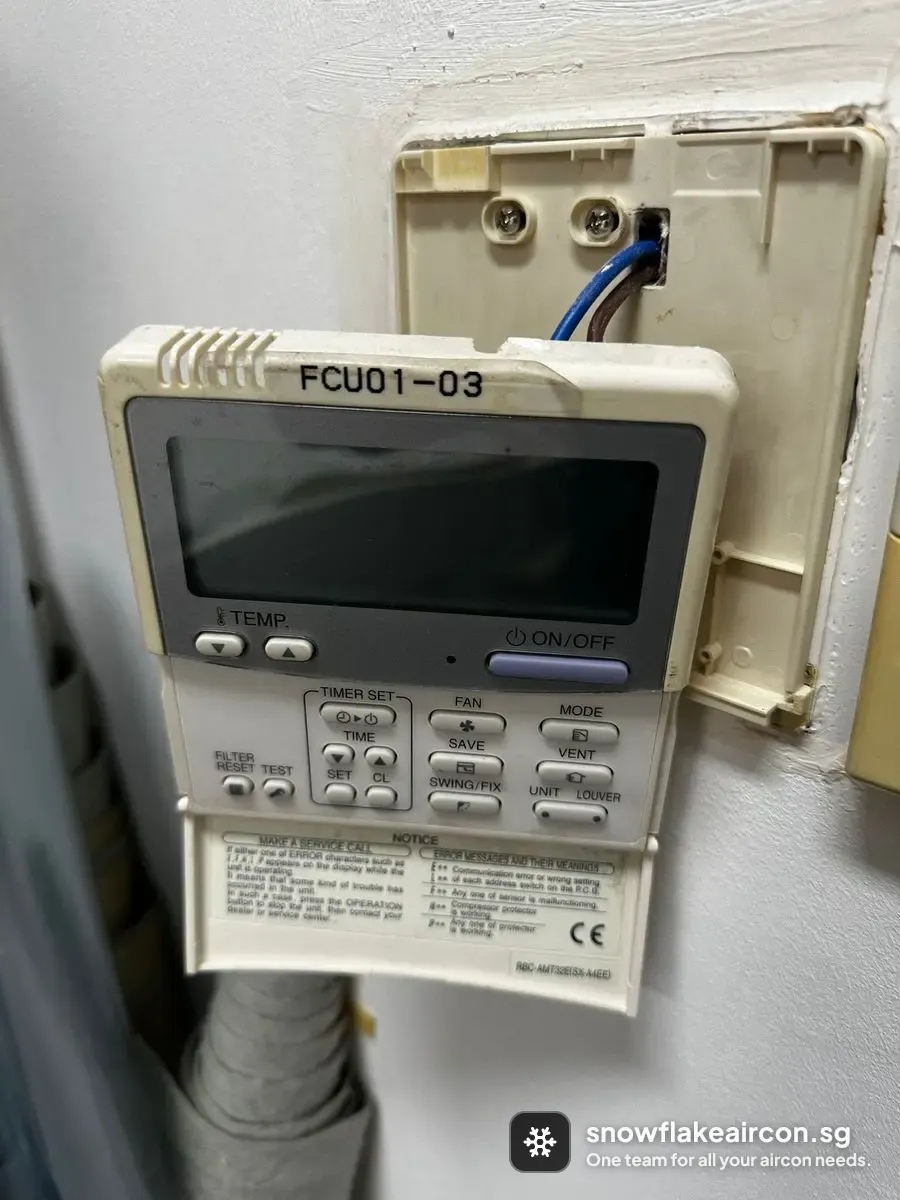
Novena Shophouse · Fujitsu
Shophouse FCU Blowing Warm: Perished Seals and Packed Blower
Perished internal foam baffle seals causing warm void bypass alongside a dust-loaded blower housing