On this page
Quick summary
Airborne flour mixed with butter vapour and Singapore humidity bakes into a dense paste across bakery aircon coils within weeks. Pastry kitchens need weekly mesh rinsing, monthly servicing, and quarterly chemical washes to stop icing and leaks, while eligible food-services SMEs can tap 70% EEG co-funding for 5-tick replacements.
Why Flour and Butter Mist Cake Bakery Coils Rapidly
Standard shop dust stays dry and rinses off easily, whereas fine wheat flour drawn onto wet evaporator fins hydrates into sticky starch paste. Warm butter and shortening vapour from laminated dough benches coats that starch layer, sealing the narrow aluminium fin gaps.
Once airflow drops across the caked coil, chilled air cannot reach chocolate tempering or pastry proofing zones. Condensation also backs up in the drain tray and drips onto prep tables, creating hygiene hazards during peak morning bakes.
High Singapore ambient heat pushes kitchen compressors near maximum amps all day, accelerating wear whenever coils stay coated.
Match Bakery Cleaning Intervals to Flour and Grease Load
Different areas inside a Singapore bakery or shophouse kitchen accumulate flour paste at distinct speeds:
Scroll to see more columns
| Bakery or cafe zone | Primary fouling mix | Staff filter wash | Technician cleaning cadence |
|---|---|---|---|
| Pastry lamination and dough room | Heavy flour dust plus butter mist | Twice weekly soak and dry | Monthly routine; 3-month chemical wash |
| Hot oven and baking line | Flour, sugar haze, and oil film | Weekly warm-water degrease | Monthly routine; 3 to 4 month chemical |
| Cake decorating and chiller room | Light sugar dust and high moisture | Every 2 weeks | Every 2 months routine; 6-month chemical |
| Front retail counter and cafe | Light foot-traffic dust and aroma | Every 2 to 4 weeks | Quarterly routine; annual chemical wash |
Use 70% SME EEG Support When Old Kitchen Units Struggle
Pastry rooms running ageing 2-tick or 3-tick units for 12 hours daily pay steep SP Group electricity bills and lose temperature stability during afternoon heat. Under Singapore's Energy Efficiency Grant (EEG) for food services SMEs, qualifying local businesses can receive up to 70% co-funding toward pre-approved 5-tick air-conditioners listed on the GoBusiness repository.
Replacing undersized or corroded kitchen fan coils through EEG lowers monthly kWh draw while giving cleaner airflow around chilled prep areas. Always verify current GoBusiness eligibility rules, ACRA registration status, and pre-approved model numbers before purchasing.
Keep NEA indoor air quality and cleanliness standards top of mind by scheduling deep coil rinses outside baking hours so cleaning mists never touch open ingredients.
Plan Your Bakery Servicing Budget and Booking Schedule
Preventive upkeep costs far less than discarding melted buttercream or halting morning production due to a water leak:
- Wall-mounted bakery splits qualify for transparent flat servicing: S$50 solo, S$60 total for two coils (S$30 each), or S$25 per coil from three upward, backed by 14-day labour cover.
- Removing baked-on wheat starch and butter glaze takes chemical coil flushing priced from S$60 per split (three-plus coils), S$70 per split (two coils), or S$80 for a lone split, protected for 60 days.
- Caked pastry-room blower barrels need full wall-removal overhauls: S$115 per split (three-plus), S$125 per split (two), or S$150 for one split, carrying 90-day labour protection.
- Mid-shift breakdowns begin with a S$30 inspection fee waived upon approving quoted repairs, while commercial ceiling cassettes and ducted kitchen systems receive tailored on-site quotations.
Diagnostic Cases for This Fault
Singapore jobs showing what we checked on-site before quoting parts or gas.
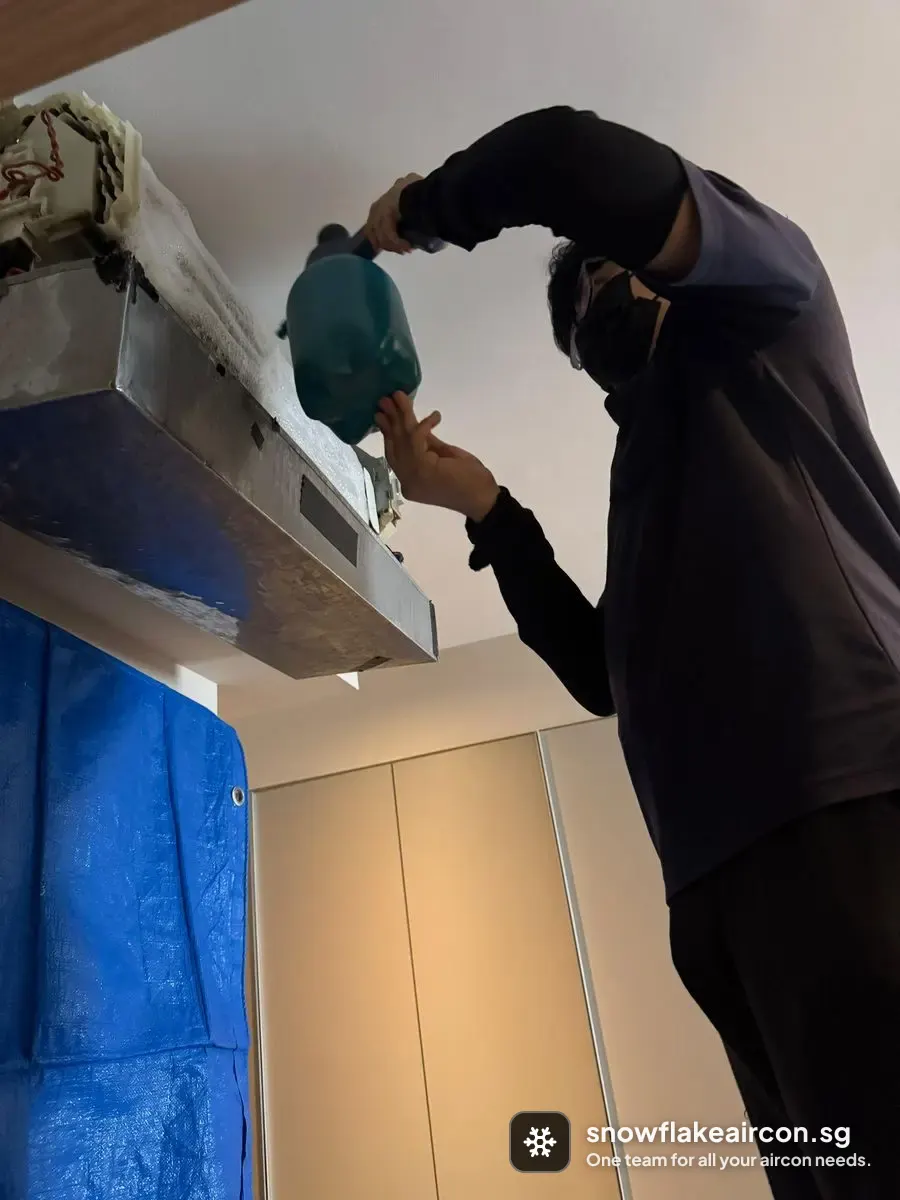
Novena Office · Daikin
Novena Office Ceiling Drip: Biofilm Flush, No Hacking
Thick gelatinous biofilm bridging evaporator fin tips and choking the internal drain tray spout inside an office ceiling-mounted Daikin unit while concealed PVC piping stayed intact
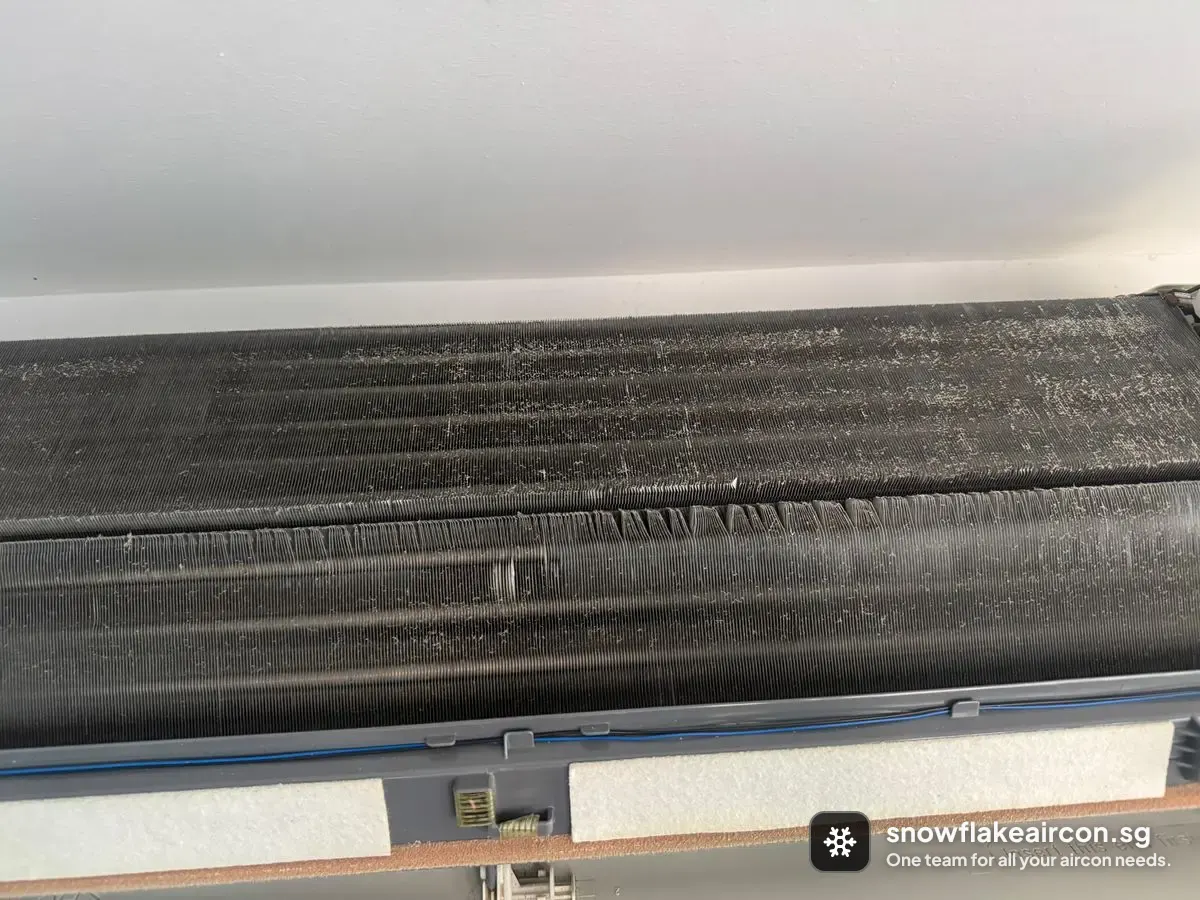
Bukit Merah Retail · Midea
Shop Aircon Runs Non-Stop: Dust Mat Across Indoor Coil
Dense lint and retail dust felt blanketing the exposed evaporator coil face behind rinsed mesh filters