On this page
Quick summary
Dog and cat undercoat hair mixes with damp Singapore air to mat evaporator fins twice as fast as ordinary household dust. Dry-brush and rinse mesh filters every fortnight, skip sticky aerosol cans, and book general servicing every two to three months before coils need chemical clearing.
Why Dog and Cat Fur Mats Evaporator Fins Twice as Fast
Standard split-unit nylon screens catch coarse lint, yet silky cat hair and microscopic dog dander slip straight through the weave. Inside a chilled Singapore bedroom, continuous condensation keeps the metal coil surface wet for hours.
Natural coat oils bind airborne hair to damp fin grooves like wet felt. Within eight to twelve weeks, air velocity drops, room cooling turns sluggish, and the blower wheel collects grey fur collars along every blade.
Shed clumps eventually wash down into the condensate tray. Once fur strands twist into drain slime, narrow 16mm PVC outlets choke far earlier than in pet-free flats.
Match Fur Buildup to Fortnightly Rinses, General Wash, or Chemical
Check your filter screen and behind the intake grille to decide which cleaning tier your pet room actually requires:
Scroll to see more columns
| Visible pet-room sign | Right maintenance step | Recommended frequency | Key protection gained |
|---|---|---|---|
| Grey hair blanket on top mesh screen | Dry vacuum then cool tap rinse | Every 14 days | Keeps full intake airflow and cuts dander bypass |
| Light fuzz on upper fins, airflow still strong | Routine general servicing | Every 2 to 3 months | Clears fin dust and flushes early hair from drain |
| Sour pet odour returns days after filter wash | In-place chemical coil wash | Every 9 to 12 months if needed | Dissolves oily dander film gripping evaporator rows |
| Matted fur on blower blades or recurring drips | Full dismantled chemical overhaul | Only on neglected heavy buildup | Strips fan barrel and clears rear pan hair knots |
Rinse Mesh Screens Fortnightly and Keep Pet Smells Down
Always lift loose fur off dry nylon screens with a soft brush attachment before touching tap water. Wetting dry cat or dog hair directly mats strands into the mesh weave and drops hairballs straight into your bathroom trap.
Flush cool water from the clean underside outward so trapped grit pops free instead of wedging deeper. Air-dry both screens completely in shaded ventilation before clipping them back under the lid.
Skip perfumed coil foam cans sold online. Unrinsed detergent stays sticky on fins, gluing fresh dander faster and irritating pet airways. Running fan circulation for 20 minutes after cooling dries the wet coil and neutralises musty smells naturally.
Compare Pet-Home Servicing Costs and Pick Your Wash Schedule
Regular light cleaning protects both your pets' breathing air and your wallet against heavy overhaul bills:
- Two-to-three-month washes remain economical: S$50 handles a single wall split, S$30 per split covers two units, and S$25 apiece applies once three or more fan coils share an appointment (14-day cover).
- Sticky dander oil that resists water jets requires chemical flushing at S$80 for one split, S$70 per unit on two, and S$60 per unit on three or more (60-day cover).
- Fur-packed blower barrels or stubborn leaks call for full strip-down servicing. That runs S$150 on one unit, S$125 per unit across two, or S$115 per unit across three-plus splits (90-day cover).
- Place a freestanding HEPA air cleaner beside sleeping baskets or litter trays so floating undercoat gets trapped before reaching the ceiling-height intake.
Diagnostic Cases for This Fault
Singapore jobs showing what we checked on-site before quoting parts or gas.
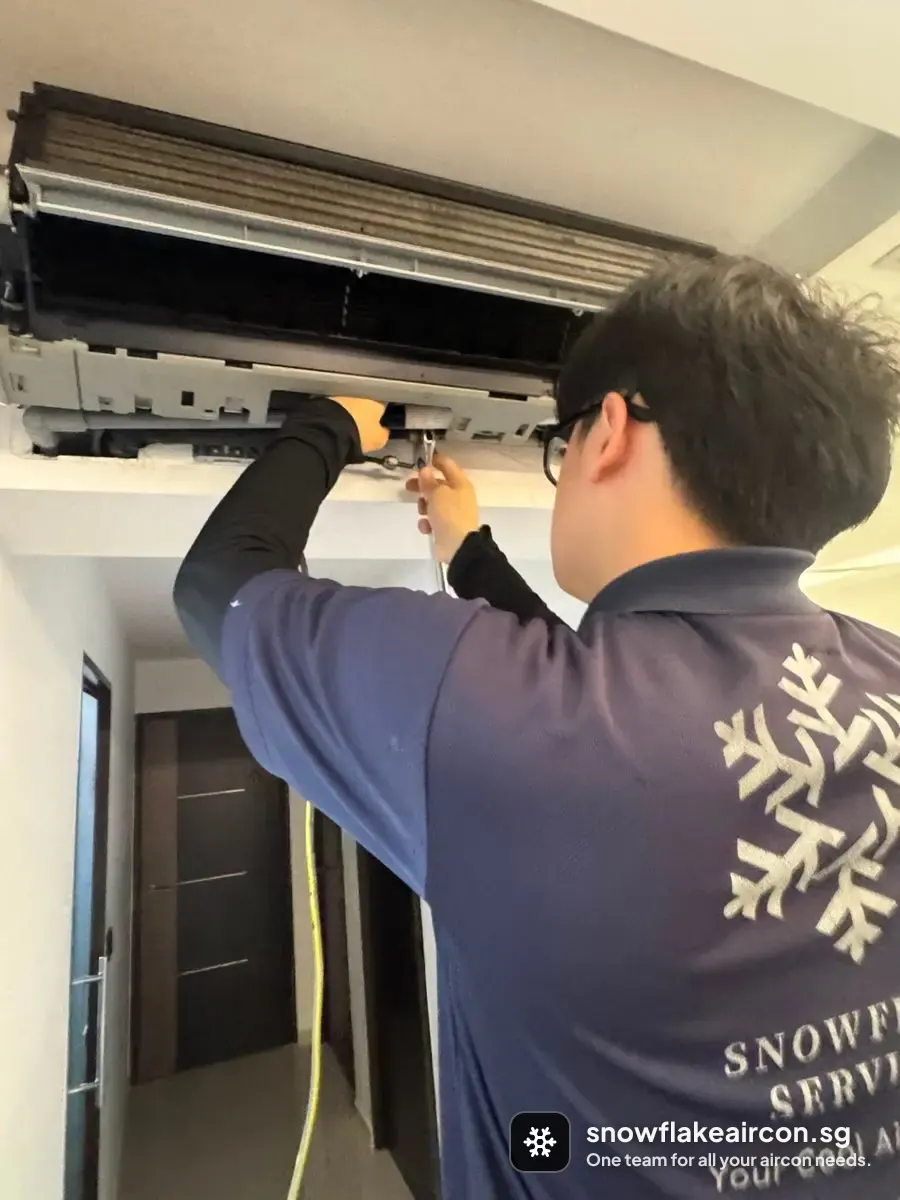
Tampines HDB · Daikin
Daikin Right-Corner Drip: Plugged Drain Elbow, Not Pipe
Dense biofilm plug lodged inside the short right-side drain elbow under the indoor pan while the concealed trunking pipe stayed clear
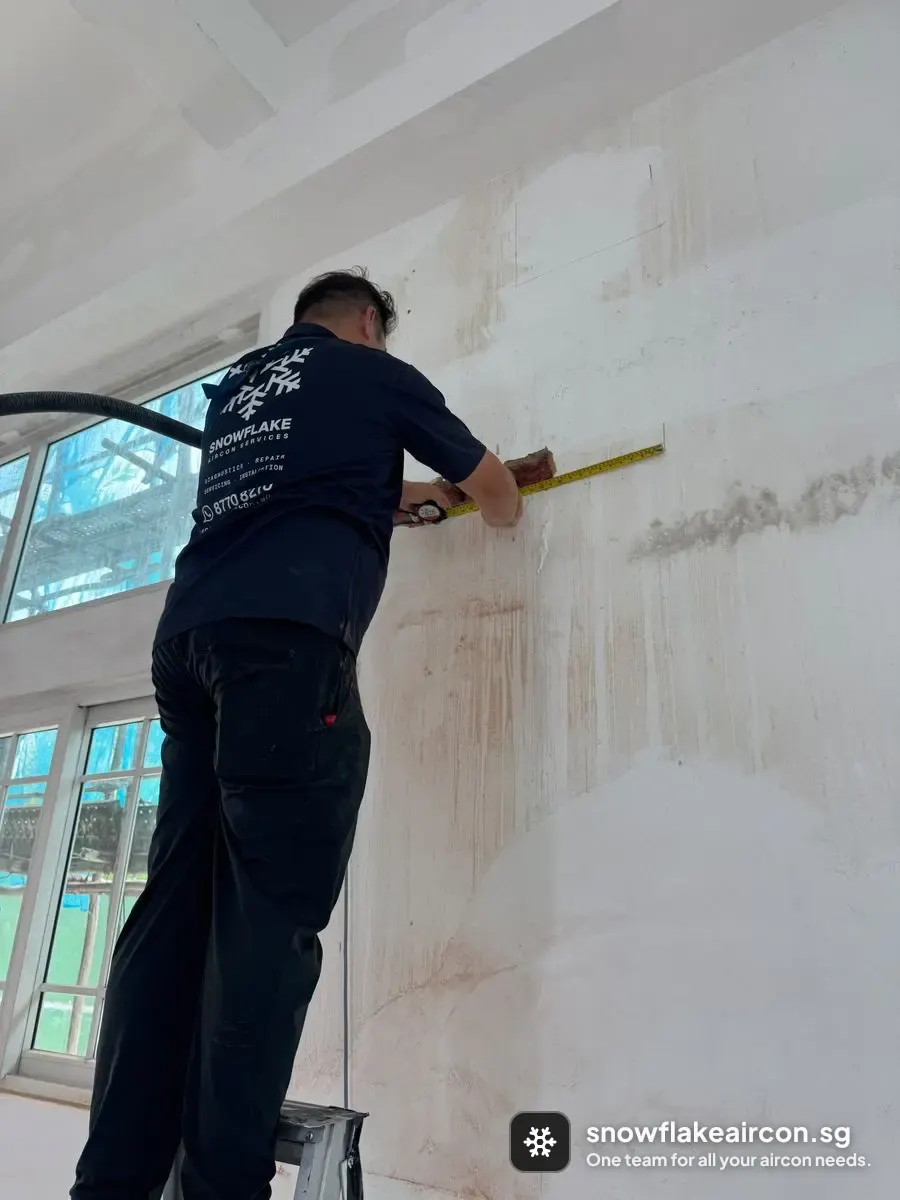
Toa Payoh HDB · Daikin
Daikin Wall Water Stain: Rear Drain Trough, Not Pipe
Biofilm jelly choking the hidden rear auxiliary drain trough behind the evaporator coil, spilling condensate down the plastered wall while the main trunking pipe stayed intact