Casement Aircon Slinger Ring and Base Pan Guide
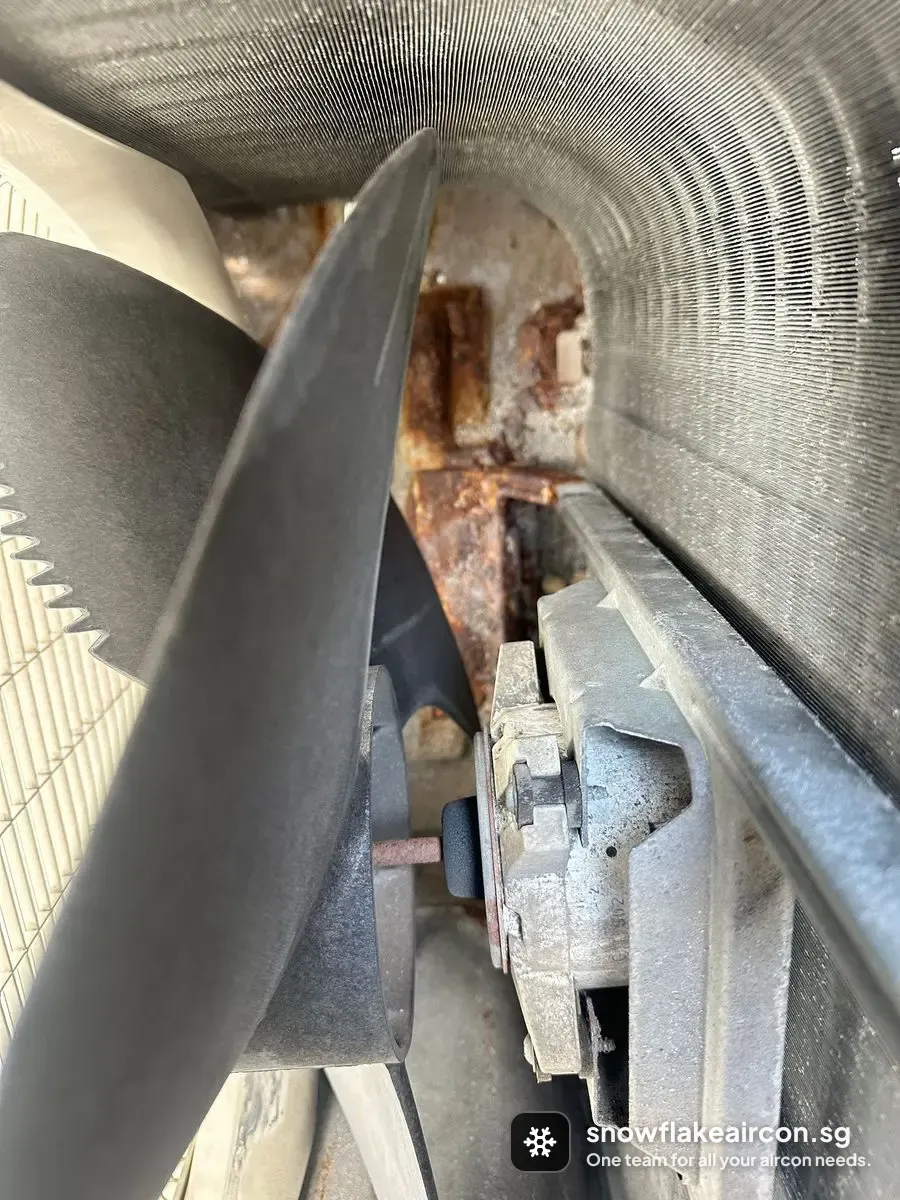
The casement slinger ring and base pan form the self-evaporating condensate system inside a window or casement aircon, where the outdoor fan dips into collected water and sprays it onto the hot condenser coil.
What the casement slinger ring and base pan does
Because window and casement aircons sit in one compact all-in-one chassis, condensate flows from the indoor evaporator tray through internal channels into the rear outdoor sump. A rimmed ring around the condenser fan tips dips into that shallow pool and atomises water onto the hot condenser coil to boost efficiency and evaporate moisture.
Mechanical component
Casement slinger ring and base pan failure signs
Match the symptom, then see what a technician checks to confirm the cause.
| What you observe | Likely causes | How we verify |
|---|---|---|
| Water drips out the front grille into the bedroom | Chassis tilted level or slightly inward instead of sloping outward, Sludge blocking the narrow channel between the front evaporator tray and rear sump, Overflowing rear sump in high Singapore humidity with a blocked rear drain plug | Check chassis slope with a spirit level, then slide out the unit to inspect the front-to-rear drain trough and rear drain port. |
| Loud splashing, rattling, or water-slapping noise from the unit | Excessive standing water depth in the rear base pan, Warped or cracked plastic slinger ring striking the condenser shroud, Debris or fallen leaves sitting in the outdoor sump | Remove the rear drain plug briefly to check standing water depth, then inspect the condenser fan ring clearance with power isolated. |
| Rust stains dripping down the exterior window ledge | Corroded steel base pan rusting through from constant standing condensate, Blocked drain hole forcing stagnant water to sit along the pan seams | Slide the chassis out of its window sleeve and inspect the base pan underside for rust perforation. |
- What you observe
- Water drips out the front grille into the bedroom
- Likely causes
- Chassis tilted level or slightly inward instead of sloping outward, Sludge blocking the narrow channel between the front evaporator tray and rear sump, Overflowing rear sump in high Singapore humidity with a blocked rear drain plug
- How we verify
- Check chassis slope with a spirit level, then slide out the unit to inspect the front-to-rear drain trough and rear drain port.
- What you observe
- Loud splashing, rattling, or water-slapping noise from the unit
- Likely causes
- Excessive standing water depth in the rear base pan, Warped or cracked plastic slinger ring striking the condenser shroud, Debris or fallen leaves sitting in the outdoor sump
- How we verify
- Remove the rear drain plug briefly to check standing water depth, then inspect the condenser fan ring clearance with power isolated.
- What you observe
- Rust stains dripping down the exterior window ledge
- Likely causes
- Corroded steel base pan rusting through from constant standing condensate, Blocked drain hole forcing stagnant water to sit along the pan seams
- How we verify
- Slide the chassis out of its window sleeve and inspect the base pan underside for rust perforation.
Replacing the casement slinger ring and base pan
Replace
Replace the outdoor fan blade with slinger ring if cracked or warped; if the steel base pan itself is rusted through on an older casement unit, whole-unit replacement usually costs less than rebuilding the chassis.
You can wait
Light splashing noise with dry indoor sills simply reflects normal self-evaporation in humid weather.
Do not wait
Water dripping onto indoor floors, window carpentry, or down onto lower-floor HDB neighbours needs prompt clearing, re-tilting, or drain-hose fitting.
If you proceed
- Typical replacement cost
- S$120–S$280
- Replacement timeline
- Same-day
Most window and casement leaks are resolved by sliding the chassis out, flushing sludge from the internal base-pan channels, resetting outward tilt, and connecting a rear drain hose where required.
In Singapore HDB flats, dripping onto exterior ledges or neighbours below can trigger NEA/Town Council notices; ensure the rear drain plug or drain hose routes properly.
Source: Mini-Split Leaking Water: Causes and Solutions, Trane, checked .
Repair service: Aircon repair.
How we verify a casement slinger ring and base pan fault
These are technician checks to confirm whether the part is at fault.
Check horizontal and outward tilt of the window or casement chassis using a spirit level.
Tools: Spirit level
Healthy reading: The unit slopes gently outward (roughly 5–10mm lower at the rear) so condensate drains away from the room.
Slide the chassis out of its mounting sleeve and flush the front-to-rear drain channels.
Healthy reading: Water poured at the front evaporator tray flows rapidly into the rear sump without pooling.
Spin the condenser fan blade by hand to inspect the slinger ring for cracks, rubbing, or wobble.
Healthy reading: The ring clears the shroud evenly and sits tightly on the motor shaft.
Frequently asked questions about the aircon casement slinger ring and base pan
What are the warning signs that the casement slinger ring and base pan is wearing out?
The first sign of a casement slinger ring and base pan problem is this: water drips out the front grille into the bedroom, and the same fault can also show as loud splashing, rattling, or water-slapping noise from the unit.
Does the casement slinger ring and base pan need repairing or replacing?
Replace the outdoor fan blade with slinger ring if cracked or warped; if the steel base pan itself is rusted through on an older casement unit, whole-unit replacement usually costs less than rebuilding the chassis. You can wait in this case: light splashing noise with dry indoor sills simply reflects normal self-evaporation in humid weather.
When should I stop using the aircon because of the casement slinger ring and base pan?
Water dripping onto indoor floors, window carpentry, or down onto lower-floor HDB neighbours needs prompt clearing, re-tilting, or drain-hose fitting; the warning sign to track is this: water drips out the front grille into the bedroom. Another sign: loud splashing, rattling, or water-slapping noise from the unit.