Compressor Crankcase Heater: Standby Breaker Trips
The compressor crankcase heater is a low-wattage electric belt around the base of a commercial or VRF compressor. It warms sump oil during standby so liquid refrigerant does not pool and slug the unit.
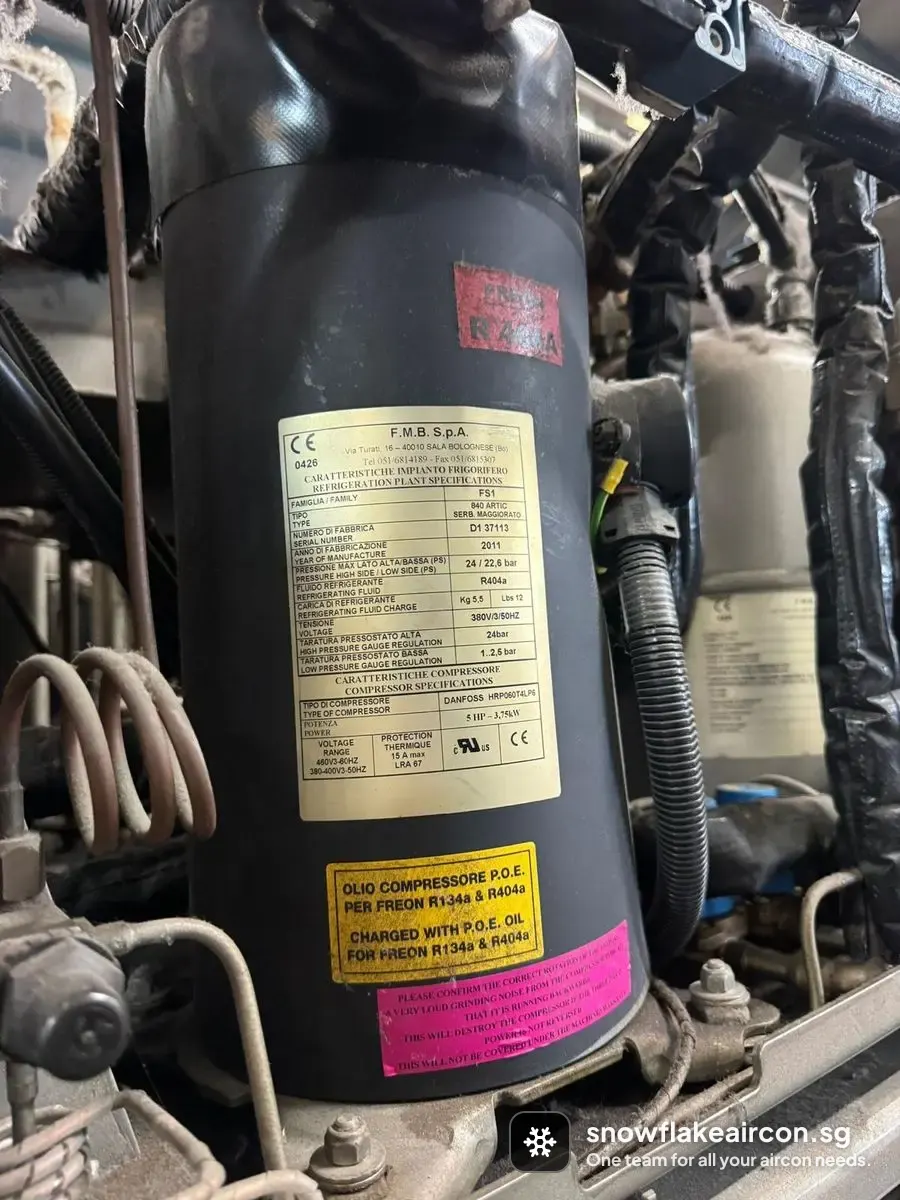
What the compressor crankcase heater does
When a large outdoor condensing unit sits idle, refrigerant naturally migrates toward the coolest part of the circuit and mixes into the compressor oil sump. The crankcase heater stays energised during standby to boil off dissolved refrigerant so the compressor starts with clean oil lubrication instead of foaming liquid slugging.
Electrical component
Compressor crankcase heater failure signs
Match the symptom, then see what a technician checks to confirm the cause.
| What you observe | Likely causes | How we verify |
|---|---|---|
| Breaker or RCCB trips even while the indoor units are turned off | Moisture entering the heater sheath causing an earth-leakage fault to the compressor shell, Chafed heater lead wire rubbing against vibrating outdoor copper piping | Disconnect the crankcase heater leads from the outdoor PCB or contactor and measure insulation resistance to earth with a megohmmeter. |
| Outdoor unit logs a standby preheat fault or starts noisily after long idle periods | Open-circuit heating element inside the crankcase belt, Faulty standby heater relay on the outdoor control board | Measure heater element resistance across the disconnected leads and confirm mains voltage output from the outdoor PCB during standby. |
| Visible burnt sleeve or brittle wiring around the base of the compressor | Loose clamping strap allowing the heater belt to overheat in free air, Oil-soaked insulation degrading around the compressor foot | Inspect belt clamping tension around the compressor base and verify ohm and insulation readings. |
- What you observe
- Breaker or RCCB trips even while the indoor units are turned off
- Likely causes
- Moisture entering the heater sheath causing an earth-leakage fault to the compressor shell, Chafed heater lead wire rubbing against vibrating outdoor copper piping
- How we verify
- Disconnect the crankcase heater leads from the outdoor PCB or contactor and measure insulation resistance to earth with a megohmmeter.
- What you observe
- Outdoor unit logs a standby preheat fault or starts noisily after long idle periods
- Likely causes
- Open-circuit heating element inside the crankcase belt, Faulty standby heater relay on the outdoor control board
- How we verify
- Measure heater element resistance across the disconnected leads and confirm mains voltage output from the outdoor PCB during standby.
- What you observe
- Visible burnt sleeve or brittle wiring around the base of the compressor
- Likely causes
- Loose clamping strap allowing the heater belt to overheat in free air, Oil-soaked insulation degrading around the compressor foot
- How we verify
- Inspect belt clamping tension around the compressor base and verify ohm and insulation readings.
Replacing the compressor crankcase heater
Replace
Replace the crankcase heater when insulation resistance drops toward earth, the element tests open-circuit, or the sheath is cracked and oil-soaked.
You can wait
Never leave an earth-leaking heater connected; if an open heater fails on a small standby unit, schedule prompt replacement before extended shutdowns.
Do not wait
An earth-faulting crankcase heater tripping the DB breaker or RCCB should be isolated and replaced promptly so it is not misdiagnosed as a dead compressor.
If you proceed
- Typical replacement cost
- S$160–S$360
- Replacement timeline
- Same-day
Replacing a crankcase heater requires opening the outdoor unit service panel, unclamping the old belt around the compressor base, and clamping the OEM-wattage replacement snugly against the shell without touching the refrigerant circuit.
A shorted crankcase heater is one of the most common causes of an outdoor RCCB trip being misquoted as a dead compressor. Always ask for separate insulation readings for the compressor windings and the crankcase heater.
Source: Why Compressor Replacement Fails — and What to Check First, LG Electronics, checked .
Repair service: Aircon compressor repair.
How we verify a compressor crankcase heater fault
These are technician checks to confirm whether the part is at fault.
Isolate outdoor power, unplug the crankcase heater connector, and measure resistance to earth.
Tools: Insulation tester (megohmmeter)
Healthy reading: Insulation resistance reads well above manufacturer minimum (typically >20 MΩ) with zero earth leakage.
Measure element resistance across the two heater leads to confirm the belt is not open-circuit.
Tools: Multimeter
Healthy reading: Resistance matches rated wattage (commonly several hundred to ~1,500 ohms depending on heater power).
Check whether the RCCB holds with the heater isolated to separate a cheap heater belt from a failing compressor.
Healthy reading: If earth leakage disappears when the heater is unplugged, the compressor itself is healthy.
Frequently asked questions about the aircon compressor crankcase heater
What are the warning signs of a failing compressor crankcase heater?
The first sign of a compressor crankcase heater problem is this: breaker or RCCB trips even while the indoor units are turned off, and the same fault can also show as outdoor unit logs a standby preheat fault or starts noisily after long idle periods.
When should I switch off the aircon because of the compressor crankcase heater?
An earth-faulting crankcase heater tripping the DB breaker or RCCB should be isolated and replaced promptly so it is not misdiagnosed as a dead compressor; the warning sign to track is this: breaker or RCCB trips even while the indoor units are turned off.
Does the compressor crankcase heater need replacing, or can it be repaired?
Replace the crankcase heater when insulation resistance drops toward earth, the element tests open-circuit, or the sheath is cracked and oil-soaked. You can wait in this case: never leave an earth-leaking heater connected; if an open heater fails on a small standby unit, schedule prompt replacement before extended shutdowns.